

The best way to compare franchise industries is to line them up on four measures: how much you must invest, how profitable units tend to be, how the sector is trending, and how the work fits your life. The British Franchise Association (BFA) survey data gives you the first three. Your own budget, time and location give you the fourth. Franchise Local lets you apply all four at once, filtering UK franchises for sale by industry, investment level, lifestyle and location.
This guide sets out what the UK numbers say about each part of the industry. It also shows how to read them and how to turn them into a shortlist.
The UK franchise industry at a glance
Start with the size of the market, because it tells you how much choice you have. The BFA’s 2024 National Franchise Survey reports that the UK franchise sector contributes £19.1 billion to the economy. It counts 1,009 franchise systems, up 8% since 2018, and 50,421 franchised units, up 4%. Average turnover per unit is £400,000.
The 2018 BFA NatWest Franchise Survey put the contribution at over £17 billion, with 48,600 units and more than 700,000 people employed. So the sector has grown in value and in the number of brands, while unit numbers have risen more slowly.
| Measure | 2018 survey | 2024 survey |
|---|---|---|
| Contribution to the UK economy | Over £17 billion | £19.1 billion |
| Franchised units | 48,600 | 50,421 |
| Franchise systems | Not quoted here | 1,009 |
| Units reported profitable | 93% of franchisees claimed profitability | 89% |
Two further 2024 findings help you judge the mood of the market. Around 66% of franchisors reported better trading than before the pandemic. About half of franchisees operate from home. For a deeper look at the size figures, see our breakdown of UK franchise market size.
How the main industries compare
“Franchise” covers very different businesses. A van-based cleaning franchise and a restaurant unit share a legal model and little else. The 2024 BFA survey shows the sectors moving in different directions. Personal services and hotel and catering grew by 53% and 34%. Transport and vehicle services and store retailing declined by 34% and 25%.
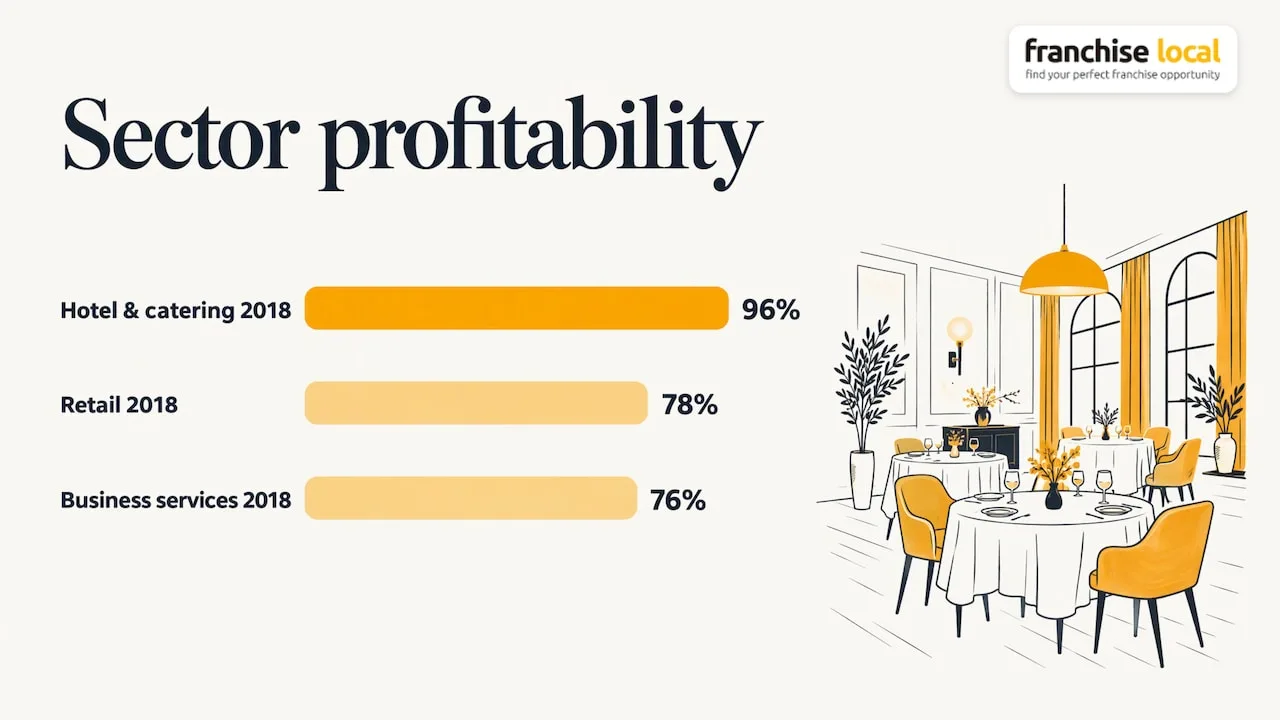
The 2018 survey gives a snapshot of profitability by sector:
| Sector | Share of units profitable (2018) |
|---|---|
| Hotel and catering | 96% |
| Retail | 78% |
| Business services | 76% |
Read these as a starting point, not a verdict. A high profitability share tells you that most units in a sector make money. It does not tell you how much, how quickly, or whether the best brand in the sector suits you. Hotel and catering franchises often need premises and staff, so the money to open is larger. Business services can often be run from a spare room.
Personal services
This is the sector with the strongest recent growth in the 2024 survey. It includes health, fitness, beauty, childcare-related and care-related concepts. Many are built around repeat local customers. They often suit people who like working with the public and want a defined territory.
Hotel and catering
The 2018 figure of 96% of units profitable is the highest in the survey, and the sector grew in 2024. Expect premises, equipment and a team to manage. Investment tends to sit higher than in home-based models, so budget needs to be settled before you look at brands.
Business services
Think recruitment, marketing support, accountancy-related services, networking and consultancy. Many of these can be home-based, which keeps start-up costs down. Profitability in the 2018 survey was 76%, lower than catering, but the overheads behind that figure are also usually lower. Browse our networking franchises and investment franchises to see how this type of model looks in practice.
Retail and transport
Store retailing and transport and vehicle services both fell in the 2024 survey, by 25% and 34%. That reflects shifts in how people shop and travel. It does not mean no good opportunity exists, only that you should look closely at each brand’s current network and support. Our guide to franchise industry sectors defines each category so you can compare like with like.
Comparing investment levels
Investment is the criterion most buyers start with, and it narrows the field fastest. The 2024 survey puts the average franchise investment across the sector in a wide band. Home-based service concepts sit at the lower end. Retail and food outlets sit at the top.
The 2018 survey found that franchisees who put in more than £20,000 at set-up tended to be more profitable than those who put in less. That does not mean spending more guarantees a better result. It suggests that adequately funded launches, with money for marketing, equipment and working capital, tend to do better than thin ones.
A sensible way to use budget bands:
- Under £10,000: mostly home-based and mobile service models, often with low overheads.
- £10,000 to £50,000: a wide middle range of services, mobile businesses and small territories.
- £50,000 and above: premises-based models in food, retail, fitness and care, usually with staff.
These bands mirror the filters on Franchise Local, where you can search by investment level and see what is on offer at your budget. Remember to include working capital in your figure, not just the initial franchise fee. Our guide to franchise profitability factors covers the costs to plan for.
Home-based versus premises-based
The split between home-based and premises-based franchising may matter more to your result than the industry itself. About half of UK franchisees work from home, according to the 2024 survey.
The 2018 survey found that 73% of businesses run from a home or home office were profitable, against 93% of those run from a shop or retail premises. Only 3 of the 198 businesses surveyed said they were definitely loss-making.
What this means in practice:
- Home-based models cost less to start and are easier to fit around family or a job.
- Premises-based models carry higher costs but tend to report a higher share of profitable units.
- Either way, you need a clear picture of the hours the model asks of you.
Lifestyle is a real comparison criterion here, which is why Franchise Local includes lifestyle filters such as home based alongside industry and price.
Franchise or independent start-up?
Many readers comparing industries are really weighing franchising against starting alone. The BFA’s Redundancy Toolkit states that franchising has had a forced failure rate below 6% for over 25 years. It sets this against the commonly quoted figure that half of new non-franchised start-ups fail within three years. The 2024 survey reports the commercial failure rate falling from 0.9% in 2018 to 0.5%.
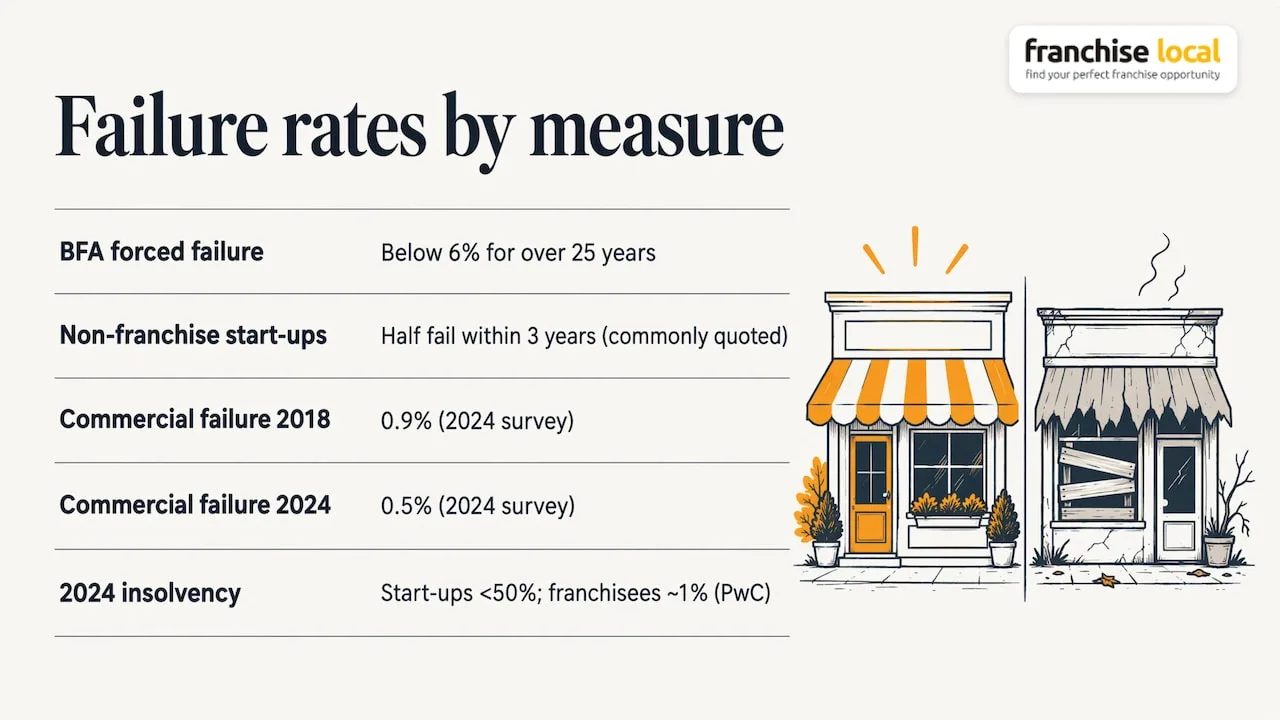
Barclays reported in 2025, citing PwC, that 2024 was the first time the average start-up insolvency rate fell below 50%. For franchisees it was around 1%.
The pattern is consistent across these sources: a proven model, training and a network lower the risk of a first-time business. Our articles on franchise failure rates and franchise versus start-up cover the comparison in more detail, including a risk checklist.
How to read the statistics
Good comparison depends on knowing what each number measures.
- Check the year. Much sector-level profitability data comes from the 2018 survey. The 2024 survey was the first since then, and it captured the effects of the pandemic. Where the periods differ, say so in your notes.
- Know the method. The BFA surveys franchisors and franchisees, so it describes the franchising industry itself. The Global Entrepreneurship Monitor is a population survey that measures how common franchising is within entrepreneurial activity. Differences between them reflect method, not contradiction, and they work best together.
- Compare failure figures carefully. Franchise failure rates usually count commercial failure of units. Start-up figures usually count businesses that stop trading for any reason over a set period. The two are not measured the same way, so treat the gap as a direction, not an exact number.
- Remember who answers. Surveys depend on who responds. Recent independent academic study of UK franchising is limited, so industry reports carry much of the evidence.
- Look at the trend, not one year. The fall in new franchisees under 30, from 27% in the previous year to 7% in 2024, is the kind of shift to watch, and so is the rise in resales. About 65% of franchisors expected at least one unit in their network to be offered as a resale in the coming year, up from 51% in 2018. Resales can give you an established business, and they add another route into an industry.
A method for building your shortlist
Here is a practical process to turn these comparisons into a decision.
- Set your budget range. Include the franchise fee, equipment, marketing and working capital. On Franchise Local, filter by investment level to see only models in your range.
- Decide your working pattern. Choose home-based, mobile or premises-based, and how many hours a week you can commit. Use the lifestyle filters.
- Pick two or three industries. Use the sector data above to see which are growing and which are shrinking, then choose where your skills and interests fit.
- Narrow by location. Check which territories are open near you.
- Compare brands within the sector. Look at the investment, support offered, training and the size of the network for each.
- Read the franchise agreement with a specialist. A solicitor experienced in franchising should review the contract before you sign. Ask the franchisor to introduce you to existing franchisees, and speak to several.
Our ultimate guide to franchising walks through the full buying journey, and franchise exhibitions give you a chance to meet franchisors face to face.
Compare franchises by industry on Franchise Local
Franchise Local is a UK franchise directory that lists opportunities by industry, investment level and lifestyle, with filters for price and location. You can start with the full list of franchise industries, look at trending franchise opportunities, or browse the best UK franchise opportunities. Each listing lets you send an enquiry to the franchise seller directly.
For current movement in the market, our guides on franchise industry trends for 2026 and the UK franchising trend in 2026 show where investors are looking.
FAQ
Which franchise industry is most profitable in the UK?
In the 2018 BFA survey, hotel and catering had the highest share of profitable units at 96%, ahead of retail at 78% and business services at 76%. Profitability depends on the brand, the territory and your investment, so compare brands within a sector as well as sectors against each other.
How much does it cost to start a franchise in the UK?
Costs range widely. Home-based service franchises sit at the lower end, while retail and food outlets sit much higher. The 2018 BFA survey found that franchisees who invested more than £20,000 tended to be more profitable. Use the investment filters on Franchise Local to see what is available at your budget.
Are franchises safer than independent start-ups?
The BFA reports a commercial failure rate of 0.5% in 2024, and its toolkit cites a forced failure rate below 6% over 25 years. It compares this with the often-quoted figure of half of new non-franchised start-ups failing within three years. The measures differ, but the direction is consistent.
Can I run a franchise from home?
Yes. About half of UK franchisees operate from home, according to the 2024 BFA survey. Business services, personal services and many mobile models suit this. Use the home-based lifestyle filter on Franchise Local to see the options.