

Most people assume that starting a business means building everything from scratch: the brand, the systems, the customer base, and the hard-won reputation. Franchise networks turn that assumption on its head. Rather than starting cold, you step into a proven structure with an established identity and a support system already in place. The UK franchise sector is one of the most resilient in the world, generating £19.1 billion annually and employing hundreds of thousands of people. This guide breaks down exactly what a franchise network is, how it works in practice, and how you can use that knowledge to make a confident investment decision.
Key Takeaways
| Point | Details |
|---|---|
| Franchise networks explained | A franchise network in the UK combines an established brand with independent operators sharing a proven business model. |
| High UK success rates | Nearly 90% of UK franchises are profitable with much lower failure rates than start-ups. |
| Costs and standards | Expect entry fees of £20,000–£50,000, royalties of 5–8%, and strict operational standards. |
| Choosing wisely matters | Assess franchise support, BFA status, and profitability data before investing. |
Defining the franchise network
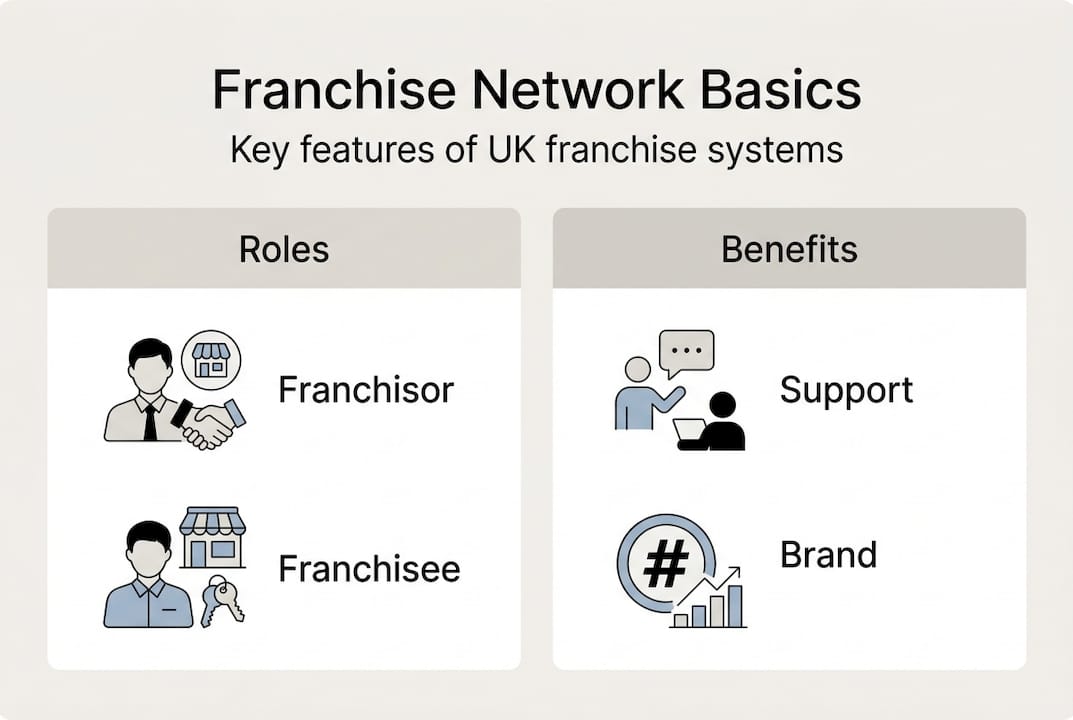
A franchise network is a system where an established brand, known as the franchisor, licenses its business model, brand identity, and operational methods to multiple independent operators called franchisees. Each franchisee runs their own business day to day, but they do so within the framework the franchisor has built. Think of it like a recipe: the franchisor owns the recipe, and each franchisee cooks the dish in their own kitchen.

This is fundamentally different from an independent startup, where you create everything yourself, and from a company-owned chain, where the parent company owns and operates every location. In a franchise network, ownership is distributed but standards are centralised. That balance is what makes the model so attractive to first-time business owners.
The core mechanics are straightforward. Franchisees pay initial fees of £20K to £50K and ongoing royalties of typically 5 to 8% of revenue. In return, they receive training, marketing support, and supply chain access, all while adhering to strict operational standards. Understanding why franchises succeed often comes down to this structured exchange of investment for infrastructure.
Here is what a franchise network typically provides to each franchisee:
- A recognised brand with existing customer trust
- Comprehensive initial and ongoing training
- Marketing materials and national advertising campaigns
- Access to vetted suppliers and negotiated pricing
- Operational manuals and quality control systems
- A peer network of fellow franchisees
“Joining a franchise network means you are not reinventing the wheel. You are buying the right to use a wheel that has already been tested on the road.”
For anyone weighing up their options, the franchise vs startup comparison is a useful starting point before committing to either path.
How franchise networks operate in the UK
The UK franchise market is substantial. There are approximately 1,009 franchise systems and 50,421 units operating across the country, supporting 770,000 jobs and generating £19.1 billion in annual revenue. That is not a niche industry. That is a major pillar of the UK economy.
What makes the model particularly compelling is its resilience. The sector’s failure rate sits at just 0.5%, compared to the much higher failure rates seen among independent startups in their first five years. Understanding the franchise profitability factors that drive this performance helps you identify which networks are worth your attention.
| Factor | Typical range in UK franchise networks |
|---|---|
| Initial franchise fee | £20,000 to £50,000 |
| Ongoing royalty rate | 5% to 8% of revenue |
| Average turnover per unit | £400,000 per year |
| Sector failure rate | 0.5% to 1% |
| Franchises reporting profit | 89% |
| Total UK franchise units | 50,421 |
The franchise profit model works because franchisors have a direct financial incentive to help franchisees succeed. When you earn more, the franchisor earns more through royalties. That alignment of interests is built into the structure from day one.
Franchisees receive structured onboarding, access to established supply chains, and ongoing operational support. Before you commit, it pays to thoroughly research franchise opportunities so you understand exactly what each network offers in return for your investment.
Roles and relationships: franchisor, franchisee, and beyond
Every franchise network has two primary players, and understanding what each one brings to the table is essential before you sign anything.
The franchisor is responsible for:
- Setting and enforcing brand and operational standards
- Providing initial training and ongoing support
- Running national marketing campaigns
- Protecting the brand’s reputation across all units
- Updating systems and products as the market evolves
The franchisee is responsible for:
- Managing day-to-day operations within the agreed framework
- Hiring, training, and managing local staff
- Meeting financial targets and royalty obligations
- Upholding brand standards at the local level
- Engaging with the franchisor’s support systems
The tension in this relationship is real. Franchisors need brand consistency to protect the network’s value, while franchisees naturally want some autonomy to respond to local conditions. The best networks manage this balance well, giving franchisees room to adapt within clearly defined boundaries.
“The franchisor sets the stage; the franchisee performs the show. Both need each other to succeed.”
One practical safeguard is to look for networks accredited by the British Franchise Association (BFA). BFA membership signals that the franchisor has met ethical standards and operates with transparency. Effective franchise marketing is another area where the franchisor’s commitment to the network becomes visible. A franchisor that invests in national campaigns is actively protecting the value of your investment.
Pro Tip: Always ask a prospective franchisor how many franchisees have left the network in the past three years and why. The answer tells you far more than any brochure will.
Benefits and challenges of joining a franchise network
The case for joining a franchise network is strong, but it is not without caveats. Let’s look at both sides clearly.
Key benefits:
- You start with a proven business model rather than an untested idea
- National brand recognition reduces the time needed to build customer trust
- Training and support lower the learning curve significantly
- Peer networks give you access to experienced franchisees who have faced your challenges before
- 89% of UK franchises are profitable, with average turnover of £400,000 per unit
Key challenges:
- Upfront fees of £20,000 to £50,000 require careful financial planning
- Ongoing royalties of 5 to 8% reduce your net margin compared to an independent business
- You must follow the franchisor’s rules, even when you disagree with them
- Not all franchise networks are equal in quality or support
- Exit options can be limited depending on the terms of your franchise agreement
The profitability statistics are genuinely encouraging, but they should not replace your own due diligence. A sector-wide 89% profitability rate does not guarantee that every individual franchise will perform well. Understanding why investing in franchises makes sense requires looking beyond the headline numbers.
Pro Tip: Before signing, ask the franchisor for a copy of their franchise disclosure document and take it to a solicitor who specialises in franchise law. A well-structured franchise business plan will also help you stress-test the financials before you commit.
How to evaluate and choose a franchise network
Choosing the right franchise network is one of the most consequential decisions you will make as a prospective business owner. A structured approach protects you from costly mistakes.
Follow these steps in order:
- Set your budget. Know your maximum investment, including working capital for the first six to twelve months, before you look at any listings.
- Check BFA accreditation. Prioritise networks that are BFA members. This is a baseline quality filter, not a guarantee, but it matters.
- Analyse the fee structure. Initial fees of £20K to £50K are standard, but compare what each network delivers in return.
- Review performance data. Ask for audited accounts, unit-level profitability data, and the network’s failure rate.
- Interview current franchisees. Speak to at least three people already operating within the network. Ask about support quality, communication, and whether they would invest again.
- Take legal advice. Have a franchise-specialist solicitor review the franchise agreement before you sign.
Use this comparison framework when evaluating multiple networks:
| Evaluation factor | What to look for |
|---|---|
| BFA accreditation | Full or provisional membership |
| Initial fee | Transparent breakdown of what is included |
| Royalty structure | Percentage and what it funds |
| Training programme | Duration, format, and ongoing support |
| Franchisee satisfaction | Testimonials and direct conversations |
| Exit terms | Resale rights and transfer conditions |
| Network size | Number of active units and growth trend |
The best franchises in the UK share common traits: transparent fee structures, strong franchisee support, and a track record of unit-level profitability. Taking time to research franchise opportunities thoroughly before committing is the single most effective way to reduce your investment risk. UK franchisees benefit most when they enter networks with robust peer support and clear operational frameworks.
Find your ideal franchise network with Franchise Local
If you are ready to move from research to action, Franchise Local is the UK’s dedicated franchise directory, built specifically for people at exactly this stage of their journey. You can filter opportunities by investment level, industry, location, and lifestyle preference, making it straightforward to identify networks that genuinely fit your situation. Whether you are looking for a home-based operation, a high street presence, or a mobile franchise, the platform brings together hundreds of vetted listings in one place. Explore the full range of UK franchise opportunities and take the next step towards owning a business that is built to succeed from day one.
Frequently asked questions
What is the difference between a franchise and a franchise network?
A franchise is a single licensed business unit, while a franchise network is the entire system connecting the franchisor with all of its franchisees operating under one brand.
Are franchise networks profitable in the UK?
Yes. 89% of UK franchises are profitable, with an average turnover of £400,000 per unit and a failure rate far lower than that of independent startups.
How much does it cost to join a UK franchise network?
Initial fees typically range from £20,000 to £50,000, with ongoing royalties of 5 to 8% of revenue payable to the franchisor.
How do I check if a franchise network is reputable?
Look for British Franchise Association accreditation and ask the franchisor for audited performance data and direct contact with existing franchisees before making any commitment.