

Franchise lead nurturing is the structured follow-up that turns a franchise enquiry into a signed franchisee. It means giving each candidate the right information, at the right time, from a named person, until they are ready for a discovery call, a discovery day and a decision. Most franchisors do not have a lead problem. They have a follow-up problem. This guide sets out how to build a nurture process that suits a UK franchise brand: the stages, the content, the timing, the qualification checks and the legal limits.
What franchise lead nurturing actually covers
A franchise purchase is not an impulse buy. A candidate may be risking redundancy money, savings or a remortgage. They research for weeks or months, compare brands, talk to family and often return to a brand several times before they commit.
Nurturing covers everything you do between the first enquiry and the point where a candidate is sales-ready:
- Acknowledging the enquiry quickly.
- Sending information that answers real questions: the business model, investment, training, support and day-to-day reality.
- Qualifying the candidate against your ideal franchisee profile.
- Keeping contact going while they think, without pressure.
- Handing over to a person for the discovery call at the right moment.
It is not a drip of generic emails. It is a sequence of useful steps, some automated and some human, with a clear owner for each candidate.
Why leads go cold
The common failure in UK franchise recruitment is inconsistency. Enquiries arrive through a website form, a directory, an exhibition or a broker. One person replies in an hour, another in three days, and a third never. Candidates drift away without anyone deciding they were a poor fit.
The wider UK marketing data points the same way:
- A 2025 lead qualification study found that 75% of UK marketers drive more than 100 leads a month, yet one in three struggle to get in touch with those leads.
- In the State of B2B Pipeline Growth 2025 report, 34% of UK respondents named lead nurturing as a struggle, and 56% described their tech infrastructure as limited or disorganised.
- The same report found 56% of UK and European marketers see content personalisation as a major priority for nurturing.
These are general B2B figures, not franchise-specific ones. They still describe the pattern franchise recruiters recognise: plenty of enquiries, patchy contact, weak systems.
The stages of a franchise nurture path
Your pipeline stages should mirror how a candidate actually moves. A simple UK version looks like this:
| Stage | What the candidate needs | What you do |
|---|---|---|
| New enquiry | Confirmation that someone has read it | Instant acknowledgement, named contact, a short information pack |
| Contacted | A first conversation | A quick call or text, a few open questions about their situation |
| Qualified | Clear numbers and a realistic picture | Financial and motivation checks, a fuller prospectus |
| Discovery call | A two-way conversation | A senior recruiter talks strategy, not basics |
| Due diligence | Proof and references | Introductions to existing franchisees, disclosure documents |
| Discovery day | To meet the team and see the operation | Structured visit, fair assessment on both sides |
| Decision | Time and clarity | Support for legal and financial advice, no pressure |
Give every lead a status in a CRM, not a spreadsheet and an inbox. Spreadsheets cope with a handful of candidates. Beyond that, interactions get missed, and the candidates you most wanted are the ones who vanish. For more on how directories and CRM tools fit together, see our guide to the UK franchise sales funnel.
Respond fast, then slow down
Speed matters at the start. A candidate who has just submitted a form is at their most engaged. Acknowledge the enquiry within minutes, by email and, where consent allows, by a short text. We have set out how a short SMS can open a sequence in our piece on franchise recruitment email sequences.
After that first contact, change pace. The goal is not to chase. It is to stay present while the candidate does their homework. Over-selling early is a common mistake. Give enough value that the candidate chooses to move to the next stage, such as booking a call, rather than being pushed.
Qualify early, and be objective about it
Nurturing and qualification belong together. Nurturing without qualification fills your diary with candidates who cannot invest. Qualification without nurturing feels like an interrogation.
Build a short list of objective criteria and apply it to every candidate. Typical ones:
- Funding. Can they fund the total investment, through savings, a bank, or a route such as a Start-up Loan? Check this before a candidate meets senior management, not after.
- Location. Is their preferred territory available?
- Time and lifestyle. Do they want a full-time, part-time or home-based business, and does your model fit?
- Skills and attitude. Are they comfortable with the core tasks of the role, such as managing a team, selling or following a system?
- Timeline. Are they ready to decide in weeks or in a year?
A candidate who is not ready is not a lost lead. Move them to a longer-term track with lighter contact, and revisit when their circumstances change. Our guides on franchise lead qualification and lead magnets and why volume still needs qualifying go deeper on this step.
Content that moves a candidate forward
Good nurture content answers the questions candidates have at each stage. If your first call is spent explaining what the franchise is, your nurture content has not done its job. By the time a candidate reaches a discovery call, they should already understand the business model and the investment, so the conversation can focus on fit.
Early stage: awareness
- A plain-English overview of what the franchise does and who it suits.
- The initial investment and what it covers, stated clearly.
- A short video or day-in-the-life piece.
Middle stage: evaluation
- Detail on training and ongoing support.
- Honest figures on how long a new franchisee typically takes to build up.
- Stories from existing franchisees, with their agreement.
- A walk-through of your recruitment process, so nothing feels like a surprise.
Late stage: commitment
- Disclosure documents and a clear timetable.
- Guidance on speaking to an accountant and a franchise solicitor.
- Introductions to current franchisees for independent conversations.
This is the same education-led logic behind trust-building funnels in general. There is a useful outside view in this explainer on how lead nurturing builds conversions, and the principle carries over: help first, then ask for the next step.
Automation plus a human
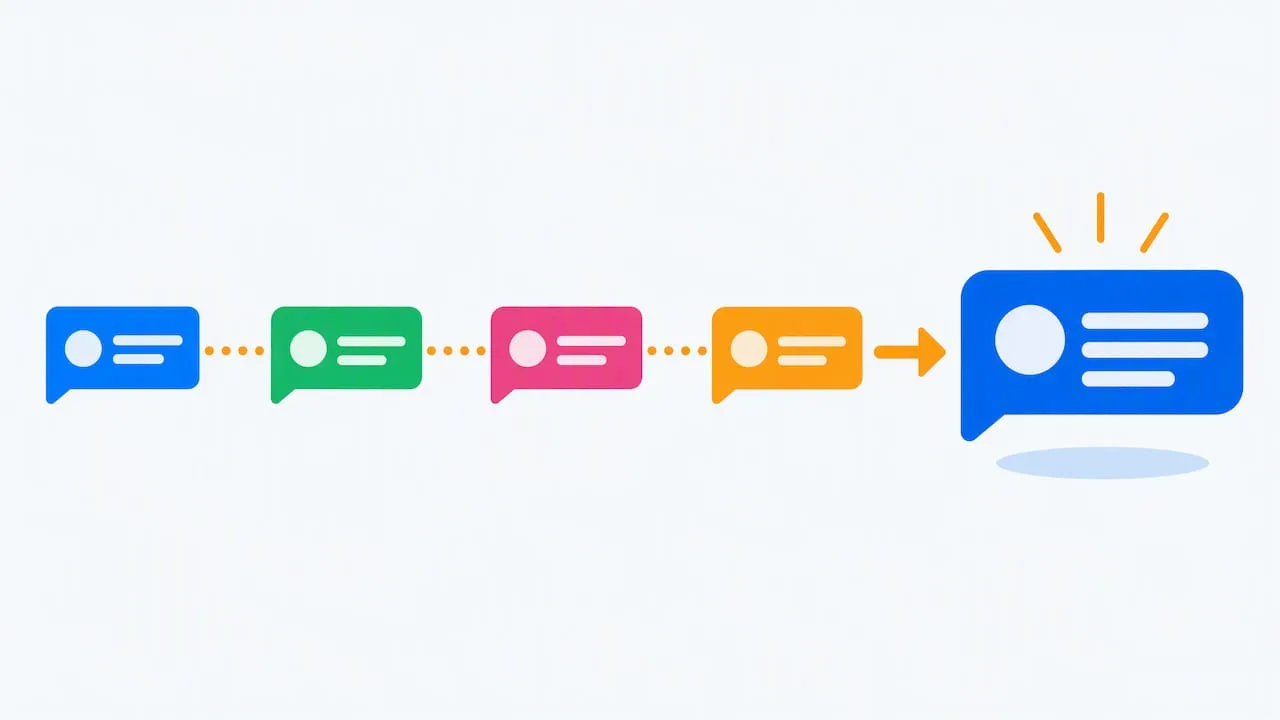
Automation earns its place in nurturing. The Data & Marketing Association’s Value of Automation Report 2025 reports that automation can boost marketing effectiveness by 50% and increase ROI by 32% when integrated across the funnel. These are general marketing results, not a promise for any one franchise brand.
A sensible split for franchise recruitment:
- Automate: acknowledgements, information packs, reminders, “have you had a chance to read this?” nudges, and booking links.
- Keep human: the first real conversation, any discussion of money, answers to personal worries, and everything from the discovery call onwards.
The same report found that 52% of UK and European marketers say they are making only limited progress towards pipeline goals, even with larger budgets. A tool alone does not fix that. Ownership does: one named person responsible for each candidate, and one person responsible for the process as a whole.
A sample 30-day sequence
Adapt this to your brand and investment level. Higher-investment franchises usually need longer, more personal paths than low-cost home-based ones.
- Day 0: Instant email acknowledging the enquiry, with the name and number of the person who will call.
- Day 0 to 1: A call, or a short text if you have consent, offering a time to talk.
- Day 2: Information pack covering the model, investment and support.
- Day 5: An email answering the three questions candidates ask most often.
- Day 9: A franchisee story or video.
- Day 14: A short check-in from the recruiter: any questions so far?
- Day 21: An invitation to book a discovery call, with a short pre-call questionnaire.
- Day 30: If there is no response, a polite final message that leaves the door open and moves the lead to a long-term list.
Stop the sequence the moment a candidate replies or books. Nothing irritates a serious prospect more than an automated email arriving after a real conversation.
Stay within PECR and UK GDPR
Nurturing is direct marketing, so the law applies. The Information Commissioner’s Office sets out the rules in its guide to electronic and telephone marketing under PECR. In practice:
- Consent for emails and texts must be specific, freely given and clearly worded. Pre-ticked boxes and blanket consent do not count.
- Give a clear way to opt out in every message.
- Keep a record of when and how each person consented.
- Be clear about how you will use someone’s details when you collect them. The ICO’s guidance on collecting information and generating leads covers privacy information on forms.
Some franchise candidates are enquiring in a business capacity, and rules for business-to-business marketing can differ from those for individuals. Do not assume that makes you exempt. Apply the same discipline to everyone. If you are unsure about a particular campaign, take advice from a data protection specialist or solicitor. Our checklist of five core documents for UK franchise data protection is a practical starting point.
Measure what matters
Track the process, not only the lead count. Volume can flatter a weak funnel. These measures show where candidates drop out:
- Speed to first contact: time from enquiry to first human reply.
- Contact rate: share of leads you actually speak to.
- Qualification rate: share that pass your criteria.
- Discovery call to discovery day rate: a sign of how well the nurture prepared candidates.
- Cost per signed franchisee: the figure that matters most, because it includes the leads that never went anywhere.
- Source quality: which channels produce candidates who sign, not merely those who enquire.
Review them monthly. If many candidates stall at the same stage, fix that stage: a missing piece of content, a slow hand-over, an unclear price.
Common mistakes to avoid
- No owner. If everyone can follow up, nobody does.
- Generic messages. Candidates notice when a message ignores what they said on the form. Use their territory, budget and preferred working pattern.
- Hiding the numbers. Candidates who find the real investment late feel misled and leave.
- Pushing the close. A franchise decision is large. Pressure drives away the careful people you want.
- Dropping the unready. Today’s “not yet” is often next year’s signed agreement.
For more on attracting the right people in the first place, read our practical playbook on how to attract franchisees in the UK and our overview of lead generation for franchises. For the whole journey from enquiry to signature, see the franchise recruitment guide.
For candidates: what good nurturing looks like from your side
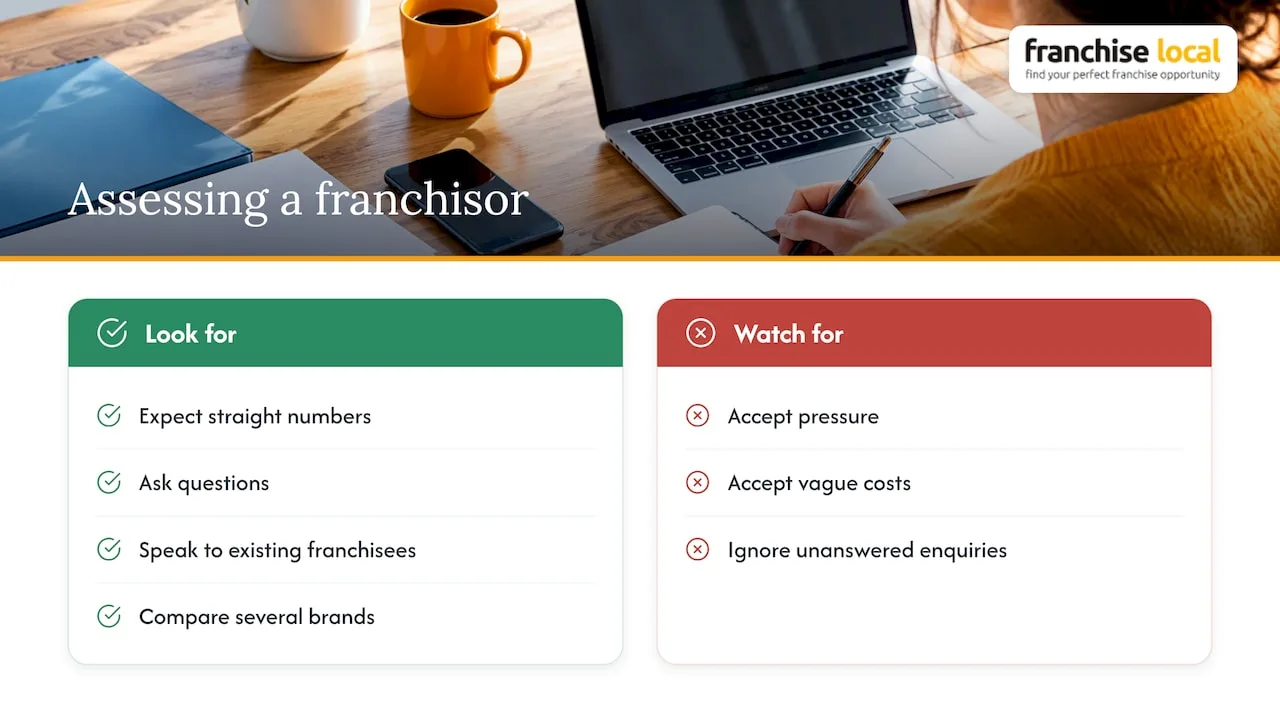
If you are looking at franchises rather than selling them, the nurture process tells you a lot about a brand. A good franchisor replies promptly, gives you straight numbers, answers your questions rather than dodging them, and lets you speak to existing franchisees. A brand that rushes you, stays vague on costs or goes silent after your enquiry is showing you how it may support you later.
Take your time. Compare several brands, write down your own criteria, and use our franchise selection workflow to keep your search organised. Our guide to how franchise lead forms work is also worth a read before you submit your details, so you know what happens next.
Reach candidates who are already searching
Nurturing works best when the leads arriving are already a good fit. Franchiselocal is a UK franchise directory where candidates search by industry, investment level, lifestyle and location, so franchisors and brokers are found by people actively comparing options. Candidates can browse trending franchise opportunities or explore the full range by industry, and enquiries from those listings feed straight into the nurture path described above. If you want to list your brand or feature it, start from the Franchiselocal homepage.
FAQ
What does lead nurturing mean in franchising?
It is the process of building a relationship with a franchise enquirer, from first contact to a decision. You provide information, check suitability and keep in touch until the candidate is ready for a discovery call or day. The aim is trust and fit, not a quick sale.
How long should a franchise nurture sequence last?
It depends on the investment and the brand. A lower-cost, home-based model may move in weeks, while a larger investment can take several months. Plan an active sequence of around 30 days, then move candidates who are not ready into a lighter, longer-term track.
Can I text franchise leads?
Only with valid consent. Under PECR, consent for electronic marketing must be specific and freely given, and every message needs a clear opt-out. Record when and how you obtained consent. If you are unsure, check the ICO’s guidance or ask a data protection adviser.
Should I use a CRM for franchise recruitment?
Yes, once you are handling more than a few candidates. A CRM records every interaction, shows each lead’s stage and reminds recruiters when to follow up. That stops promising candidates slipping away unnoticed.