

Most people picture a shopfront when they think of buying a franchise. A branded unit on a busy high street, fixed overheads, long lease agreements, and the daily commute to your own patch of retail space. That picture is outdated. Mobile franchising is quietly reshaping how entrepreneurially minded people in the UK build businesses, offering a route into self-employment that sidesteps the heavy costs and rigid commitments of fixed-location models. This guide explains exactly what mobile franchising is, how it works under UK law, what types of businesses you can run, and what you genuinely need to succeed.
Key Takeaways
| Point | Details |
|---|---|
| Definition clarified | Mobile franchising lets you operate branded services or products without being tied to a fixed premises. |
| Legal structure matters | In the UK, mobile franchise arrangements are governed by contracts and intellectual property law rather than franchise-specific statutes. |
| Logistics are essential | Success in mobile franchising depends largely on strong routing, scheduling, and daily operations processes. |
| Range of options | Mobile franchises cover sectors from food and tech to services, with diverse investment levels and flexibility. |
| Pros and cons | Mobile franchising offers lower overheads and flexibility but comes with franchise fees and potential limitations on independence. |
What is mobile franchising?
Not all franchises need four walls and a postcode. Mobile franchising is a format where the franchisee takes the branded product or service directly to the customer, rather than waiting for the customer to come to them. As defined in the mobile franchise model space, mobile franchising delivers branded goods using a van, unit, or portable setup rather than operating solely from a fixed high-street location.
This distinction matters more than it might first appear. When you remove the fixed premises, you change almost everything: your cost structure, your customer reach, your daily routine, and your growth ceiling.
Common mobile franchise formats in the UK include:
- Service vans: pet grooming, car valeting, drain cleaning, mobile beauty treatments
- Food and beverage units: mobile coffee vans, catering trailers, ice cream rounds
- On-site delivery services: mobile tyre fitting, tool sharpening, equipment repair
- Technology-enabled models: mobile app franchises that coordinate service delivery through digital platforms
“The franchisee delivers the branded goods or services using a mobile format, visiting customers with a van or unit, rather than operating only from a fixed high-street location.”
What makes the mobile model genuinely different is that your territory becomes your shop floor. Instead of drawing customers into a fixed space, you move through your territory and meet demand where it naturally exists. That geographic flexibility is the core appeal for many prospective franchisees.
How mobile franchising works in the UK
With the basics established, you will want to know how mobile franchising is structured and regulated in the UK, and how that shapes your options as a franchisee.
The fundamental legal mechanics remain consistent regardless of whether your franchise operates from a shop or a van. As noted in UK franchise guidance, the core mechanism is that a franchisor grants the franchisee the right to use its brand and know-how, and the franchisee pays fees and must operate to the franchisor’s system. Initial franchise fees and ongoing royalties are standard obligations across the industry.
One critical point: the UK has no dedicated Franchise Act. There is no single piece of legislation governing franchising the way some countries regulate it. Instead, franchise arrangements in England and Wales are governed by contract law, intellectual property law, and competition law. This places enormous weight on the franchise agreement itself, making independent legal review before signing genuinely essential. You can read more about the legal framework through this UK franchise law overview.
Understanding your franchise legal requirements before committing protects you from poorly drafted territory clauses or exit restrictions that can trap you if the relationship sours.
| Key element | What to look for | Why it matters |
|---|---|---|
| Franchise fee | Initial investment figure | Sets your entry cost baseline |
| Royalty structure | Percentage of turnover or fixed fee | Directly impacts your profit margins |
| Territory definition | Exclusive or non-exclusive area | Prevents competitor franchisees nearby |
| Term and renewal | Length of agreement, renewal rights | Determines your long-term security |
| Exit clauses | Conditions for selling or leaving | Affects your future flexibility |
Reviewing these legal considerations for UK buyers thoroughly before you sign is not optional. It is the single most protective step any aspiring franchisee can take.
Pro Tip: Always instruct a solicitor who specialises in franchise law, not just commercial contracts. The British Franchise Association maintains a list of accredited franchise solicitors who understand the sector’s specific nuances.
Types of mobile franchise businesses and examples
Understanding how mobile franchising is structured legally is just the start. Let’s turn to the types of mobile businesses you could actually run and what is distinctive about them.
The UK mobile franchise market spans a surprisingly wide range of sectors, each with its own investment profile, skill demands, and earning potential. Mobile formats include service businesses that take services directly to their customers, such as pet grooming vans and mobile mechanic units, as well as van-based food businesses like mobile coffee traded from a fitted café van.
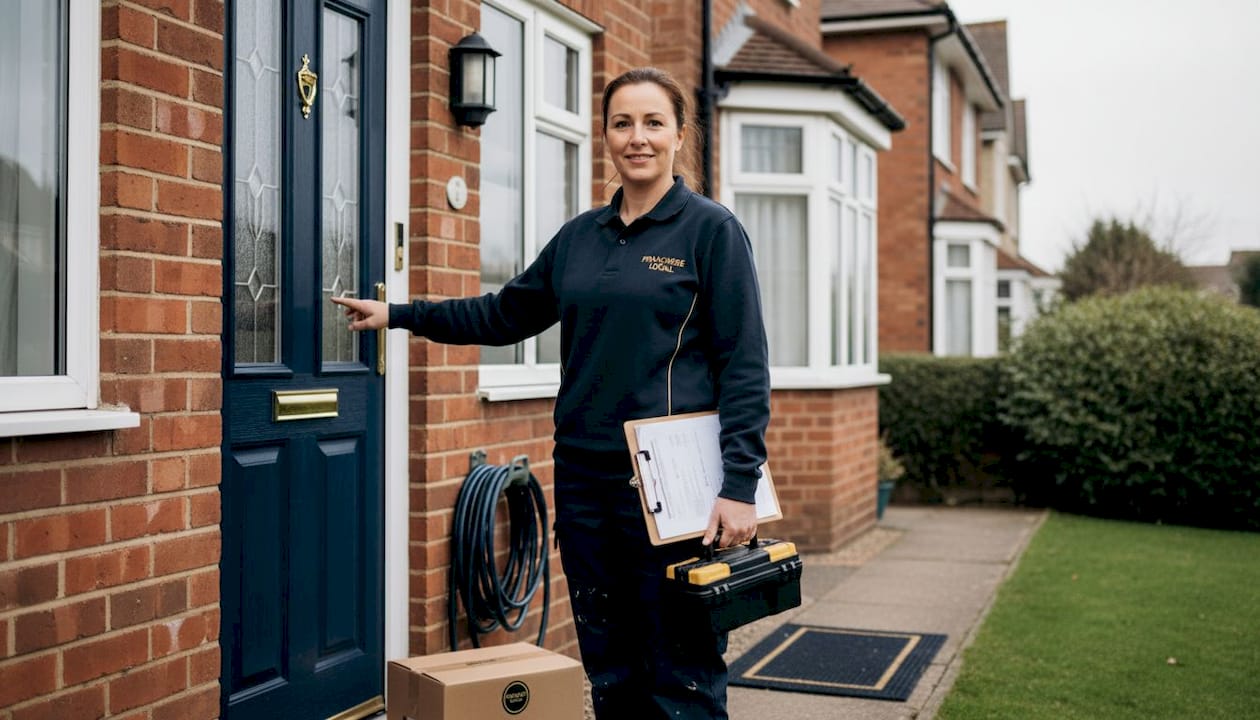
Service-based mobile franchises tend to have lower entry costs because the vehicle itself doubles as your premises. Pet grooming, carpet cleaning, mobile hairdressing, and car repair businesses fall into this category. You arrive, you deliver, you move on.
Food and beverage mobile franchises require more equipment investment but benefit from impulse purchasing and event-based revenue. A well-positioned coffee van at a business park or a mobile catering unit at weekend markets can generate strong daily turnover.
Technology-enabled franchises are an emerging category worth paying attention to. These models use apps or platforms to match service providers with customers in real time, blending the mobile format with digital infrastructure. Explore UK mobile app franchise examples if this model appeals to you.
Retail and product-based mobile franchises include operations like flower delivery franchises. Companies such as OnlyRoses offer branded luxury product delivery through a franchised network, combining prestige branding with a mobile fulfilment model.
| Sector | Typical investment | Flexibility | Brand support |
|---|---|---|---|
| Pet services | £10,000 to £30,000 | High | Moderate |
| Food and beverage | £20,000 to £60,000 | Moderate | Strong |
| Automotive services | £15,000 to £50,000 | High | Moderate |
| App-based delivery | £5,000 to £25,000 | Very high | Strong |
| Luxury retail delivery | £20,000 to £45,000 | High | Very strong |
Key characteristics that make a mobile franchise worth considering include:
- Low or no fixed premises costs
- A proven route-to-market through brand recognition
- Included training and operational systems
- A defined and protected territory
- Strong repeat customer potential
For inspiration, looking at profitable franchise examples in the UK helps you benchmark realistic earnings against investment levels before you commit.
Operational and logistics essentials for mobile franchisees
Once you have identified a potential mobile franchise fit, it is vital to understand what is really involved in running your business day to day, especially around logistics.
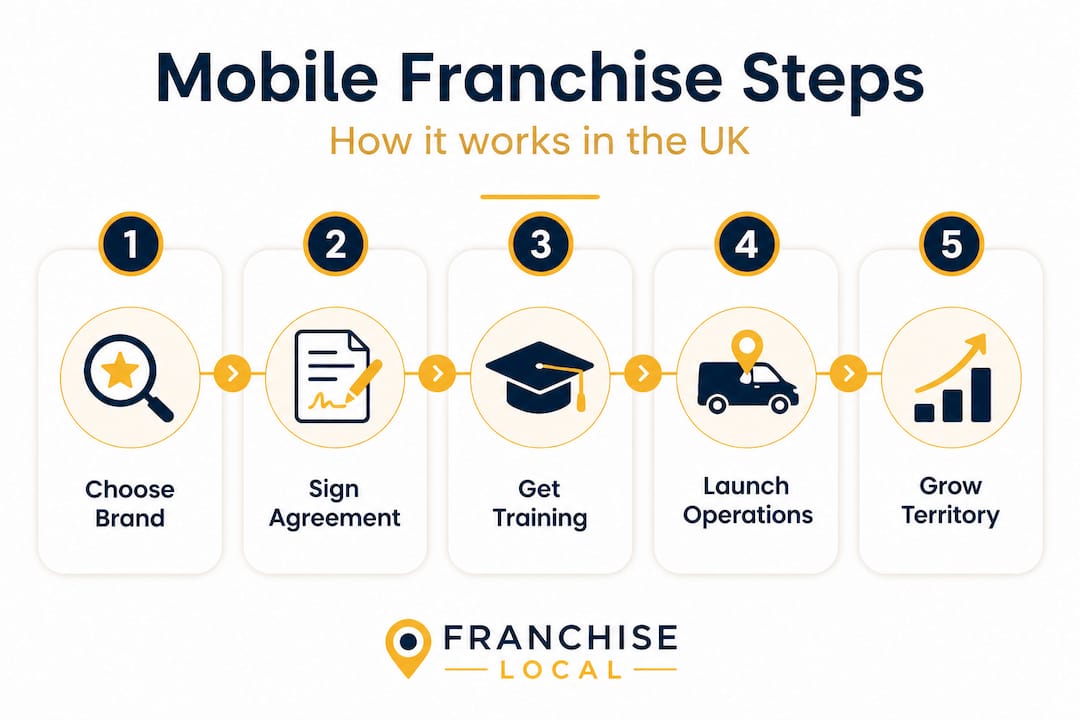
The operational reality of a mobile franchise is significantly different from sitting behind a counter. Your income depends directly on how efficiently you move, schedule, and deliver. Mobile franchise operations typically rely on logistics and field-operations systems, including routing, scheduling, and dispatch, because the business outcome depends on delivering jobs to customers across locations.
Here is a practical breakdown of what drives day-to-day performance:
- Route planning: Minimise dead miles between jobs. Even a 15-minute reduction in daily travel time compounds into significant cost savings over a year.
- Scheduling software: Use digital tools to book appointments, send reminders, and reduce no-shows. Most established franchisors provide this as part of their system.
- Vehicle maintenance: Your van or unit is your most critical asset. Downtime costs you revenue directly. Build a maintenance schedule into your weekly routine.
- Fuel and running costs: Track these obsessively. They are your most variable overhead and directly reflect your routing efficiency.
- Customer communication: Same-day confirmation messages and post-visit follow-ups build loyalty and generate reviews, which drive future bookings.
“The business outcome depends on delivering jobs to customers across locations — logistics and operational systems are not optional extras, they are the engine of a mobile franchise.”
For more on optimising mobile franchise operations, the key is treating every route like a retail layout: thoughtfully designed to maximise conversion and minimise wasted movement.
Pro Tip: Calculate your jobs-per-day target before you launch. If your average job generates £80 in revenue and your break-even point is £200 per day, you need at least three completed jobs before you start earning. Knowing this figure transforms your scheduling from guesswork into a measurable system.
There are UK-specific factors worth noting. Urban franchisees face parking restrictions, congestion charges in cities like London, and higher fuel costs. Rural franchisees enjoy lower congestion but face longer travel distances between jobs. Neither is better or worse, but each demands a different operational model. Reviewing guidance on mobile operations from operators who have navigated these trade-offs gives you a more realistic view of daily challenges.
Pros and cons of mobile franchising
Now that you understand what is demanded operationally, you are in a position to weigh up the real-world benefits and downsides of going mobile through a franchise.
The genuine benefits include:
- Lower startup investment: No lease, no shop fit-out, no retail display costs. Your investment goes into the vehicle, equipment, and franchise fee.
- Geographic flexibility: You are not tethered to foot traffic patterns. You can serve customers across your entire territory.
- Brand credibility from day one: You start trading with a recognised name, established systems, and often a customer base waiting for you.
- Scalability through additional vehicles: Many mobile franchisees grow by adding a second van and operator rather than opening a second location.
- Work-life balance potential: You schedule your jobs, which gives you more control over your working hours than a fixed-premises model often allows.
The real drawbacks you should not overlook:
- Ongoing royalty fees reduce your margins: Ongoing fees and restrictions on autonomy can reduce margins and flexibility compared with running an independent business.
- You operate within a defined system: You cannot rebrand, change pricing, or introduce new services without franchisor approval. This is the deal, and it is not always comfortable for entrepreneurially minded people.
- Contract lock-in: Franchise agreements typically run for five to ten years. Exiting early is costly and complicated.
- Territory limitations: Your growth ceiling is determined by your territory. A poorly defined or overpopulated territory severely limits your income potential.
“Franchising can involve trade-offs: ongoing fees and restrictions on autonomy can reduce margins and flexibility compared with running an independent business.”
Understanding why franchises succeed often comes down to how well-matched the franchisee is to the system they have bought into. Equally, reviewing franchise pitfalls in the UK reveals that many failures stem from inadequate due diligence before signing rather than poor performance after launch. Resources like GeneMatrix also demonstrate how franchise models are expanding across sectors, each with its own risk and reward profile.
A fresh perspective: what most new UK franchisees miss about mobile business
Balancing the pros and cons is important. But here is the deeper reality few aspiring franchisees appreciate when it comes to truly thriving with a mobile format.
Most people buy a mobile franchise thinking they are buying brand strength. They are actually buying a set of operational systems and a support structure. The brand gets you your first few customers. Your logistics, your communication, and your ability to consistently deliver on time are what keep them coming back and what drive referrals.
The “just follow the system” advice you hear at franchise discovery days is not wrong, but it is incomplete. The franchisees who outperform their peers are not the ones who follow the system most faithfully. They are the ones who master the operational nuances the franchisor’s manual glosses over: how to route efficiently during school run hours, how to turn a late arrival into a loyal customer through excellent communication, how to schedule a mix of high-value and quick jobs to maximise daily revenue.
Here is the uncomfortable truth: mobile franchising rewards operational intelligence more than salesmanship. A charming franchisee who cannot route efficiently or manage their vehicle costs will underperform a methodical operator who is obsessive about punctuality and job-per-day metrics.
The other thing most new franchisees miss is the psychological weight of working alone in a van. There is no office, no colleagues, no shared atmosphere. Some people thrive in this environment. Others find it isolating within six months. Understanding why franchises fail in the UK shows that franchise exit often reflects a misalignment between lifestyle expectations and operational reality rather than a flawed business model.
Ask yourself honestly: do you want to work independently and move around, or do you prefer collaborative environments? The answer tells you more about mobile franchise fit than any financial projection.
Your next steps: explore UK mobile franchise opportunities
Armed with fresh perspective, you are ready to explore your best-fit options and put insights into action. Franchiselocal.co.uk is the UK’s dedicated franchise directory, built specifically to match aspiring business owners with the right opportunity at the right investment level. Start by reviewing UK franchising fundamentals if you want to strengthen your broader understanding before committing to a specific model. When you are ready to search by format, the listings for mobile app franchises for sale are a strong starting point for technology-enabled opportunities. For the full range of sectors, investment levels, and operational models, explore the full UK franchise directory and filter by mobile or van-based opportunities to find listings that match your budget and lifestyle goals.
Frequently asked questions
What is the main difference between mobile franchising and traditional franchising?
Mobile franchising enables you to deliver goods or services directly to customers rather than operating from a fixed high-street location, fundamentally changing your cost structure and working pattern. Traditional franchising typically requires you to trade from a fixed premises such as a shop, kiosk, or office.
Do I need special licences or permissions for a mobile franchise in the UK?
While there is no dedicated franchise law in the UK, you may need vehicle licences, local council permits, food hygiene certificates, or sector-specific permissions depending on what your franchise delivers. Always check with your franchisor and local authority before launching.
How much do mobile franchise businesses typically cost to start?
Investment varies widely, but mobile formats generally cost less than high-street alternatives because there is no shop lease or fit-out required. Service businesses such as pet grooming vans or mobile mechanic units often start from as low as £10,000, while food and beverage units can reach £60,000 or more.
What operational challenges are unique to mobile franchising?
Managing scheduling, route planning, and real-time customer communication are the central challenges. Mobile franchise success depends on delivering jobs efficiently across locations, so logistics competence is as important as the service itself.
What are common drawbacks of choosing a mobile franchise?
Franchisees face ongoing fees and restricted autonomy that can reduce profit margins compared with independent business ownership, along with contract lock-in periods that make early exit expensive and complex.