

Franchise brand storytelling is defined as a strategic communication process that shifts a franchise’s focus from product features to purpose-driven narratives, creating emotional connections with prospective franchisees. The British Franchise Association recognises that 100% of the franchise value proposition depends on prospective franchisees understanding and trusting the brand’s mission before investing. That is a striking figure. It means no amount of financial data or operational detail will convert a serious prospect unless the story behind the brand lands first. Understanding what is franchise brand storytelling is, therefore, not optional for franchise owners and marketers. It is the foundation of effective franchise marketing.
What is franchise brand storytelling and why does it differ from traditional branding?
Franchise brand storytelling operates in a category of its own. Traditional brand storytelling targets consumers making low-risk purchasing decisions. Franchise storytelling, by contrast, targets individuals considering a life-changing financial commitment. The Franchising Centre describes this as B2F communication, meaning Business-to-Franchisee, a model distinct from both B2B and B2C because it must invite long-term partnership rather than a single transaction.
The psychological stakes are entirely different. A consumer buys a product and moves on. A franchisee signs a legal agreement, invests their savings, and commits years of their working life. The narrative must therefore do far more than inform. It must build trust, demonstrate shared values, and make the prospect feel genuinely seen.
The most common mistake franchisors make is placing the brand at the centre of the story. Brands that speak “at” rather than “to” franchisees experience lower engagement and weaker recruitment results. The correct approach positions the franchisee as the hero and the franchisor as the guide. Think of it this way: your brand is not Luke Skywalker. Your brand is Yoda. The franchisee is the one with the adventure ahead.
Key differences between franchise and traditional brand storytelling:
- Audience motivation: Consumers seek satisfaction; franchisees seek purpose, income, and belonging.
- Decision timeline: Consumer purchases take minutes; franchise decisions take months.
- Emotional depth required: Franchise narratives must address fear, ambition, and identity, not just desire.
- Relationship duration: The story must sustain a multi-year partnership, not a one-off sale.
Pro Tip: Before writing a single word of your franchise brand narrative, ask yourself: does this story make the prospective franchisee feel like the protagonist? If the answer is no, start again.
The four pillars of a compelling franchise brand story
A reliable framework for building a franchise brand narrative rests on four pillars: people, place, plot, and purpose. Each pillar serves a distinct function, and together they form a story that is both consistent and emotionally resonant.
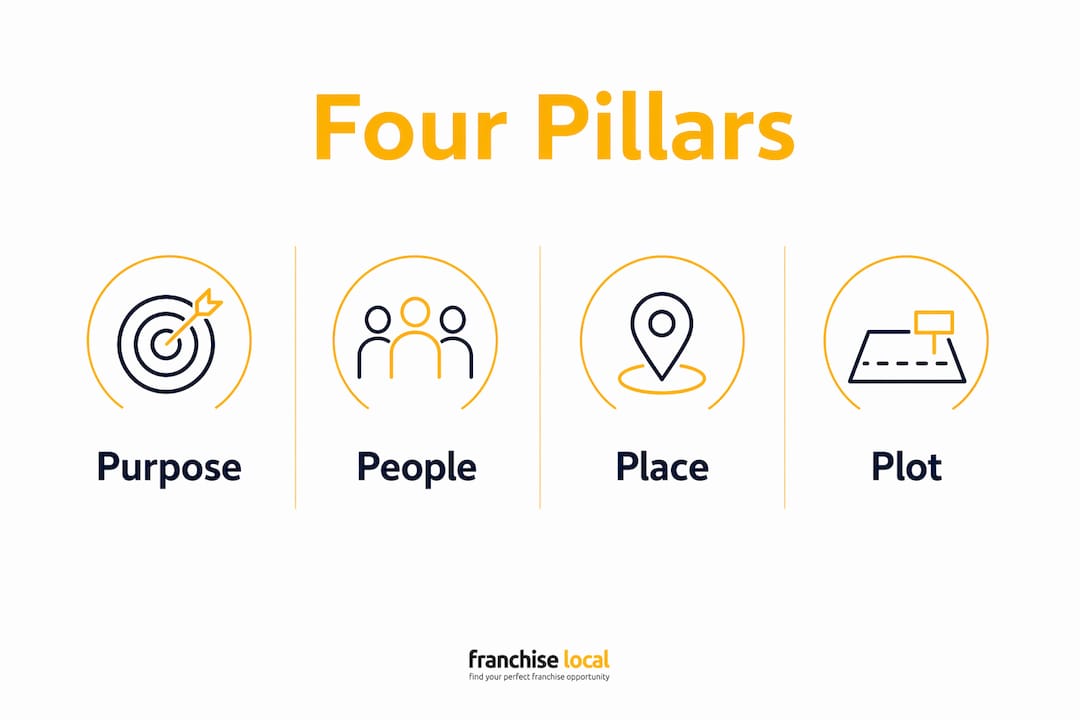
1. People
People are the most persuasive element in any franchise story. Franchisee testimonials, staff profiles, and customer accounts all humanise the brand. The key is diversity. A single success story from a former corporate executive tells one type of prospect that this works. A story from a former teacher, a single parent, or a recent graduate tells a far wider audience the same thing.
2. Place
Place grounds the story in reality. Showing how a franchise operates in a specific local community makes the opportunity feel tangible. It answers the unspoken question every prospect asks: “Could this work where I live?”
3. Plot
Plot is where most franchise narratives fall short. Brands default to highlight reels: record-breaking revenues, rapid expansion, award wins. Honest narratives showing obstacles convert prospects from “interested” to “ready to sign.” The plot must include the struggle, not just the triumph.

4. Purpose
Purpose is the “why” behind the brand. It is the reason the franchise exists beyond profit. Defining this clearly is the foundation of the entire storytelling process. A brand that cannot articulate its purpose cannot build a narrative that lasts.
| Pillar | Core question it answers | Common mistake |
|---|---|---|
| People | Who does this work for? | Featuring only one type of franchisee |
| Place | Where does this work? | Keeping stories generic and location-free |
| Plot | How did they get there? | Omitting challenges and setbacks |
| Purpose | Why does this brand exist? | Confusing mission with marketing slogans |
A centralised brand style guide should codify all four pillars, along with tone, values, and approved language. Every franchisee location must mirror this guide to maintain trust and recognition across the network.
Pro Tip: Run a “purpose audit” before finalising your style guide. Ask five current franchisees to describe the brand’s purpose in one sentence. If the answers vary wildly, your purpose statement needs sharpening before it goes into any recruitment material.
What are the most damaging storytelling pitfalls in franchising?
Knowing what to do matters. Knowing what to avoid matters just as much. These are the pitfalls that most consistently damage franchise recruitment and brand trust.
- Brand-centred narratives: Placing the franchisor’s achievements at the heart of every story alienates prospects. They are not looking for a brand to admire. They are looking for a brand to join.
- Over-polished content: Glossy videos and flawless testimonials feel staged. Franchisee stories that include challenges and real journeys convert at higher rates than polished highlight reels alone.
- Inconsistent messaging across locations: When individual franchise locations communicate differently, the brand loses coherence. A prospect who sees conflicting tones or values across different touchpoints loses confidence in the network as a whole.
- Ignoring the digital experience: Serious franchise prospects expect the quality and detail of major online retailers in recruitment content. A thin website with no testimonials and vague values will lose serious leads before a conversation even begins.
- Treating storytelling as a one-off task: Brand narratives require regular updating. Franchisee circumstances change, markets shift, and new stories emerge. A static narrative becomes stale and loses its power to connect.
“Authenticity is the highest currency in franchise storytelling. People buy from those they feel connected to. A story that includes real struggle, real doubt, and real resolution builds the kind of trust that no polished brochure ever can.”
The role of brand reputation in franchise success is directly tied to how consistently and honestly a brand tells its story. Reputation is not built by marketing claims. It is built by the accumulated weight of authentic human stories told well and told consistently.
How to implement franchise brand storytelling: a step-by-step approach
Knowing the theory is one thing. Putting it into practice across a franchise network is another. These steps provide a clear path from concept to consistent execution.
-
Define your purpose. Write a single, clear statement explaining why your franchise exists beyond profit. Test it with current franchisees. If it does not resonate with the people already inside the network, it will not attract those outside it.
-
Identify your audience segments. A career changer in their 40s needs a different story than a recent graduate. Map out two or three distinct prospect profiles and identify which franchisee stories will resonate most with each.
-
Build a brand style guide. This document should cover tone of voice, approved terminology, narrative pillars, and visual standards. A consistent communications strategy across all digital touchpoints builds familiarity, loyalty, and advocacy over time.
-
Collect diverse franchisee stories. Interview franchisees at different stages: those who are new, those who are established, and those who have faced setbacks. Ask specifically about the hardest moments. Those answers are your most valuable content.
-
Produce content in multiple formats. Written case studies work for some audiences. Video testimonials work for others. Short social media clips, podcast appearances, and webinars each reach different segments of your prospect pool. The power of storytelling across formats significantly deepens emotional engagement and brand recall.
-
Audit your digital presence. Your website, social media profiles, and recruitment materials must all tell the same story. Check that your purpose statement, franchisee testimonials, and brand values appear consistently across every channel. A strong franchise website presence is not optional. It is where most prospects form their first impression.
-
Measure and adapt. Track which stories generate the most enquiries, the longest time on page, and the highest conversion rates. Replace underperforming content with fresher, more specific narratives. Storytelling is not a campaign. It is an ongoing practice.
Pro Tip: Video is the single most effective format for franchise storytelling. A two-minute video of a franchisee describing their first difficult year, and how they came through it, will outperform a ten-page brochure every time. Invest in quality audio before quality visuals. Viewers forgive average picture quality. They will not forgive poor sound.
Authenticity in branding is not a trend. It is the foundation of trust and growth for any franchise that wants to attract committed, well-matched partners rather than impulsive enquiries.
Franchiselocal: find UK franchise opportunities that match your story
Franchiselocal connects prospective franchisees with hundreds of UK franchise opportunities across every industry and investment level. If the principles of franchise brand storytelling have clarified what kind of opportunity you are looking for, the next step is finding brands whose purpose aligns with yours. Franchiselocal features curated listings across sectors including networking franchises, business services franchises, and financial business franchises, each with detailed information to help you evaluate fit before you make contact. Use the directory to find brands that tell their story clearly and consistently. That clarity is itself a signal of a well-run franchise.
FAQ
What is franchise brand storytelling?
Franchise brand storytelling is a strategic communication process that uses purpose-driven narratives to build emotional trust with prospective franchisees. It shifts the focus from product features to the “why” behind the brand, positioning the franchisee as the hero of the story.
How does franchise storytelling differ from standard brand storytelling?
Franchise storytelling is B2F communication, targeting individuals making significant financial and personal commitments rather than consumers making low-risk purchases. The emotional depth, decision timeline, and relationship duration required are all substantially greater.
Why do polished franchise stories sometimes fail to convert?
Overly polished stories feel staged and reduce trust. Honest narratives that include setbacks and real challenges convert prospects more effectively because they demonstrate authenticity and build genuine credibility.
What are the four pillars of a franchise brand story?
The four pillars are people, place, plot, and purpose. Each addresses a distinct question prospects ask, and together they form a narrative framework that is both consistent and emotionally compelling across all channels.
How do I keep storytelling consistent across multiple franchise locations?
A centralised brand style guide that codifies tone, values, narrative pillars, and approved language is the standard solution. Every franchisee location should mirror this guide to maintain brand coherence and prospect trust across the network.