

Choosing where and how to invest in a franchise can feel overwhelming, especially when initial costs range from £15,000 to £350,000 depending on sector and size. For aspiring entrepreneurs in the UK, setting clear objectives and budget boundaries is the first step to avoiding wasted time and costly mistakes. This guide shows you how to pinpoint your investment criteria, compare different industries and operational models, and make informed decisions based on your personal goals and financial reality.
Step 1: Define your investment criteria and objectives
Before you commit any money to a franchise opportunity, you need to get crystal clear on what you’re actually looking for. This step separates the serious investors from those who drift into franchise ownership without direction. Your investment criteria form the foundation for every decision that follows, and getting this right now will save you months of wasted time exploring unsuitable opportunities.
Start by doing an honest assessment of your financial position. How much capital can you realistically invest without jeopardising your personal finances or existing commitments? This isn’t just about your savings account. Consider what you can borrow, what investors might contribute, and crucially, what buffer you need for working capital once the business launches. Many franchisees discover too late that they’ve stretched their finances too thin on the initial investment, leaving nothing for the first few months of operation when cash flow often runs negative. Look at your personal skills and interests as well. Are you naturally suited to customer-facing work, or do you prefer operational and administrative tasks? Do you have experience in the industry you’re considering, or will you be starting completely fresh? Your honest answers here will point you towards franchises that actually fit your strengths rather than fighting against them every single day.

Next, define what success looks like for you specifically. Setting clear goals for profitability, growth potential, and brand alignment is where most franchise investors gain their competitive advantage. Are you looking for a steady income stream that replaces your current salary, or are you hunting for aggressive growth and multiple units? Do you want to be hands-on in the business, or do you prefer to hire managers and step back? Your lifestyle matters too. Some franchises demand sixty-hour weeks; others can run with part-time involvement. Some require a high street premises with customers walking through the door, whilst others operate beautifully from a home office or mobile setup. Think about the time horizon as well. Are you building something to run for the next five years, or are you positioning for a sale in three years? Each of these objectives shifts which franchise models make sense for you.
Take time to write these criteria down. Not in your head, but on actual paper or in a document. Something shifts when you force yourself to articulate your boundaries and goals. You’ll discover contradictions you didn’t know existed. You’ll realise what truly matters and what you thought mattered but actually doesn’t. This written clarity becomes your filter. When franchise opportunities land on your desk, you’ll compare them against these criteria instead of getting swayed by slick marketing or compelling founder stories.
Professional tip Write your investment criteria in a simple one-page document that includes your budget range, your preferred industry or operational model, your lifestyle requirements, and your financial success targets. Keep this document handy and reference it every time you evaluate a new franchise opportunity.
Step 2: Research UK franchise sectors and available models
Now that you’ve clarified what you’re looking for, it’s time to explore the actual landscape of franchise opportunities available across the UK. This research phase transforms your investment criteria from abstract wishlist into concrete options you can evaluate and compare. You’ll discover which sectors align with your goals, which operational models fit your lifestyle, and where real opportunities exist rather than where you assumed they might be.
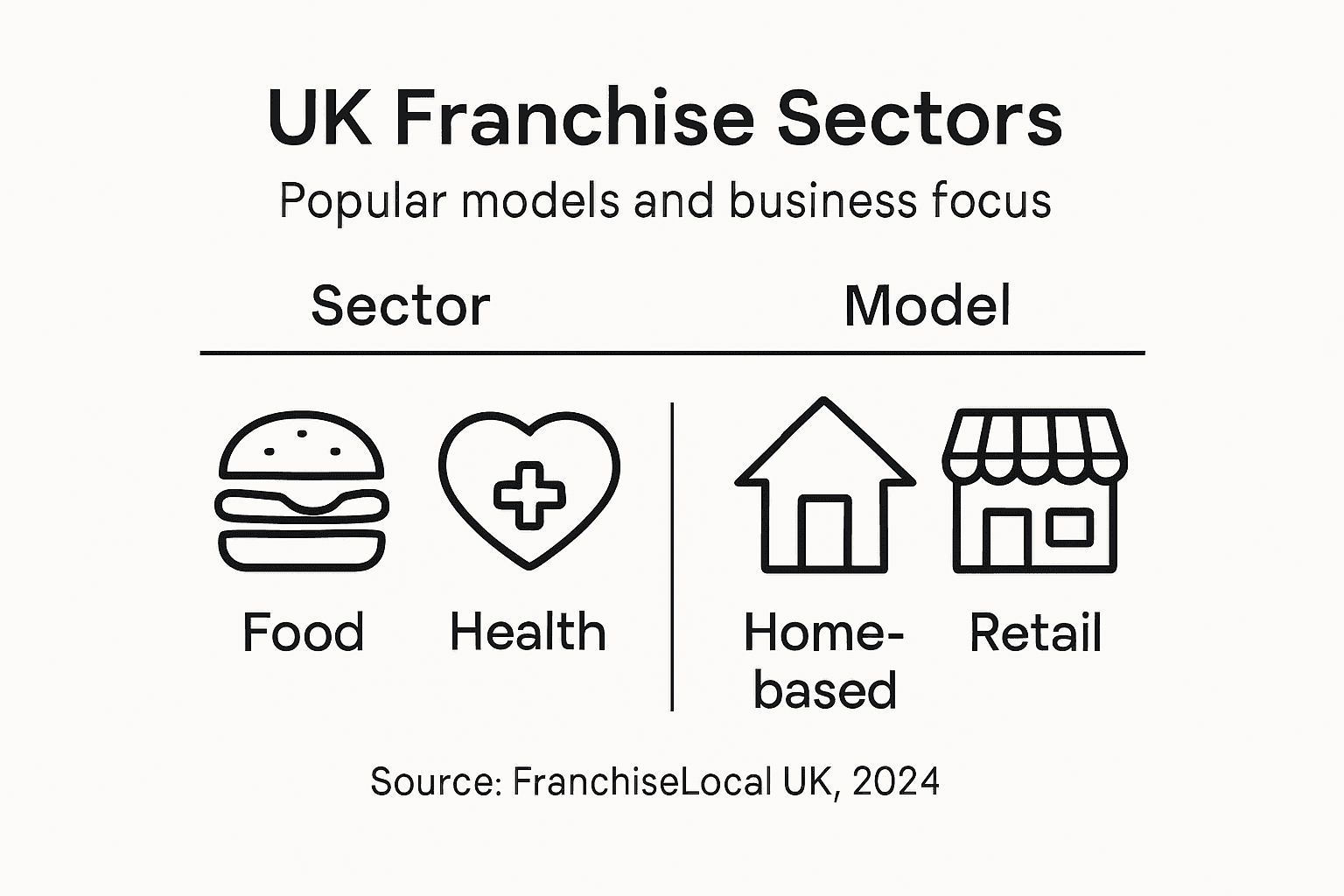
Start by understanding the different franchise models available, as they fundamentally shape how you’ll operate and what returns you can expect. Some franchises operate from high street locations with foot traffic and walk-in customers. Others run beautifully from home offices or mobile setups, which appeals to people seeking flexibility without the overhead of commercial premises. Still others operate hybrid models where you manage a network of sub-franchisees rather than running the business yourself. Some franchises involve product-based work like manufacturing or distribution, whilst others centre entirely on providing services. Each model carries different risk profiles, time commitments, and income potential. A home-based franchise might require just twenty hours weekly but generate modest returns, whilst a high street location might demand sixty hours but offer significantly higher revenue potential. Understanding these distinctions matters enormously because choosing the wrong model for your circumstances sets you up for constant friction and regret.
Next, explore the sectors that genuinely interest you. The UK franchise market spans hospitality and food service, professional services like accountancy and recruitment, retail and personal care, childcare and education, fitness and wellness, home services, and dozens of other industries. Rather than approaching this randomly, narrow your focus based on your investment criteria. If you want limited daily involvement, professional services franchises or recruitment often work well. If you’re seeking a lifestyle business where you build community, fitness or personal care franchises might resonate. If you want scalability and growth potential quickly, food service or established retail concepts often move faster. Spend time genuinely exploring each sector. Read about industry trends, speak with existing franchisees, understand the competitive landscape, and assess whether you actually want to spend years in that sector. Money isn’t everything, and choosing a sector you find tedious destroys your motivation long-term.
Use this research phase to identify specific franchise brands that match your criteria. Look at the investment ranges they require, the support they provide, the training they offer, and the track record of their existing franchisees. Check how long they’ve been operating, how many franchisees they have, and critically, whether their franchisees actually seem satisfied or whether you notice patterns of complaints. Create a shortlist of five to ten franchises that genuinely appeal to you and that meet your financial and lifestyle requirements. This shortlist becomes your focus area for deeper investigation and due diligence in the coming steps.
Here’s a concise comparison of common UK franchise models and their typical business impact:
| Franchise Model | Typical Time Commitment | Investment Range | Business Impact |
|---|---|---|---|
| High Street | 40–70 hours weekly | £50,000–£350,000 | High overhead, greater revenue |
| Home-Based | 15–30 hours weekly | £5,000–£25,000 | Flexible, lower initial returns |
| Mobile | 20–40 hours weekly | £10,000–£60,000 | Low fixed costs, scalable |
| Network/Management | 30–50 hours weekly | £20,000–£150,000 | Leadership focus, variable returns |
| Product-Focused | 35–60 hours weekly | £25,000–£200,000 | Inventory required, B2B/B2C mix |
| Service-Based | 20–45 hours weekly | £10,000–£150,000 | Recurring revenue, client-driven |
Professional tip Create a comparison spreadsheet listing your shortlisted franchises with columns for investment required, ongoing fees, support offered, operational model, and sector. This simple tool helps you spot patterns and quickly compare options when you’re overwhelmed with information.
Step 3: Assess franchise costs and funding options
This step requires you to look honestly at the money involved and where it’s actually coming from. Franchise costs vary enormously depending on what you’re buying into, and understanding the complete financial picture prevents nasty surprises later. You’ll map out everything you need to invest and explore realistic funding routes that don’t overextend your financial security.
Start by breaking down what you’re actually paying for. Franchise costs in the UK range from £15,000 to £350,000 depending on sector, brand, and size, and these costs include initial franchise fees paid to the franchisor, equipment purchases, fit-out costs for your premises, initial marketing spend, and often working capital to keep operations running before you turn profitable. The franchise fee itself is just one component, typically ranging from three thousand to fifteen thousand pounds. Equipment and fit-out can dwarf the franchise fee on high street operations. A coffee shop franchise might require forty thousand pounds just for espresso machines, counters, and signage. A home-based recruitment franchise might need just five thousand pounds for office setup. Marketing budgets vary wildly too. Some franchisors include launch marketing support, whilst others expect you to fund your own opening campaign. Then there are the ongoing costs: royalties typically range from five to ten percent of monthly turnover, and these continue indefinitely as long as you own the franchise. Many franchises also charge monthly service fees or marketing levies. Calculate all of this clearly so you understand not just the initial hit to your bank account, but what you’ll owe monthly once you’re operating.
Next, explore your funding options honestly and thoroughly. Personal savings remain the most straightforward route if you have enough capital sitting aside, but most people need to combine multiple sources. Bank loans remain accessible for proven business plans, though interest rates and lending criteria have tightened. Government-backed schemes deserve serious attention. The UK government supports small and medium-sized enterprises through various funding initiatives, and prospective franchisees should explore government-backed loans, enterprise schemes, and regional funding alongside traditional banking options. These schemes often come with better interest rates and more flexible terms than commercial loans. Some franchisors offer in-house financing or partnerships with lenders, making it simpler to access funds, though you’ll pay a premium for this convenience. You might also consider bringing in business partners or investors who contribute capital in exchange for equity or profit sharing. Each funding route carries different implications for your ownership and control, so evaluate them against your goals.
Build a detailed budget spreadsheet that lists every cost you can identify. Research specific franchises you’re interested in and contact them directly for their disclosure documents, which outline costs comprehensively. Talk to existing franchisees about actual costs versus disclosed costs, as there’s often a gap. Be conservative in your estimates. Factor in that you might need six to twelve months of living expenses covered while the business ramps up, because most franchises don’t generate full profit immediately. Once you have this complete picture, match it against your available funding and determine whether you can genuinely afford this opportunity without jeopardising your personal financial security. If you can’t fund it comfortably, that’s valuable information. Either keep saving, look at lower-cost franchise opportunities, or reconsider your franchise timeline.
Professional tip Request the franchisor’s Item 19 financial performance representations if available, contact at least three existing franchisees in your target franchise to discuss actual costs versus projections, and build your budget with a twenty percent contingency buffer for unexpected expenses.
Step 4: Evaluate shortlisted franchises for suitability
You’ve narrowed your options down to a manageable handful. Now comes the critical work of examining each franchise thoroughly to determine which genuinely fits your circumstances, capabilities, and ambitions. This evaluation phase separates wishful thinking from realistic opportunities and protects you from expensive mistakes.
Start with the franchise disclosure document. Every reputable franchisor provides this legal document, which outlines everything you need to know about their franchise opportunity. Read it carefully. Yes, it’s dense and sometimes tedious, but this document contains essential information about fees, ongoing royalties, training provided, support systems, termination clauses, and your obligations. Pay particular attention to the financial performance representations if included. These show actual earnings from existing franchisees and give you realistic profit expectations. Many franchisees skip this step and regret it later. Understand all contractual obligations before you commit money, as these terms govern your relationship with the franchisor for the duration of your franchise agreement, typically five to ten years. Look for clauses about renewal options, exit terms, non-compete restrictions, and what happens if you want to sell your franchise. Thoroughly reviewing the franchise disclosure document, understanding contractual obligations, and comparing franchises on cost, support, and market position ensures you make an informed decision aligned with your objectives.
Next, assess the franchisors support systems and training. A franchise is theoretically designed to reduce your risk because you’re buying a proven business model with built-in support. But the reality of that support varies enormously. Contact existing franchisees directly and ask frank questions. How responsive is the franchisor when you need help? Do they provide ongoing training or just initial onboarding? What marketing support do they offer? Have they helped you troubleshoot problems? Are there hidden issues they wish they’d known before investing? Most franchisees are surprisingly willing to be honest if you approach them respectfully. Ask about their actual profitability, not just what the franchisor claims. Compare the franchises you’re evaluating on these support dimensions. A slightly more expensive franchise with exceptional support might deliver better results than a cheaper one where you’re largely on your own. Consider your own experience and background too. If you’ve never worked in retail and you’re looking at a retail franchise, you’ll need strong franchisor support. If you’re already experienced in your target industry, you might need less hand holding. Honesty matters here because buying a franchise that requires expertise you don’t have creates constant frustration.
Take time to visit franchise locations if possible. See the business operating in real conditions. Talk to customers. Watch how staff interact with the brand. Does it feel like what you want to build? Sometimes the reality of a franchise differs from marketing materials. A food franchise might look appealing in glossy brochures but feel chaotic and exhausting when you spend an afternoon watching it operate. Your gut feeling matters alongside data and research. Once you’ve thoroughly evaluated your shortlisted franchises, rank them based on how well they match your investment criteria and personal objectives. You should have one clear winner and potentially one or two runners up. If nothing feels genuinely right, go back and research more options. Forcing yourself into a franchise you’re not enthusiastic about usually ends badly.
Professional tip Create a suitability scorecard rating each shortlisted franchise across ten criteria including cost, support quality, profitability potential, lifestyle fit, and growth opportunities, then score each on a scale of one to ten and compare totals to see which franchise ranks highest against your specific priorities.
Step 5: Verify legal and contractual commitments
Before you sign anything or hand over money, you need to understand exactly what you’re committing to legally and financially. The franchise agreement is a binding contract that will govern your relationship with the franchisor for years, and getting this wrong can trap you in an unfavourable situation with limited escape routes. This step protects your investment and ensures you know precisely what you’re responsible for.
Start by obtaining all legal documents from the franchisor. These include the Franchise Agreement itself, the Franchise Information Memorandum, financial disclosures, and any related legal documents. UK franchising lacks specific legislation but is regulated under contract law, intellectual property, and competition laws, with the franchise agreement outlining rights, obligations, fees, and termination clauses. Read these documents thoroughly, though you’ll likely need professional help to interpret them fully. The Franchise Agreement specifies how long your franchise lasts, what happens at renewal, what fees you pay and when, what you can and cannot do with the business, how disputes are resolved, and what grounds allow the franchisor to terminate your agreement. Pay particular attention to non-compete clauses, which often restrict what you can do after your franchise ends. Some agreements prevent you from working in the same sector for two or three years after you leave. Understand territorial rights as well. Are you the sole franchisee in your area, or can the franchisor open another franchise down the street? This dramatically affects your market potential. Look at training and support obligations too. What must the franchisor provide, and what happens if they fail to deliver? Understanding these terms upfront prevents nasty surprises later.
Next, hire a specialist franchise solicitor to review the agreement independently. This isn’t an unnecessary expense but essential protection. A solicitor can identify unfair terms, flag risks you might miss, and potentially negotiate better conditions. They can explain what each clause means in plain language and advise whether the agreement is typical for your franchise sector or unusually restrictive. They can also check compliance with UK contract law and ensure your intellectual property protection is adequate. Careful legal review and negotiation with professional advice reduce risks and protect your investment rights and obligations over the franchise term. Many franchisors expect some negotiation on contract terms, particularly around exit clauses and renewal options. Your solicitor can help identify where flexibility might exist. Ask your solicitor specific questions about anything that worries you. What happens if the business underperforms? Can you exit early? What are the financial penalties? What if the franchisor changes the business model mid-contract? What support can you genuinely count on, and what happens if they fail to provide it?
Also verify that the franchisor aligns with the British Franchise Association Code of Ethics if they’re a member. This code promotes fairness and transparency and provides recourse if disputes arise. Check the franchisor’s track record. Have they had legal disputes with franchisees? Do they have pending litigation? Have previous franchisees pursued complaints? This information can sometimes be found through company searches or by contacting trading standards. Once your solicitor has reviewed everything and you understand all commitments, you’re ready to make your final decision. Don’t rush this step even if you’re excited about the opportunity. Franchise agreements are legally binding, and getting trapped in a poor agreement causes years of regret.
Professional tip Ask your solicitor to produce a one-page summary of key terms and risks, highlighting any clauses that differ from typical franchise agreements, and request the franchisor provide a list of franchisees you can contact who have recently exited their franchise agreements.
The table below highlights key legal clauses typically found in UK franchise agreements and their significance:
| Clause Type | What It Covers | Impact on Franchisee |
|---|---|---|
| Franchise Term | Duration of agreement | Defines business planning window |
| Renewal Options | Conditions for extending agreement | Affects growth and exit strategy |
| Territorial Rights | Geographic exclusivity | Determines local market access |
| Non-Compete | Restrictions after contract ends | Limits future career choices |
| Training & Support | Obligations of franchisor | Shapes daily operational support |
| Termination Conditions | Rules for ending agreement | Risks and penalties involved |
Step 6: Secure your chosen franchise and plan next steps
You’ve done the research, evaluated your options thoroughly, and verified the legal commitments. Now comes the moment when you move from planning to action. This step involves finalising your franchise agreement, securing funding, and establishing the operational foundation for your new business. You’re transitioning from prospective franchisee to actual business owner.
Start by confirming everything with the franchisor. Ensure they’ve received all required documentation, any deposits or fees are clearly documented, and you have written confirmation of what they’ve committed to provide. Review your franchise agreement one final time with your solicitor to ensure no changes occurred since your last review. Clarify your start date and what the onboarding process looks like. Will you attend training at their head office? How long does it last? When does it begin? What support will you receive in those crucial first weeks? Ask about the UK franchise application process and any specific steps required to activate your franchise officially. Some franchisors have formal application processes that must be completed before you can begin trading. Understand these requirements and timelines completely so you’re not caught off guard.
Next, arrange your funding. If you’re using bank loans, government-backed schemes, or investor capital, complete those applications now. Don’t assume everything will go smoothly or quickly. Bank approvals can take weeks, sometimes months. Government-backed schemes have specific application windows and processing times. If you’re bringing in business partners or investors, ensure all agreements are documented properly and that everyone understands their role, financial contribution, and what they’ll receive in return. Avoid handshake deals or vague understandings with partners. Get everything in writing to prevent future disputes that destroy both your business and your relationships. Set up your business legally as well. Register your business name, decide whether you’ll operate as a sole trader, partnership, or limited company, and register with appropriate tax authorities. Your accountant or business advisor can guide these decisions based on your circumstances.
Create an operational plan for your launch period. Developing a comprehensive franchise business plan covers your financial projections, marketing strategy, staffing needs, and operational timelines. This plan becomes your roadmap for the first year. Map out when you need premises secured, when staff should be hired and trained, when marketing begins, and what your revenue targets are. Identify your key milestones. When do you expect to open? When should you reach break-even? When will you hit profitability targets? These milestones help you track progress and spot problems early. Set up your financial systems now too. Open a business bank account separate from your personal finances. Implement bookkeeping software or hire an accountant. Understand your tax obligations and set aside money for tax payments. Many new franchise owners underestimate their tax liability and get caught short later.
Finally, prepare yourself mentally for the journey ahead. Franchise ownership is rewarding but demanding, especially in the first year. You’ll face unexpected challenges, moments of doubt, and probably some regrets about decisions you’ve made. That’s normal. Connect with other franchisees in your network, either through the franchisor or independently. These relationships become invaluable when you need advice, encouragement, or someone who understands what you’re going through. Be ready to work harder than you’ve ever worked, at least initially. Most successful franchisees invest substantial personal effort in their first year to establish solid foundations. Accept that some of your initial plans will need adjustment as reality unfolds. Stay flexible, keep learning, and remain focused on your long-term objectives.
Professional tip Create a detailed launch timeline working backwards from your target opening date, assigning responsibility for each task and setting completion deadlines, then review this timeline monthly with your franchisor to ensure alignment and catch potential delays early.
Find Your Ideal Franchise Investment with Confidence
Navigating the complexities of franchise investment requires clarity on your financial limits, lifestyle needs, and business goals as outlined in this comprehensive guide. Many face challenges such as balancing upfront costs with ongoing fees, selecting the right operational model, and assessing the true support a franchisor provides. Your investment criteria and suitability must align perfectly with the franchise opportunity to avoid costly mistakes and stress.
That is where FranchiseLocal excels as your essential UK franchise directory. Our platform empowers you to filter franchise listings by investment range, industry sector, and your preferred operational model like high street or home-based businesses. This precision search helps narrow your options to those meeting your unique goals and financial comfort level avoiding wasted time or resources on unsuitable prospects. Explore detailed franchise profiles that include fees, training offerings, and proven track records enabling you to make an informed choice.
Ready to take decisive action in securing the right franchise opportunity? Visit FranchiseLocal today to explore our carefully curated franchises and use our powerful search tools to match your criteria perfectly. Begin your journey now and build your business with the confidence that the right opportunity is within reach.
Frequently Asked Questions
What criteria should I define before investing in a franchise?
Before investing, clearly outline your investment criteria, including budget, preferred industry, and lifestyle requirements. Assess your financial position and determine what success looks like for you to narrow down suitable opportunities.
How can I research franchise sectors and models available to me?
Begin by exploring the different franchise models, such as high street or home-based franchises, to see which fits your investment criteria. Create a shortlist based on your interests and operational preferences, then investigate specific franchise brands that align with your goals.
What costs should I consider when evaluating a franchise opportunity?
Consider all costs involved, including initial franchise fees, equipment purchases, fit-out costs, and ongoing royalties or service fees. Create a comprehensive budget to assess these expenses realistically and determine what you can afford.
Why is it important to evaluate shortlisted franchises for suitability?
Evaluating shortlisted franchises helps you assess their alignment with your investment criteria, personal capabilities, and goals. Conduct thorough due diligence, including reviewing the franchise disclosure document and speaking with existing franchisees for insights into support and profitability.
How do I verify legal and contractual commitments before signing a franchise agreement?
Obtain and carefully review all legal documents, including the franchise agreement and franchise information memorandum. It’s also wise to consult a franchising solicitor for professional advice on the terms and risks outlined in these documents before proceeding.