

For most UK buyers, the best low cost franchise options are Franchise Local (the recommended starting point for comparing opportunities by investment band), The Travel Franchise, Oven Wizards, ComputerXplorers, No Letting Go, Clear Brew, Auditel, and Ed-Heads. Each sits in a different investment band and suits a different operator profile.
The British Franchise Association notes that a franchise fee under £10k can still generate significant turnover with full founder commitment. Razzamataz, for example, carries a franchise fee under £10,000 with potential for significant turnover. Low cost does not mean low effort.
Quick shortlist by investment band:
- Franchise Local (free to search) — best for comparing every option before committing to any
- Ed-Heads / ComputerXplorers (under £10k) — education models for teachers or IT professionals
- ColourWheel / Micropet / Trendsignal (under £10k) — creative, pet care, and B2B field research
- Oven Wizards / Clear Brew / Access4Lofts (£10–20k) — hands-on service rounds with territory
- The Travel Franchise / No Letting Go (£10–30k) — home-based sales or property services
- Auditel (£20–50k) — B2B cost-reduction consultancy for experienced professionals
How we selected and ranked these affordable franchise opportunities
The shortlist above was built using a consistent set of criteria, applied to listings on Franchise Local and cross-referenced with BFA guidance and franchisor disclosure materials.
Selection criteria:
- Investment band — initial franchise fee and realistic total start-up cost
- Ongoing fees — royalty percentage and any marketing levy
- Business model — home-based, territory, or location-bound
- Accreditation and references — BFA membership or equivalent trust signals, franchisee testimonials
- Support and training — quality and depth of onboarding and ongoing operational support
- Time to break even — typical earnings band and payback window by model type
Figures used are typical published ranges. Verify all costs directly with the franchisor before committing, as fees and structures change.
Low cost franchise options grouped by investment band
Under £5,000
1. Franchise Local
Franchise Local is a UK franchise directory and marketplace, free for buyers to use. It is not a franchise itself, but it belongs at the top of any shortlist because it lets you filter by price band, industry, and region before you spend a penny. The advanced search covers franchises under £30,000 through to higher investment tiers, with curated low-cost lists and direct enquiry forms linking you to franchisors.
2. Ed-Heads
Ed-Heads is a tutoring and education franchise aimed at school-age students. Delivery happens in schools or community venues, so premises costs are minimal. Teachers and tutors with an existing curriculum background tend to get up to speed quickly. The structured brand and materials reduce the time spent building resources from scratch.
3. Trendsignal
Trendsignal is a consumer research and mystery shopping franchise, typically home-based with territory or contract work. It suits buyers interested in B2B services and field research who want flexible hours without fixed premises.
Under £10,000
4. ComputerXplorers
ComputerXplorers delivers children’s coding and computing tuition through after-school programmes. Classes run from schools or community venues, keeping overheads low. Owners with education or IT backgrounds can scale by adding class slots without proportional cost increases.
5. ColourWheel
ColourWheel is a creative or event-based franchise concept with typically low equipment costs. Revenue depends on bookings and local marketing, so operators who are comfortable promoting themselves locally tend to perform best.
6. Micropet
Micropet is a small-pet care and mobile grooming franchise. Scheduling is home-based, though some equipment and vehicle costs apply. Animal-care enthusiasts who want a flexible route to market without fixed premises will find this model practical.
£10,000–£20,000
7. Oven Wizards
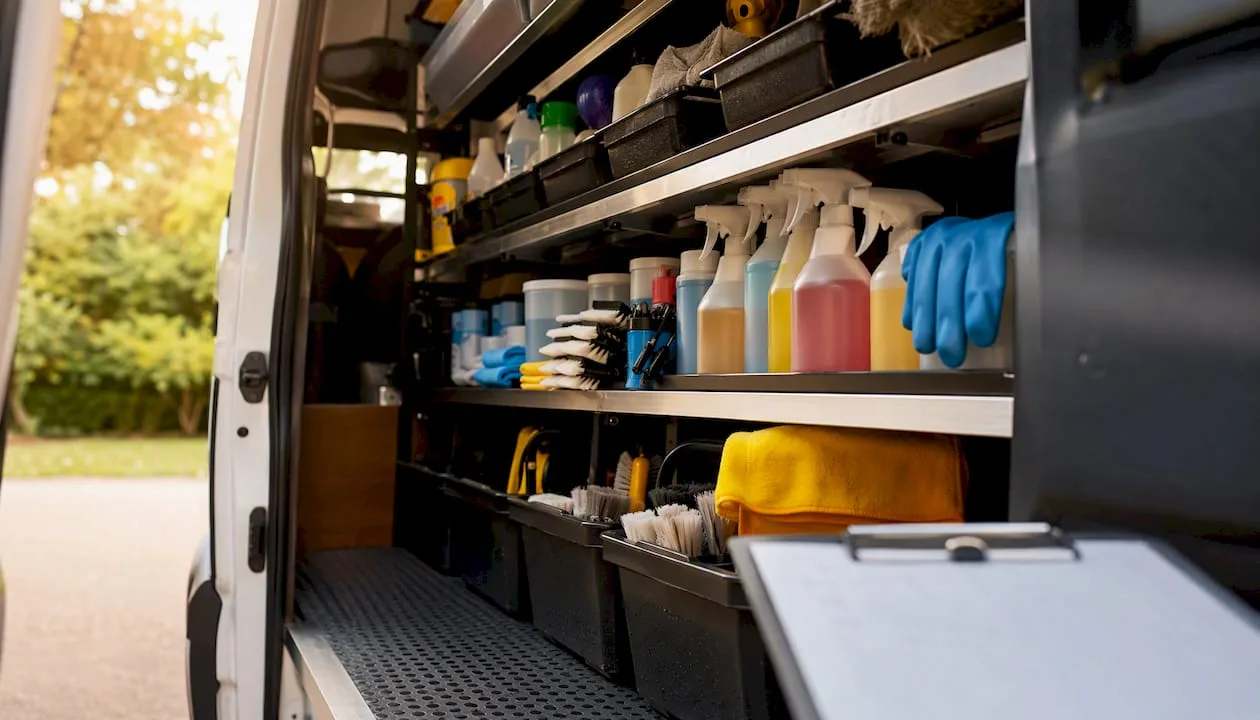
Oven Wizards is a domestic oven cleaning franchise with relatively low start-up costs. It requires no commercial premises; the main variable costs are a vehicle and cleaning kit. Hands-on operators building local service rounds in a defined territory are the natural fit.
8. Clear Brew
Clear Brew operates a mobile beer line cleaning model for pubs and hospitality venues. Fixed premises costs are low, but equipment and licensing costs apply. Operators who prefer a recurring-revenue service model with a clear client base will find the structure straightforward.
9. Access4Lofts
Access4Lofts is a property services franchise focused on loft and access installations. It suits tradespeople or entrepreneurs who want a territory-based model in property services. Some tools and modest storage are required.
£10,000–£30,000
10. The Travel Franchise
The Travel Franchise covers home-based travel sales and advisory roles. Premises overheads are low because the model runs from home. It suits sellers or advisors who want to build a client book in travel without a high-street shop.
11. No Letting Go
No Letting Go provides property management and lettings support services on a territory model. Income potential tracks local property market activity, which makes it a stronger fit in areas with active rental markets.
£20,000–£50,000
12. Auditel
Auditel is a cost-reduction consultancy franchise targeting business clients. It is home-based, with travel and client meeting costs as the main variables. Revenue comes from retained contracts, which creates recurring income once a client base is established. Experienced sales or consultancy professionals targeting B2B leads are the intended audience.
At-a-glance comparison of low cost franchise categories
Key trade-offs to understand:
- Lower initial fees often mean more owner hours in the early months, particularly in service-round models such as Oven Wizards or Clear Brew.
- Home-based models reduce premises costs but can slow scaling if territory or client capacity is limited.
- B2B models like Auditel and Trendsignal typically have longer sales cycles but generate recurring revenue once contracts are in place.
What total costs include and a realistic break-even timeline
Total start-up cost equals franchise fee plus equipment, training, initial marketing, working capital, and VAT, plus premises or vehicle costs where the model requires them. The BFA’s financial guidance is clear that buyers should budget for all components, not just the headline franchise fee.
Cost components to budget for:
- Franchise fee — the licence to operate under the brand
- Equipment and kit — vehicles, tools, or technology depending on the model
- Training — initial onboarding; some franchisors charge separately
- Initial marketing — launch materials, local advertising, and territory setup
- Working capital — cash to cover operating costs before revenue stabilises
- VAT — applicable on most franchise fees and ongoing services
- Premises or vehicle — relevant for mobile or territory-based models
Royalty rates typically range from 6% to 14% of gross revenue, structured as a percentage or fixed monthly fee. Bridgewater Home Care, cited by the BFA, charges a 6% + VAT monthly service fee as an example of how ongoing fees are commonly structured.
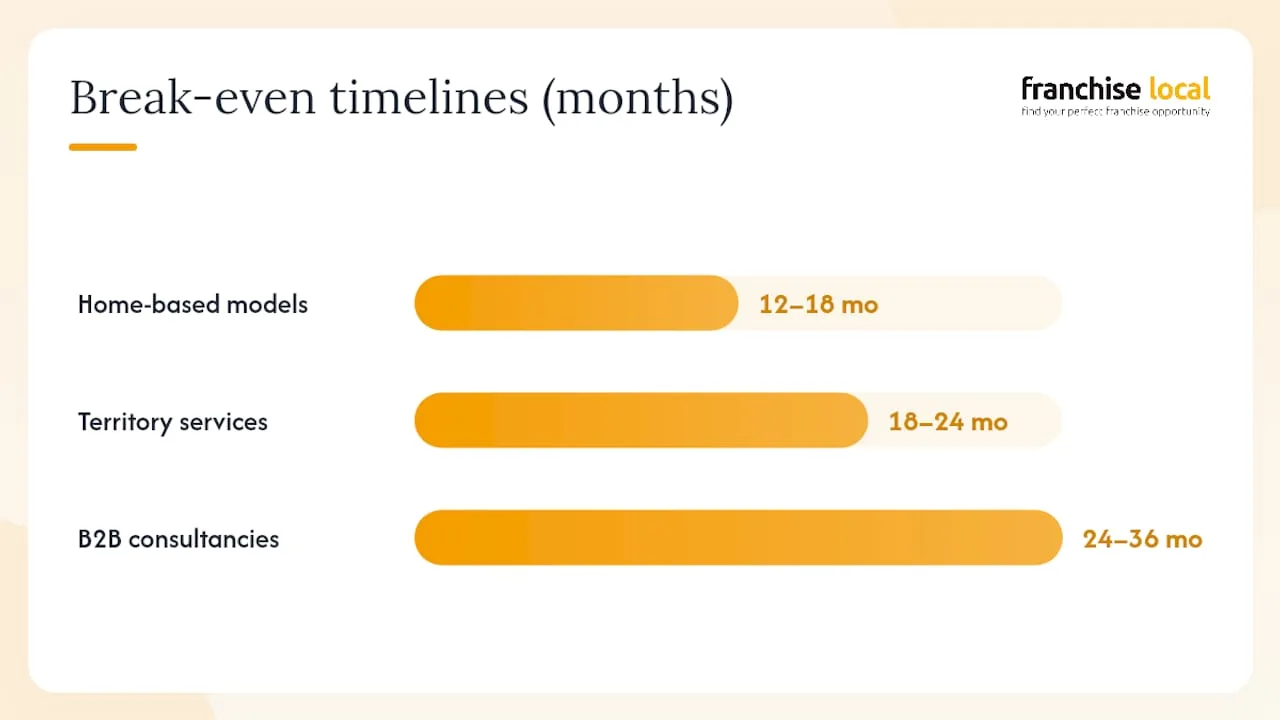
Typical break-even windows: home-based and low-overhead models (Ed-Heads, Trendsignal, Micropet) often reach break-even within 12–18 months. Territory service models (Oven Wizards, Clear Brew, Access4Lofts) typically target 18–24 months. B2B consultancy models (Auditel) may take 24–36 months to build a retained contract base, though individual results vary.
Banks commonly expect a personal contribution of around 30% of total start-up costs. Preparing a transparent business plan with a 12-month cashflow forecast significantly improves loan outcomes.
Due diligence checklist: essential questions to ask before you commit
The single most important step is speaking to existing franchisees beyond the names the franchisor supplies. Ask for a full list of past and present franchisees and contact several yourself.
Documents to request:
- Financial performance representation or franchise performance statement (FPR/FPS)
- Full franchise agreement, including renewal, exit, and restraint clauses
- Operations manual (at least a summary before signing)
- A full list of current and former franchisees
Questions to ask the franchisor (drawn from the BFA’s recommended checklist):
- What is the total investment including working capital, not just the franchise fee?
- What are the ongoing royalty and marketing levy percentages?
- Did you pilot the model before franchising it, and can you share company-owned performance data?
- What financial projections do you provide, and on what basis?
- What support is available after the initial training period?
Red flags to watch for:
- High franchisee turnover in the network
- Vague or unavailable financial performance data
- Verbal promises that do not appear in the written agreement
- Restrictive exit or renewal terms that limit your options
NiBusinessInfo recommends requesting a full past and present franchisee list specifically to detect turnover patterns that signal model or support problems.
Pro Tip: Get a specialist franchise solicitor to review the franchise agreement before you sign. Verbal promises are not enforceable; renewal, exit, and restraint clauses can significantly affect your long-term position. A specialist review typically costs a few hundred pounds and is money well spent.
How to fund a low cost franchise in the UK
Personal savings are the simplest route and satisfy the personal contribution requirement most lenders expect. Beyond savings, the main options are bank loans, specialist franchise finance, and franchisor-arranged finance.
Funding routes:
- Personal savings — no interest costs, full control, but ties up personal capital
- High-street bank loans — NatWest, HSBC, Lloyds, and Barclays all have dedicated franchise lending teams; they typically expect around 30% personal contribution and a credible business plan
- Specialist franchise finance brokers — arrange funding across multiple lenders and understand franchise-specific risk profiles
- Franchisor finance — some franchisors offer deferred payment or in-house finance on the franchise fee; check terms carefully
- Government-backed schemes — the British Business Bank’s Start Up Loans programme offers loans up to £25,000 for eligible new businesses
Lenders assess franchise applications differently from standard business loans because the franchisor’s track record reduces perceived risk. A well-prepared business plan with realistic projections and a 12-month cashflow forecast is the most practical step you can take before approaching any lender.
Pro Tip: Use Franchise Local’s investment filters to shortlist only opportunities within your confirmed funding ceiling before approaching lenders. Presenting a lender with a specific, costed opportunity is more persuasive than a general enquiry about franchise finance.
Why Franchise Local is the practical starting point for your search
Franchise Local is a leading UK franchise directory that lets buyers find and compare low investment franchises by industry, price band, and region from a single platform. Every franchise featured in this article has a listing or profile on the directory.
Platform features that help buyers:
- Price filters — search by investment band from under £10k through to higher tiers, including a dedicated franchises under £100k curated list
- Industry filters — browse by sector including cleaning, tutoring, pet care, property, and business services
- Region filters — narrow results to your target territory or local area
- Curated landing pages — dedicated pages for many of the franchises in this article, with key details and direct enquiry forms
- Resource guides — practical articles on due diligence, costs, and the franchise process
The directory is free for buyers to use. You can shortlist multiple opportunities, compare investment bands side by side, and submit enquiries directly to franchisors without committing to anything.
Final recommendation: how to pick your first low cost franchise
Match your investment band, preferred business model, and support requirements to the options that genuinely fit your situation. A home-based model suits buyers with limited capital; a territory service model suits hands-on operators who want a defined patch; a B2B consultancy model suits professionals with an existing network.
Three clear next steps:
- Shortlist three options from the investment band that matches your confirmed funding ceiling, using Franchise Local’s price filters to narrow the field.
- Request the FPR/FPS (financial performance representation or statement) from each franchisor and compare realistic earnings projections, not headline figures.
- Speak to at least three franchisees from each shortlisted brand, including at least one who joined in the past 12 months and one who has been operating for three or more years.
Browse the full UK franchise directory on Franchise Local to start your shortlist today.
Franchiselocal: the smarter way to compare low cost opportunities
Every franchise on this list is searchable on Franchiselocal, the UK’s leading franchise directory. Rather than researching each brand separately across multiple sites, Franchiselocal puts every option in one place, filterable by price, industry, and location.
For buyers with a clear budget ceiling, the business services franchise listings and B2B franchise category are particularly strong starting points for home-based and low-overhead models. The directory is free to use, with no obligation to enquire until you are ready.
Search low cost franchise opportunities on Franchiselocal and filter by your investment band to build your shortlist now.