

A pet care franchise lets you run a local pet business under an established brand, with training, systems and a protected territory supplied by the franchisor. In return you pay an initial fee and, usually, an ongoing percentage of turnover. This guide covers the models on offer in the UK, what you pay, the licensing rules that apply, the checks to run before you sign, and when an existing pet business owner should think twice about franchising their own brand.
It is written for people at the start of a search. You do not need franchise experience, only a clear idea of how much time and money you can commit.
The main types of pet care franchise
Pet care franchising is not one business. The day-to-day work, the start-up cost and the regulation differ sharply between models. Most UK opportunities fall into five groups.
| Model | What you do | Typical set-up | Main regulatory point |
|---|---|---|---|
| Dog walking and pet visits | Walk dogs and visit pets at home while owners are out | Home based, vehicle, a few staff or contractors | Insurance, park permissions |
| Pet sitting and home boarding | Look after pets in your home or the owner’s | Home based, suitable property | Boarding licence in England |
| Dog grooming | Groom dogs in a salon or mobile van | Premises or converted van, specialist skills | Local business and premises rules |
| Day care and kennel-style boarding | Run a site where dogs stay for the day or overnight | Premises, staff, higher investment | Licensing and welfare standards |
| Pet food and supplies delivery | Sell and deliver food to regular customers | Van, stock, round of customers | Trading standards, food-safety rules |
Dog walking, pet visits and pet sitting
This is the entry point for most buyers. Work is local, the equipment is modest and many franchisees start from home. You recruit and manage walkers and sitters as demand grows, so the business shifts from doing the work yourself to managing people and customer relationships.
It suits you if you like the outdoors, are reliable with routine and are willing to build a team. It is less suited to anyone who wants an entirely hands-off investment, because the owner is usually the face of the business with local customers.
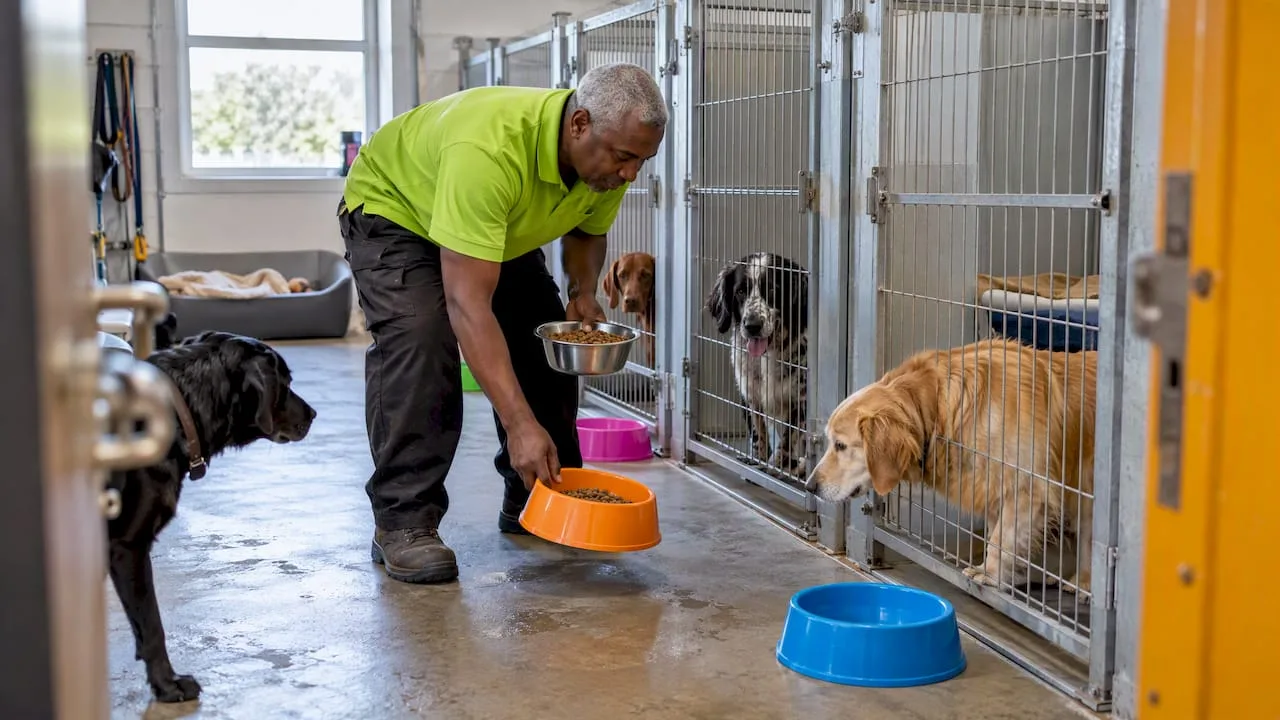
Boarding and day care
Boarding for cats and dogs is licensed. In England, the 2018 licensing regulations introduced local-authority licensing for providing or arranging boarding for cats or dogs. That covers home boarding as well as commercial kennels, so a pet sitting franchise that places animals in your home brings the licence with it.
The set-up cost rises and so does the compliance burden. Expect more staff, insurance and, for premises-based day care, a lease or purchase and a longer lead time before income arrives.
Grooming
Grooming franchises divide into salon and mobile formats. Skills matter here. Check whether the franchisor trains complete beginners or expects you to arrive qualified, and whether you will groom yourself or employ groomers. Mobile vans keep premises costs down but add vehicle, fuel and maintenance costs.
Pet food and supplies
Delivery-led franchises sell food and accessories to a regular customer base on a route. Income comes from repeat orders, which can make cash flow more predictable than casual service work, but you carry stock and vehicle costs and depend on the supplier’s pricing.
What a pet care franchise costs
The sums fall into three groups: the initial franchise fee, the start-up costs the fee does not cover, and the ongoing fees.
Initial fee and what it includes
The initial fee normally buys the right to use the brand and a territory, plus training and launch support. One UK pet care franchisor states that its package includes an exclusive territory, pre-launch training, business set-up and launch support, a marketing launch pack, and access to its systems, policies and resources. That is a useful template: when you compare brands, list exactly what each fee includes and what you must buy separately.
Fees vary widely by model. A home-based walking brand costs far less to join than a day care or grooming-salon concept. Always ask for the current figure in writing, and confirm whether VAT is added.
Costs the fee does not cover
Budget separately for:
- Public liability and, where relevant, employer’s liability and animal-related insurance.
- A vehicle, or vehicle running costs.
- Any licence fees and inspections.
- Equipment, uniforms and software.
- Local marketing beyond the launch pack.
- Working capital to cover you until income covers costs. This is the line first-time buyers most often underestimate.
If you need help raising the money, founder funding and community options sit alongside the usual routes of bank lending and personal savings. Whichever route you choose, ask the franchisor which lenders already know the brand.
Ongoing fees
Most networks charge a percentage of turnover, not of profit. Take one UK example: the network charges a management fee of 10% of turnover, which it says covers ongoing support, training, CPD, marketing and lead generation. Other brands set different rates and bundle different services, so compare what the percentage actually pays for.
A worked example shows why this matters. If your business turns over £60,000 in a year, a 10% fee is £6,000 whatever your profit. If wages, fuel and insurance leave a thin margin in the early months, the fee still falls due. Build the fee into your forecast from the first month, not as an afterthought.
What training and support to expect
Good franchisors do more than hand over a manual. For a pet care brand, look for training in recruitment, marketing, systems, finance and sales conversion, plus animal handling where the model needs it.
As a guide to what a thorough programme looks like, one UK network provides a week-long head-office training programme covering recruitment and operations, marketing and social media, business systems, finance and accountancy, and customer conversion and sales. After launch, it lists online courses, training reviews, webinars, workshops and annual conferences.
When you speak to a franchisor, ask:
- How long is initial training, and where is it held?
- Who supports me in the first 90 days, and how quickly do they respond?
- Is lead generation included, and how many enquiries did a typical new franchisee receive last year?
- What does ongoing training cost, if anything?
- How are franchisee suggestions handled?
Licensing, insurance and animal welfare
Pet care carries legal duties that other franchises do not. Rules differ across England, Scotland, Wales and Northern Ireland, so confirm those that apply in your area with your local council.
Boarding and day care licences in England
If you offer or arrange boarding for cats or dogs, you need a local-authority licence under the 2018 regulations. The government’s statutory guidance on dog kennel boarding says applicants must meet minimum standards, including written procedures for cleaning, feeding, disease control and emergencies. A franchisor with an established model should hand you those procedures in a form your council will accept. Ask to see them before you pay.
Dog walking permissions
Walking does not need a boarding licence, but many councils control commercial walkers in parks. As an example of the type of conditions you may meet, a commercial walking policy at one Surrey park requires public liability insurance of at least £2 million and adherence to a code of conduct. The same policy lets licensed walkers walk up to six dogs at a time. Other councils set different limits, so check the rules for each park and green space in your territory. A territory full of parks that restrict commercial walking is a very different business from one with open access.
Insurance and safeguarding
Ask the franchisor what cover is required and whether a group policy is available. You also handle customers’ keys and enter their homes, so check how the brand vets staff. Our guide to making a franchise inspection ready for DBS checks explains the vetting process in a UK franchise setting.
Franchise regulation itself
There is no single government body that approves every franchise opportunity in the UK, and the British Franchise Association publishes a code of ethics that member brands follow. Our overview of franchise regulation in the UK sets out what franchisors and buyers must know, and our page on BFA accredited franchises explains how to check accreditation status.
How to judge profitability and risk
No honest franchisor can promise you a profit. Your result depends on the territory, how hard you work, how you recruit and how well you handle cash. What you can do is test the franchisor’s claims.
The official guidance from Northern Ireland’s business advice service is a sound checklist: assess the business and its location, the concept’s track record, competition, initial and ongoing costs, training and support, and the franchise agreement. It also warns against relying solely on the information pack: ask questions, look for evidence and speak to franchisees.
Run the numbers yourself
Build a simple monthly forecast with these lines:
- Revenue: number of regular clients multiplied by average weekly spend.
- Direct costs: walker or sitter pay, fuel, supplies.
- Franchise fee: the percentage of turnover.
- Fixed costs: insurance, software, phone, vehicle.
- Your own pay: include it, or the profit figure will mislead you.
Then test it. What happens if you reach only half the franchisor’s example client numbers by month six? Cash flow often hurts before profit does, because wages and fees leave your account before customers’ payments arrive. Card payments, direct debits and invoicing terms all affect this, so consider how you will take payments for a mobile service business and how quickly the money lands.
Speak to franchisees
This is the most valuable hour of your research. Speak to several franchisees, including some who joined recently and, where you can find them, some who have left. Our list of questions to ask UK franchisees covers earnings, support quality and what they wish they had known. For a wider framework, read how to assess franchise risk and our piece on franchise due diligence.
Checks before you choose a brand
The British Franchise Association publishes questions to put to any franchisor. Adapted to pet care, the main ones are:
- Track record. How long has the company been franchising, and did it run a pilot or company-owned operation first?
- Franchisee contact. Will it give you the full list of franchisees, not a hand-picked few?
- Failures. How many franchisees have left or closed, and why?
- Fees. What are the initial fee, ongoing fees, and any supplier or marketing requirements?
- Agreement terms. How long is the term, what are the renewal conditions and what resale restrictions apply?
- Support. What training and ongoing help come with the fee?
- Money. How much working capital will you need, and what are the financial projections based on?
Pet care adds a few of its own: how is the territory defined and protected, what happens if a nearby council restricts commercial walkers, who holds the licence on boarding models, and what animal-welfare incident procedures does the brand require.
If you want a fixed timetable, our 30-day background check plan turns these questions into a schedule. Check the location side with the six location checks for site selection by postcode, and read about franchise scams before you hand over a deposit.
Franchise or independent?
Starting alone costs less up front and you keep every pound of turnover. A franchise costs more and shares revenue, but gives you a tested method, a known name and people to call when something goes wrong.
A franchise tends to suit you if:
- You have little business experience and want a structure to follow.
- You are entering a new area where nobody knows you.
- You value training in marketing, recruitment and finance.
Going independent tends to suit you if:
- You already have a customer base and a reputation.
- You want full control of pricing, branding and services.
- You are uncomfortable with a long agreement and ongoing fees.
Our six checks for weighing franchising pros and cons will help you decide.
Already run a pet business? When to franchise it
Some readers arrive from the other side: they run a good pet care business and wonder whether to franchise it. Do not rush. A business is ready to franchise only if it can be copied by someone else and still make money.
Before you start, make sure that:
- The business is profitable after you pay yourself a fair wage, and in more than one location or territory.
- It runs from written systems, not from your head.
- A newcomer could earn a reasonable return after paying a fee to you.
- You can fund training, support, legal documents and a pilot without starving the core business.
Franchising is the wrong path if the business depends on your personal skill, if margins are too thin to carry a fee, or if you have no appetite for supporting other people’s businesses. A pilot operation, a clear financial structure, and a lawyer experienced in franchise agreements come before recruitment. The animal-welfare and licensing duties described above do not disappear when others operate under your name, so your documented procedures must meet them.
Find a pet care franchise to fit your plans
Franchise Local lists UK opportunities that you can filter by investment level, industry, lifestyle and location, so you can compare home-based, part-time and full-time options side by side. Start with the trending franchise opportunities, browse the full list of top UK franchises, or explore every category on the franchise industries page. When you find a brand you like, send an enquiry through its listing and the franchisor will come back to you.
FAQ
What is the most profitable pet business?
No model is profitable by default. Results depend on territory, pricing, costs and how well you manage cash. Premises-based day care and grooming can earn more per customer but cost more to open, while home-based walking and sitting cost less and take longer to scale. Compare the franchisor’s projections with what current franchisees actually report.
Which franchise is best for beginners?
Home-based, service-led models with full training and a clear support structure are usually the easiest start. In pet care that often means dog walking or pet sitting, provided the franchisor teaches recruitment, marketing and finance as well as animal handling. Check what happens if you need a boarding licence.
How do I open a pet care business?
Decide on the service, write a business plan and check which licences and insurance you need. Then choose between starting independently and joining a franchise. If you franchise, research several brands, speak to their franchisees and have a solicitor read the agreement before signing.
Do I need a licence to run a pet care franchise in England?
It depends on the service. Providing or arranging boarding for cats or dogs needs a local-authority licence, while walking may only need permission to operate in particular parks. Ask your council and the franchisor which rules apply to your territory.
Sources
- The Animal Welfare (Licensing of Activities Involving Animals) (England) Regulations 2018
- Dog kennel boarding licensing: statutory guidance for local authorities
- Commercial Dog Walking Policy, Nonsuch Park
- Assess a franchise opportunity, nibusinessinfo.co.uk
- Questions to ask your franchisor, British Franchise Association
- Franchise FAQs: costs, funding and support
- Buying a franchise FAQs
- How to Buy a Franchise in UK 2026
- PeerFounder
- Payment processing for service businesses