

A coffee shop franchise lets you run your own café under an established brand, using its recipes, systems, training and supplier terms, in return for an initial fee and ongoing payments. In the UK, the real cost depends on the format: a kiosk or mobile unit sits at one end and a full high street café with a fit-out at the other. This guide explains what you are buying, how to budget, what franchisors look for in applicants and how to check an offer before you sign.
If you want to browse while you read, our list of the best coffee shop franchises for sale in the UK shows current opportunities with their investment levels.
What a coffee shop franchise actually involves
When you buy a franchise, you invest in and run your own business under someone else’s proven model. The franchisor supplies the brand, the operating system, training and ongoing support. You supply the capital, the commitment and the day-to-day running of the business. That split is how the British Franchise Association (BFA) describes franchising, and it is a useful way to test any offer: what exactly does the brand provide, and what exactly are you expected to do?
In a coffee business, the brand side usually covers:
- The name, shopfront design and menu
- Recipes, drink specifications and equipment standards
- An operations manual and staff training
- Approved suppliers for coffee beans, milk, food and packaging
- Help with choosing a site and opening the unit
- Marketing, often funded in part by a contribution from every franchisee
Your side covers:
- Paying the initial franchise fee and your own premises and fit-out costs
- Recruiting, rostering and managing the team
- Paying ongoing fees, usually a percentage of turnover
- Following the brand standards, even where you would do things differently
- Keeping the books, tax and compliance in order
You own the individual unit and carry its financial risk. The franchisor does not guarantee your income. That is why the checks later in this guide matter.
Buying a franchise versus franchising your own café
Searches for this topic often mix two different goals. Some readers want to buy a coffee franchise. Others already own a successful café and want to become a franchisor. This guide is written for buyers. If you are the second kind of reader, the basics are different: you need a café model that can be copied, consistent products and customer experience, an operations manual, a franchise agreement, a training programme and the ability to support franchisees. That is a business-building project in its own right, and it needs specialist legal advice before you recruit anyone.
If you are a franchisor or broker who wants your coffee brand in front of buyers, you can list with us. Our franchise industries pages show how buyers search.
Franchise or independent café: which suits you?
Both routes can work. The choice comes down to how much freedom you want and how much risk you are happy to carry alone.
| Factor | Coffee shop franchise | Independent café |
|---|---|---|
| Brand | Established name and customer recognition | You build it from nothing |
| Menu and look | Set by the franchisor | Entirely your decision |
| Start-up knowledge | Training, manual and opening support | You learn and test as you go |
| Ongoing costs | Fees or royalties on top of normal running costs | No royalties, but you fund all marketing and development |
| Suppliers | Often restricted to approved suppliers | Free to negotiate with anyone |
| Exit | Usually needs franchisor approval to sell | You sell on your own terms |
A franchise suits people who want a tested system and are willing to follow it. If you have strong views on what a café should look like and serve, you may find brand rules frustrating. If you have never run a food business, a system and a training programme can shorten the learning curve considerably.
Whichever route you choose, you will need proper business insurance. A café faces risks such as fire, water damage, food-related claims, customer injuries and loss of refrigerated stock. Ask a franchisor what cover it requires, and ask a broker to price it for your actual premises, as the requirement is often part of the franchise agreement.
What a coffee shop franchise costs in the UK
The single most common mistake is looking only at the franchise fee. The total investment is made of several layers, and the ongoing layer matters as much as the upfront one.
| Cost | What to ask |
|---|---|
| Initial franchise fee | What does it cover? Is any of it refundable if the site falls through? |
| Premises | Deposit, rent, rent-free period, lease length, service charge and business rates |
| Fit-out and equipment | Is it built to the franchisor’s specification, and who chooses the contractor? |
| Opening stock and launch marketing | Is a launch package included? |
| Working capital | How many months of losses should you be able to absorb? |
| Ongoing royalty | What percentage, and of which turnover figure? |
| Marketing contribution | Is it a fixed amount or a percentage? |
| Technology and tills | Are monthly system fees charged? |
| Renewal and transfer fees | What is payable at the end of the term or when you sell? |
Why format changes everything
Costs vary widely between formats. One UK coffee brand publishes a typical store build cost of £350,000 to £450,000 and recommends that franchisees hold £100,000 in liquidity for contingency and working capital. That is a large, high-specification store. Kiosks, mobile units, compact coffee pods and home-based coffee ventures cost much less to set up, although they trade on lower footfall. Some founders in the sector argue that sustainable models should lean on lower initial investment and lower overheads, so that a franchisee can realistically make a return without carrying a heavy rent and fit-out burden.
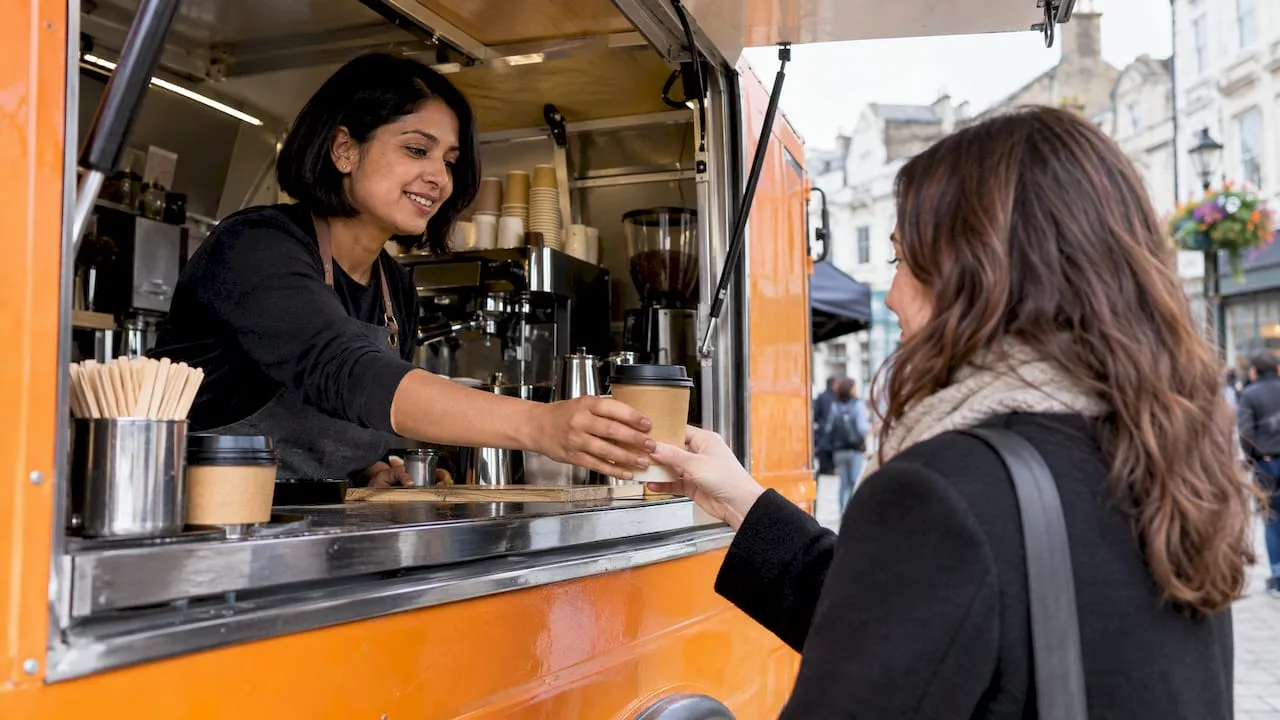
When you compare formats, calculate how many cups, or how much food, you would need to sell each week to cover rent, wages, stock, royalties and your own living costs. If the number looks unrealistic for the location, the format is wrong however good the brand is.
If budget is your first filter, start with our guide to low investment franchises in the UK and our franchise planning toolkit.
Royalties and VAT
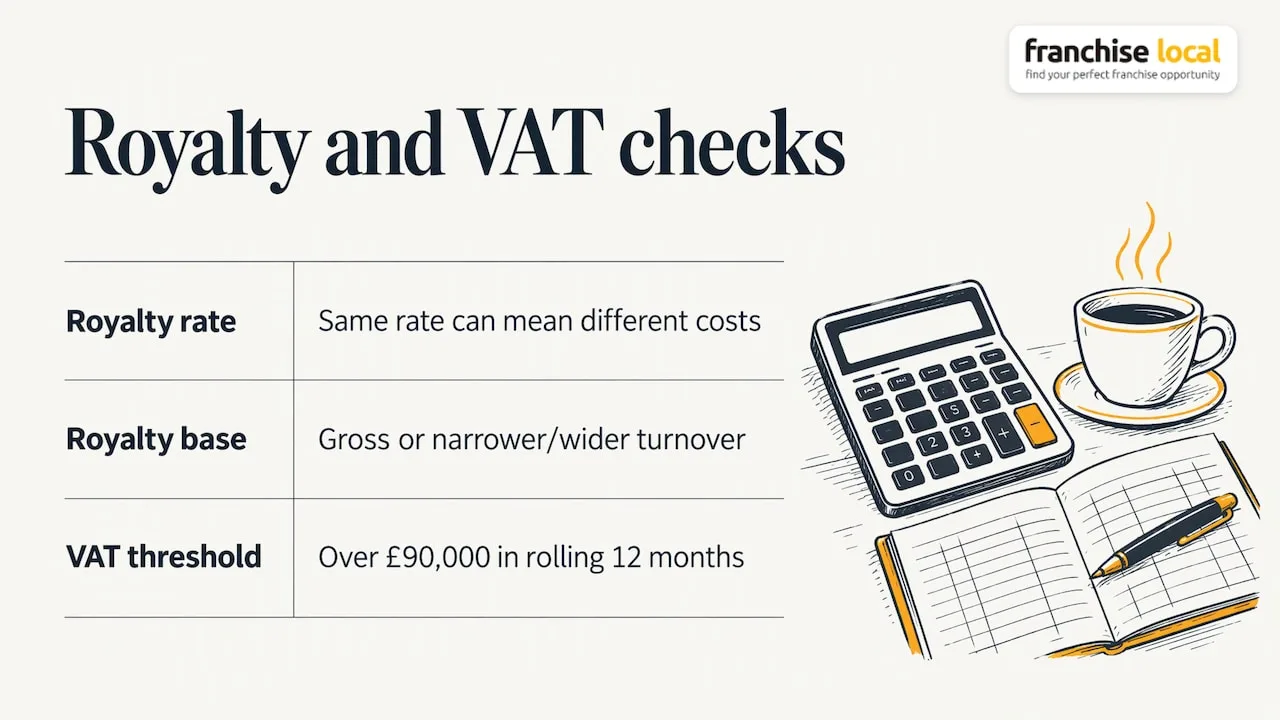
Royalties deserve a close read. Two franchises quoting the same percentage can cost you very different sums if one calculates it on gross sales and the other on a narrower or wider base. A single line in a contract defining turnover can change your annual costs significantly, so ask your accountant to model it with realistic sales figures.
VAT is the other planning point. UK businesses must register for VAT when taxable turnover goes over £90,000 in any rolling 12 months. A busy café can cross that line faster than first-time owners expect, so build VAT into your price list and cash flow plan from the start, and check the current threshold on GOV.UK. Our guide to assessing franchise financials walks through the figures to request and how to read them.
What franchisors expect from applicants
Requirements differ sharply by brand type, and they are worth checking early so you do not spend weeks on a brand that expects a different level of capital or experience.
At the top end, large national café and bakery chains seeking multi-unit partners publish requirements that run into the hundreds of thousands, and in some cases millions, of pounds in liquid assets. They also look for senior food-and-beverage management experience, multi-site experience or the ability to open many stores within a territory. These are development agreements for established operators, not first-time buyers.
At the other end, smaller and emerging coffee brands, kiosks and mobile concepts often welcome first-time business owners. They typically look for:
- Enough capital for the initial investment plus working capital
- Customer service skills and a willingness to be on site, especially in the first months
- Leadership ability and the ability to recruit and keep staff
- A realistic attitude to following the system
- Access to finance, if you are borrowing part of the investment
No previous coffee experience is a barrier with many brands, because training is part of what you pay for. Be wary of any franchisor that does not ask you anything about your finances or background. A good franchisor screens applicants because its brand depends on the quality of its operators.
Choosing the right coffee format for you
Before you compare brands, decide which type of operation fits your life and budget.
- High street or retail café. The highest visibility and the highest costs. Suited to people with substantial capital who want a full-service site.
- Drive-thru. Strong for commuter and roadside trade. Site availability and planning permission are the main hurdles.
- Kiosk, pod or concession. Lower rent and fit-out, often in stations, hospitals, offices or retail parks. Trade depends heavily on the host’s footfall and the concession terms.
- Mobile coffee van or cart. Flexible, with a smaller outlay, covering events, markets and workplaces. You will need street trading or event permissions in the places you work.
- Home-based or part-time models. Coffee-related franchises that run from home, such as delivery, vending or office coffee services, suit people who want to start smaller.
You can see how each format compares in our guides to the best coffee franchises and the best café franchises. To narrow results by location, use our county search.
How to check a coffee franchise offer before you sign
A thorough check takes weeks, not days. Do not let a salesperson set the pace. This is the process we recommend.
- Define your budget and limits. Work out how much you can invest, how much you could afford to lose and how long you can live without drawing a salary from the business.
- Ask for the full cost picture in writing. That means the initial fee, the build or fit-out estimate, royalties, marketing contributions, system fees and renewal costs.
- Study the territory. Look at footfall, competing cafés, parking, commuter patterns and the lease. A strong brand in a weak location still fails.
- Speak to current franchisees. Ask several, not just the ones the franchisor recommends, and speak to former franchisees too. Ask about real profit, hours worked, support quality and what they would do differently.
- Test the support. Find out what training is included, how long opening support lasts, who you call when a machine breaks and how supply problems are handled.
- Understand supplier restrictions. If you must buy from the franchisor or its nominated suppliers, ask how prices compare with the market and how they change.
- Look at the agreement length and exit. Check the term, renewal conditions, resale rights and termination provisions.
- Take professional advice. Use an accountant who knows franchising and a solicitor with franchise experience.
The BFA publishes a list of questions to put to a franchisor. It covers support, existing franchisees, fees, working capital, finance, supplier restrictions, training, agreement length, resale and termination. Work through all of them. Our guide to assessing franchise risk gives a UK-focused framework for weighing the answers.
Warning signs
- Pressure to pay a deposit before you have seen the agreement
- Refusal to put you in touch with franchisees
- Earnings claims with no written basis
- Vague answers about what the royalty is calculated on
- A franchisor with very few or no trading units, but ambitious promises
Reading the franchise agreement
The agreement is the document that governs your business for years. A typical UK franchise agreement covers the licence of the brand’s intellectual property, operating and quality standards, initial and continuing fees, marketing contributions, territory, reporting duties, non-compete clauses, term, renewal, termination and what happens if you sell. The UK has no dedicated franchise statute, so the contract carries most of the weight, and the details matter.
Focus on these points:
- Territory. Is it exclusive? Can the franchisor open another unit, or sell through delivery apps or retail, in your area?
- Fees. Are all of them listed, and can the franchisor increase them during the term?
- Term and renewal. What do you pay to renew, and could the renewal terms be different?
- Termination. What breaches allow the franchisor to end the agreement, and what happens to your investment?
- Transfer and resale. Can you sell the business, and does the franchisor take a fee or have a right of first refusal?
- Non-compete. How long and how wide are the restrictions after you leave?
The BFA advises that prospective franchisees have the agreement reviewed by an experienced franchise solicitor. It also sets a Code of Ethics for its franchisor members, and agreements from member brands are reviewed for compliance with it. Membership is useful information, but it does not replace your own legal advice. For a deeper walk-through, read our guide on how to evaluate franchise agreements and our overview of franchise regulation in the UK.
UK rules to sort before you open
A franchise brand will guide you, but you remain the legal operator of the premises. Plan for these.
- Food business registration. You must register your premises with your local council at least 28 days before you start trading. Registration is free. If you take over an existing café, check what the council needs from you as the new operator.
- Food safety and allergens. You need a food safety management system and trained staff, and you must handle allergen information correctly. Most franchisors provide training and documented procedures, but responsibility sits with the business.
- Licences where they apply. A standard coffee and cake menu does not need a licence of its own, but selling alcohol, serving hot food between 11pm and 5am, or providing entertainment such as live music does. Street stalls, vans and outdoor tables on the pavement have their own local permissions. Ask your council.
- Premises. Check the lease, planning use class, signage consent and any works needed for ventilation, extraction or accessibility.
- Employment law. Contracts, payslips, right-to-work checks, auto-enrolment pensions, holiday pay and minimum wage rules apply to every employee.
- Insurance. Employers’ liability, public liability and property cover are standard for cafés, and a franchisor will usually specify minimums.
- Health and safety. Risk assessments, fire safety and equipment checks are your responsibility.
- Tax. Register as self-employed or incorporate, keep the books, and plan for VAT.
Councils publish their own starting-up guidance for food businesses, and requirements can differ slightly by area, so check with the council covering your premises.
Find your coffee franchise with Franchiselocal
Franchiselocal is a UK directory that helps you search franchise opportunities by investment level, industry, lifestyle and location. For coffee, you can compare coffee shop franchises, look at what is trending now, or view all top UK franchise opportunities to compare coffee against other sectors. It is free for buyers to use. You can also send an enquiry to a franchisor directly from a listing. If you want a broader grounding first, start with the ultimate guide to franchising.
Coffee shop franchise FAQ
How much does it cost to open a coffee shop franchise in the UK?
It depends on the format. Large, fully fitted cafés can require a build budget in the hundreds of thousands of pounds plus working capital, while kiosks, vans and smaller concepts need much less. Always ask for the total investment in writing, including fit-out, working capital and ongoing fees.
Do I need experience to buy a coffee franchise?
Not with many brands. Smaller and emerging coffee franchisors often train first-time owners and look for customer service skills, leadership and enough capital. Large chains seeking multi-unit partners usually ask for substantial food-and-beverage or multi-site experience.
Is a coffee franchise more profitable than an independent café?
Neither is guaranteed. A franchise gives you a tested system and brand recognition but adds ongoing fees, while an independent café keeps all the margin and carries all the development risk. Ask any franchisor for financial evidence you can check with existing franchisees and your accountant.
What do I need to do legally before opening?
Register your food business with your local council at least 28 days before trading, arrange insurance, follow food safety, allergen and employment rules, and apply for any licences your activities need, such as alcohol or late-night food. Have a franchise solicitor review the agreement before you sign.