

A Start Up Loan is a government-backed personal loan of £500 to £25,000 that you can use to launch a franchise. A franchise loan is not a separate product. It is business lending, usually from a bank or specialist lender, arranged around the cost of buying into a franchise brand. For a small, low-cost franchise, a Start Up Loan can cover the lot. For a larger brand, you will probably combine your own savings with a bank loan, and sometimes a Start Up Loan on top.
This guide explains how the two routes differ, what each costs, what lenders look for, and how to decide. Your search starts with the budget, so we begin there.
The short version: two routes, one goal
People search for “start-up loans vs franchise loans” as if they were two products on a shelf. In practice they are two ways of describing where the money comes from.
- Start Up Loans are a specific UK government-backed scheme. The rules are the same for everyone: a fixed rate, a fixed ceiling and a standard application.
- Franchise loans is a loose label for any lending used to buy a franchise. It covers bank term loans, secured loans, asset finance and specialist franchise lending. Terms vary by lender, by brand and by you.
A franchisee can use either, or both. The scheme says franchise applicants are eligible if they meet its criteria, so the real question is not “which category” but “how much do I need, and what can I offer as security?”
What a Start Up Loan offers
The Start Up Loans scheme is government-backed and delivered through the Start Up Loans Company. Here are the headline terms, as published by the scheme and on Business.gov.uk:
- Amount: £500 to £25,000 per person.
- Interest rate: fixed at 7.5% a year for successful applications from 6 April 2026. The rate stays fixed for the whole term. Applications made before that date may qualify for the earlier 6% rate.
- Term: 1 to 5 years.
- Fees: no application fee, and no charge for arranging the loan or repaying it early.
- Security: it is an unsecured personal loan for business purposes, so you do not pledge business assets.
- Support: 12 months of free mentoring for first-loan recipients, plus help with your business plan and cash-flow forecast.
The loan is personal. You are individually liable for repaying it, even though the money goes into the business. That is worth remembering if you plan to run the franchise through a limited company.
Who can apply
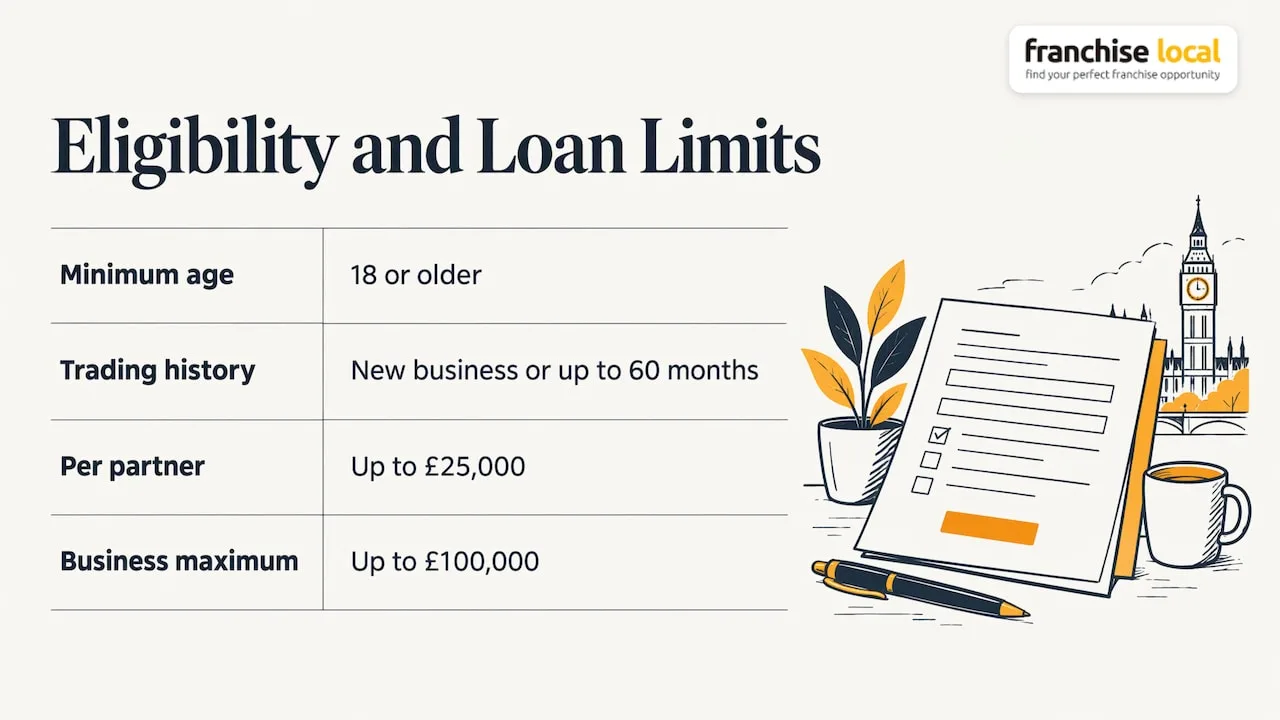
You need to be at least 18, have the right to work in the UK and be starting a new business or running one that has traded for up to 60 months. That 60-month limit is a recent widening of eligibility, intended to cover early-stage businesses that need finance later in their development. It matters for franchisees who have already opened a first unit and want to fund a second territory.
Business partners can each apply for up to £25,000, subject to a maximum of £100,000 for one business. Each partner remains personally liable for their own loan.
What it cannot be used for
The scheme says the loan cannot be used to repay debt, for training and education, or for investments unrelated to the business. Be careful with that second exclusion. Some franchisors charge a training fee, either on its own or bundled into the initial franchise fee. Ask your adviser how your franchisor’s fee breakdown fits the rules before you apply, rather than assuming it will pass.
What people mean by a franchise loan
Franchise lending is ordinary business lending with a franchise-shaped application. Banks and specialist lenders like franchises because the model is proven: a franchisor has already shown the concept works, supplies training and systems, and publishes typical costs. Many UK lenders know the established franchise brands and may be more comfortable lending against them than against an untested independent idea. Treat that as a general tendency, not a promise. Every lender decides case by case.
Franchise loans come in two broad forms:
- Secured loans are backed by collateral, such as property or other assets. They can offer lower interest rates and longer repayment periods, and they often allow larger sums. The risk is that the collateral is at risk if you cannot repay. Our guide to secured vs unsecured franchise loans walks through the trade-offs.
- Unsecured loans do not need business assets as collateral, but they tend to cost more, and lenders may ask for a personal guarantee. If that is on the table, read how to limit home risk with personal guarantees on franchise loans before you sign anything.
Unlike the Start Up Loans scheme, there is no single published rate for franchise lending. Pricing depends on your credit history, the strength of the brand, the size of the loan and whether you offer security. Get written quotes and compare the total cost of credit, not just the headline rate.
Start-up vs franchise funding: how the two situations differ
The phrase “start-up loan” can also mean funding an independent business from scratch. The difference between funding a start-up and funding a franchise is mostly about how much a lender can know in advance.
With an independent start-up, you ask the lender to believe your forecasts. With a franchise, you can point to an operating model, published costs and existing franchisees you can speak to. That can make your business plan easier to evidence. It does not remove the need for one. Our comparison of franchise vs start-up routes covers the wider decision beyond funding.
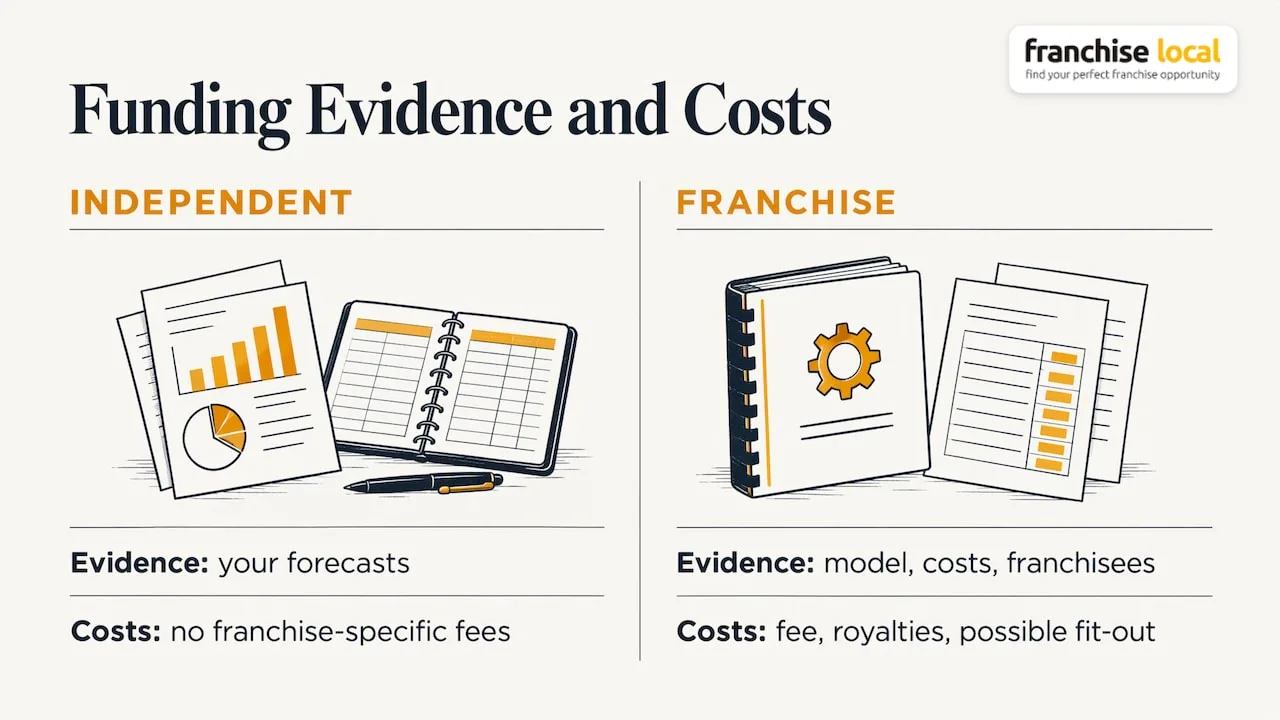
Franchises also come with costs that independents do not: an initial franchise fee, ongoing royalties or management service fees, and sometimes required equipment, vehicles or fit-out. Fund those in your plan from day one.
Side-by-side comparison
| Feature | Start Up Loan | Bank or specialist franchise loan |
|---|---|---|
| What it is | Government-backed unsecured personal loan for business use | Business loan from a bank or specialist lender |
| Amount | £500 to £25,000 per person | Set by the lender, often larger |
| Interest | Fixed 7.5% a year (applications from 6 April 2026) | Varies by lender, security and your profile |
| Term | 1 to 5 years | Varies, often longer if secured |
| Fees | No application or early repayment fees | Depends on the lender, so ask for a full breakdown |
| Security | None on business assets | Secured or unsecured; a personal guarantee may be requested |
| Business age | New, or trading up to 60 months | Depends on the lender |
| Mentoring | 12 months free for first-loan recipients | Not usually included |
| Best for | Lower-cost franchises, topping up your savings | Higher-cost brands, larger funding gaps |
Which one fits your franchise?
Start with the total cost of opening, not the franchise fee alone. According to Point Franchise, the average UK start-up cost of buying a franchise is £42,200, including stock, equipment and franchise fees. Your own figure could be far lower or much higher, depending on the brand. Our franchise start-up expenses budget guide shows what to include.
Then work through these scenarios.
Your total cost is £25,000 or less
A Start Up Loan could cover the whole thing, if the lender and the scheme accept your plan. Many home-based and service franchises sit in this bracket. Because the loan is unsecured, you do not risk business assets. You still carry personal liability, so check that the monthly repayments fit your personal budget in the first months, when income is often thin.
Your total cost is £25,000 to £100,000
This is the most common middle ground. A Start Up Loan may fund part of it, and you add savings plus a bank loan. If two of you are running the business as partners, each of you can apply for up to £25,000, within a £100,000 cap for one business. Bear in mind each person is liable for their own loan.
Your total cost is above £100,000
The scheme will not stretch this far. You will need a bank or specialist lender, and probably security. Franchise loan types explains the options, from term loans to asset finance.
You lack security but have a strong plan
The Enterprise Finance Guarantee scheme may help. It guarantees up to 75% of the loan value with accredited lenders, which can make a lender more willing to say yes when your security falls short. The lender, not you, applies it, so ask whether they are accredited.
What lenders expect from a franchise applicant
Whichever route you take, expect a lender to look at the same things.
- The franchise itself. How established the chain is, and how its franchisees perform.
- Your credit history. A personal credit check is part of a Start Up Loan application, and most lenders run one.
- Your business plan. For a franchise, this should include the franchisor’s figures and your own local assumptions.
- Affordability. The Start Up Loans scheme assesses whether the loan is affordable for you, using your cash-flow forecast and personal budget.
- Your own money. For established franchise brands, the scheme’s franchise guidance says you need to provide at least 30% of total set-up costs, including working capital, from savings rather than personal borrowing. Plan for that before you apply.
This last point shapes everything. On a £42,200 set-up, 30% is £12,660. If you are short of that, the loan size is not your first problem. Our guide to smart ways to finance a UK franchise as a new owner covers how to build your contribution.
How to apply for a Start Up Loan for a franchise
- Check eligibility. Age, right to work and a business that is new or has traded for up to 60 months.
- Choose your franchise and get its figures. Ask the franchisor for the full cost breakdown in writing.
- Prepare your documents. You will need a business plan, a 12-month cash-flow forecast, a personal budget (a survival budget), proof of identity, address and right to work, and three months of matching bank statements.
- Use the free support. A business adviser helps refine your documents. The same support covers templates and how-to guides.
- Credit check and decision. The application includes a personal credit check. If it succeeds, an approved lender sends the loan documents.
- Start mentoring. First-loan recipients get 12 months of free mentoring, which is helpful in a first year of trading when you are learning your local market.
The programme reported £14.6 million of finance delivered in July 2026, up from £12.8 million in July 2025, so lending is active.
Applying for a franchise loan from a bank or lender
The process is less standardised. Expect to provide a business plan, forecasts, personal financial details and details of the franchise agreement. If the loan is secured, expect questions about the asset being offered. Ask each lender:
- Is the loan secured or unsecured, and what exactly is at risk?
- Is a personal guarantee required, and how far does it extend?
- What are the arrangement fees and early repayment charges?
- Do you lend to this franchise brand, and will you speak to the franchisor?
- Can repayments be set to match a slow first few months?
For a wider view of what exists, see our franchise funding options list and the overview of franchise funding options in the UK. If you are looking at food businesses, there is a dedicated piece on funding a franchise purchase in the food sector.
Mixing funding sources
You do not have to pick one. A common structure for a mid-priced franchise looks like this:
- Your savings cover at least the required share of set-up costs.
- A Start Up Loan covers the franchise fee or equipment, up to £25,000.
- A bank loan or asset finance covers larger items such as a vehicle or fit-out.
Check whether each lender is happy with the others. Some will want to know about other borrowing before they lend. Be open about it.
As for grants, there is no national franchise grant in the UK. Small local awards do exist, and our piece on franchise grants in the UK explains where to look.
Find a franchise that fits your funding
Before you choose a loan, choose a franchise whose costs match what you can raise. On Franchiselocal you can filter UK franchise opportunities by investment level, industry, lifestyle and location, so you can see only the brands that suit your budget. Start with the top UK franchise opportunities, browse by industry, or use the Franchise Planning Toolkit to map your costs. Enquiries to franchisors are free for you.
Common mistakes to avoid
- Borrowing the franchise fee only. Working capital for the first months matters as much as the fee.
- Ignoring personal liability. A Start Up Loan is personal, and a guarantee on a bank loan can put your home at risk.
- Assuming training is covered. The scheme excludes training and education, so check how your franchisor’s fees are split.
- Comparing rates only. Look at term, fees, security and flexibility together.
- Applying before you have the franchisor’s figures. Lenders respond to evidence, not estimates.
If you are unsure about the commitment, speak to an independent financial adviser or an accountant before signing a loan agreement. Borrowing carries risk, and your capital or home may be at stake.
FAQ
Can I use a Start Up Loan to buy a franchise?
Yes. Franchise applicants are eligible if they meet the scheme’s criteria: you must be 18 or over, have the right to work in the UK and be starting a new business or one that has traded for up to 60 months. You can borrow between £500 and £25,000. The loan cannot be used for debt repayment, training and education, or unrelated investments.
What interest rate does a Start Up Loan charge?
The rate is fixed at 7.5% a year for successful applications from 6 April 2026, and it stays fixed for the whole term. Repayment runs over 1 to 5 years. There is no application fee and no charge for repaying early.
Do I need savings to get franchise funding?
Usually, yes. For established franchise brands, the Start Up Loans franchise guidance says you should provide at least 30% of total set-up costs, including working capital, from savings rather than personal borrowing. Your own contribution also shows lenders that you share the risk.
What if I cannot offer security for a larger loan?
An unsecured loan may be possible, though it often costs more and the lender may request a personal guarantee. The Enterprise Finance Guarantee scheme may also help by guaranteeing up to 75% of the loan value with accredited lenders. Ask each lender whether they are accredited.
Is a franchise loan easier to get than a start-up loan?
Not automatically. Lenders may be more comfortable with a proven franchise model than an untested idea, but they still assess your credit history, business plan and affordability. A clear plan built on the franchisor’s figures helps your case.