

Launching a franchise in the UK is one of the most rewarding business decisions you can make, but it is also one of the most complex. Between navigating legal structures, securing funding, satisfying compliance obligations, and coordinating your opening day, the sheer volume of tasks can feel overwhelming. Miss a single step and you risk delays, financial penalties, or worse, a failed launch before you have even served your first customer. This checklist-driven guide cuts through the noise, walking you through every critical stage from initial legal groundwork to sustainable post-launch growth, so you can open with confidence and stay compliant from day one.
Key Takeaways
| Point | Details |
|---|---|
| Follow legal prerequisites | Get your structure, agreements, and registrations in place before you start. |
| Use a step-by-step checklist | A methodical checklist helps prevent costly errors during your franchise launch. |
| Prioritise compliance | Address regulatory, health, safety, and data protection checks early on for a smooth start. |
| Prepare for launch and growth | Strong marketing and staff plans drive opening day success and long-term performance. |
Understanding UK franchise launch requirements
Before you tick a single box, you need to understand what the UK specifically demands of new franchisees. Unlike some markets, the UK has no single piece of franchise legislation. Instead, franchising operates under a patchwork of contract law, employment law, competition law, and sector-specific regulations. The British Franchise Association sets voluntary standards that reputable franchisors follow, and aligning with those standards signals credibility to lenders, landlords, and customers alike.
One of your earliest decisions is choosing a legal structure. As the legal requirements for franchises guidance makes clear, the legal structure you choose shapes the agreements, tax treatment, and your ongoing obligations. Here is a quick comparison of the three main options:

| Business structure | Liability | Tax treatment | Complexity |
|---|---|---|---|
| Sole trader | Unlimited personal liability | Income Tax via Self Assessment | Low |
| Partnership | Shared unlimited liability | Income Tax per partner | Medium |
| Limited company | Limited to share capital | Corporation Tax | Higher, but preferred by most franchisors |
Most franchisors require or strongly prefer a limited company structure because it protects both parties and simplifies the contractual relationship. Check the official UK government business setup guidance to register your chosen structure correctly.
Beyond structure, two documents are non-negotiable:
- Franchise agreement: The legally binding contract defining your rights, obligations, fees, territory, and exit terms. Never sign without a specialist franchise solicitor reviewing it.
- Operations manual: The franchisor’s operational bible, covering brand standards, processes, and compliance requirements. Treat it as your daily rulebook.
You should also understand how to franchise your business from the franchisor’s perspective, as this gives you insight into what your franchisor expects and why certain clauses exist.
Statutory obligations every UK franchisee must fulfil: Register with HMRC for tax purposes, comply with employment law if hiring staff, hold adequate business insurance, meet sector-specific licencing requirements, and adhere to GDPR data protection rules.
Pro Tip: Instruct a franchise solicitor before you sign anything. A few hundred pounds spent on early legal advice can save you tens of thousands in disputes later.
Building your franchise launch checklist: Step-by-step process
With the groundwork laid, follow this practical checklist to navigate your franchise launch from conception to reality. Each step is a milestone, and skipping any one of them creates gaps that tend to surface at the worst possible moment.
- Research franchise opportunities thoroughly. Use sector data, speak to existing franchisees, and verify the franchisor’s track record before committing.
- Conduct due diligence on the franchise brand, its financials, litigation history, and franchisee satisfaction. This step is non-negotiable.
- Draft a robust business plan. As the guidance on creating a franchise business plan confirms, drafting a robust business plan is fundamental to securing franchise approval and funding.
- Secure financing. Approach banks familiar with franchise lending, such as those accredited by the British Franchise Association, and explore government-backed start-up loans.
- Choose and secure your location. For premises-based franchises, allow three to six months for lease negotiations, fit-out, and regulatory sign-off.
- Register your business with Companies House and HMRC. Obtain your Unique Taxpayer Reference and register for VAT if your projected turnover exceeds the current threshold.
- Obtain all necessary licences and permits. These vary by sector. Food businesses need a food hygiene rating; childcare franchises require Ofsted registration.
- Set up business insurance. At minimum, you need public liability, employer’s liability (if hiring), and professional indemnity cover.
- Recruit and onboard your team. Allow time for DBS checks, contracts, and franchisor-mandated training.
- Complete franchisor training. Attend every session. This is where operational knowledge transfers from theory to practice.
- Execute your pre-launch marketing plan. Social media, local PR, and community engagement should begin at least four weeks before opening.
- Final compliance check before opening day. Health and safety risk assessment, fire safety compliance, and trading licence confirmation.
For broader guidance, the tips for new franchisees resource covers many of the softer skills and mindset shifts that complement this checklist.
Pro Tip: Build generous lead times into your project plan. Property delays, equipment back-orders, and staff onboarding almost always take longer than expected. Add a two-week buffer to every major milestone.
Key compliance checkpoints and common pitfalls
Once your step-by-step plan is in motion, focus on these compliance hotspots and watch for classic errors. Compliance is not a one-time event; it is an ongoing responsibility that begins before you open and never truly ends.
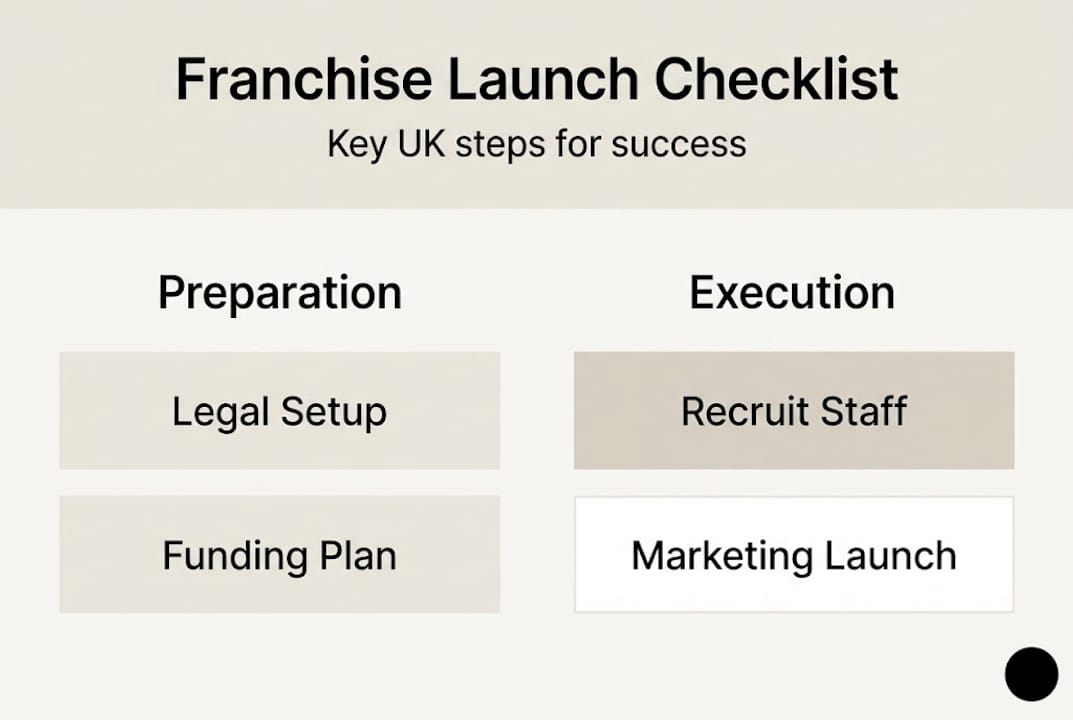
As the resource on importance of due diligence highlights, neglecting due diligence and proper documentation is a leading cause of franchise failures. Here is where most new franchisees come unstuck:
| Common pitfall | Recommended best practice |
|---|---|
| Signing the franchise agreement without legal review | Always use a specialist franchise solicitor |
| Underestimating working capital needs | Budget for at least six months of operating costs |
| Ignoring GDPR obligations | Appoint a data lead and complete staff training before launch |
| Misclassifying workers as self-employed | Follow HMRC employment status guidance carefully |
| Overlooking sector-specific licences | Create a licencing checklist specific to your industry |
Critical documentation and deadlines to track:
- HMRC registration: Must be completed within three months of starting trading.
- VAT registration: Required if turnover exceeds the current threshold (£90,000 in 2026).
- Employer’s liability insurance: Legally required before your first employee starts.
- Data protection registration: Register with the ICO if you process personal data.
- Health and safety risk assessment: Must be documented before opening.
The franchise operations manual your franchisor provides should map out many of these obligations, but do not assume it covers everything specific to your location or sector. Cross-reference it with the small business franchising advice from the Federation of Small Businesses for additional sector-specific guidance.
Understanding why franchises fail is just as instructive as knowing what to do right. Most failures trace back to avoidable errors made in the first six months.
The consequences of non-compliance are severe: Trading without a required licence can result in fines, forced closure, or criminal prosecution. GDPR breaches carry penalties of up to £17.5 million or 4% of global annual turnover, whichever is higher.
Executing your launch: Opening day to sustainable growth
With compliance secured and pitfalls avoided, your focus now shifts to opening day and sustaining franchise success. The first few weeks set the tone for your entire franchise relationship, with customers, staff, and your franchisor.
As the franchise marketing strategies guide confirms, effective local marketing and an engaged team can set your franchise up for a highly successful start. Here is your opening day action list:
- Activate your local marketing: Distribute flyers, post on social media, and engage local press in the week before opening.
- Brief your team thoroughly: Every staff member should know the brand story, product or service offering, and customer service standards.
- Set up your customer feedback mechanism: A simple Google review prompt or feedback card captures early sentiment and shows customers you care.
- Track your key performance indicators from day one: Sales volume, average transaction value, footfall, and staff hours should all be logged from the start.
- Connect with your franchise network: Attend franchisee meetings, join online groups, and ask questions freely. Your network has already solved most of the problems you will face.
- Review your operations manual weekly in the first month. Processes that seemed clear in training often raise questions in live operation.
For additional start-up resources, the IFA resource centre offers practical tools used by franchisees globally.
Pro Tip: Leverage your franchisor’s field support team aggressively in the first ninety days. Their job is to help you succeed, and the franchisees who ask the most questions in the early stages consistently outperform those who try to figure everything out independently.
Maintaining compliance beyond opening day means scheduling quarterly reviews of your insurance, licences, and employment contracts. Markets change, legislation updates, and your business evolves. Build a review calendar into your operations from the outset.
A seasoned perspective: What most franchise checklists miss
Every checklist tells you what to do. Very few tell you who to be while you are doing it. After working closely with hundreds of UK franchisees, the pattern is clear: the ones who thrive are not necessarily those who followed the checklist most precisely. They are the ones who stayed adaptable, built genuine relationships within their franchise network, and treated the checklist as a foundation rather than a ceiling.
The most common error we see is expecting the franchisor to solve every local challenge. Your franchise system provides a proven model, but it cannot account for every nuance of your specific location, customer base, or community. Local knowledge and the willingness to adapt within brand guidelines are what separate good franchisees from great ones.
Building relationships with fellow franchisees is arguably more valuable than any single compliance document. They have navigated your exact challenges already. Do not underestimate that resource.
The advice for new franchisees we consistently return to centres on mindset: treat every month as an opportunity to improve, not just maintain. Checklists get you launched. Continuous improvement keeps you growing.
Pro Tip: Once you are past the launch phase, schedule a monthly self-audit against your operations manual. The franchisees who do this consistently are the ones franchisors trust with multi-unit expansion.
Next steps: Empower your franchise journey
If you feel ready to progress from successful launch to sustainable growth, FranchiseLocal can accelerate your journey. Our ultimate UK franchising guide brings together everything from choosing the right opportunity to managing your franchise long-term, all tailored to the UK market. Whether you are still exploring options or finalising your launch plan, our directory and editorial resources are built to support every stage of your decision. Connect with vetted franchise service providers including solicitors, accountants, and marketing specialists who understand the franchise landscape. FranchiseLocal is your trusted partner from first search to opening day and beyond.
Frequently asked questions
What legal documents do I need to launch a franchise in the UK?
You will need a franchise agreement, operations manual, business registration, and any licences that apply to your sector. The franchise agreement and operations manual are the two most critical documents, while operations manuals ensure consistent compliance across your entire operation.
How can I avoid the most common franchise launch mistakes?
Carefully follow due diligence steps, review all compliance requirements, and seek expert advice before any contracts are signed. Due diligence prevents costly mistakes, while understanding common legal errors helps you sidestep the pitfalls that derail many UK franchises.
Do I need to join the British Franchise Association to operate a franchise?
Membership is not required by law, but the British Franchise Association adds credibility and gives you access to industry best practices that can meaningfully strengthen your franchise operation.
How long does it take to launch a franchise in the UK?
Most launches take three to twelve months depending on sector, location, and how ready your business systems are. Timelines vary greatly based on preparation level and the complexity of your chosen industry.