

Setting up a franchise in the United Kingdom means more than just following a well-known business model. Many aspiring owners quickly realise that without the right guidance, even the most promising franchise can falter. Structured training is a vital step, transforming ambition into business know-how and providing the foundation for real-world success. This guide highlights the value of structured franchise training, explores programme types, outlines curriculum expectations, and explains the key legal and cost considerations tailored for the British market.
Core definition and purpose of franchise training
Franchise training programmes represent systematic educational pathways designed to equip potential and new franchise owners with the critical knowledge, skills, and operational protocols necessary to successfully launch and manage their business ventures. These comprehensive training initiatives serve as structured frameworks that transform entrepreneurial enthusiasm into practical business competence, bridging the gap between theoretical understanding and real-world franchise implementation.
At its core, franchise training is more than just an informational session – it is a strategic development process tailored to help entrepreneurs understand the specific operational, legal, and commercial mechanics of their chosen franchise model. When exploring franchise business models in the UK, aspiring franchisees discover that these programmes typically encompass multiple critical learning domains: brand standards, operational procedures, financial management, marketing strategies, and compliance requirements specific to their industry sector.
The primary purpose of franchise training extends beyond simple knowledge transfer. These programmes are meticulously designed to standardise business practices, ensure brand consistency, minimise operational risks, and accelerate the new franchisee’s path to profitability. By providing comprehensive guidance on everything from initial setup to day-to-day management techniques, training programmes function as critical support mechanisms that significantly improve a franchisee’s likelihood of long-term success.
Pro tip: When evaluating franchise opportunities, carefully assess the depth and quality of the training programme, as it represents your primary blueprint for business success.
Types of franchise training programmes available
Franchise training programmes in the United Kingdom manifest across several distinct formats, each designed to address specific learning needs and developmental stages for potential and existing franchise owners. These programmes range from comprehensive initial training to ongoing professional development initiatives, ensuring franchisees receive targeted support throughout their business journey.
The primary categories of franchise training include Initial Onboarding Programmes, which provide comprehensive introductory education for new franchisees. These intensive sessions typically cover fundamental aspects like brand standards, operational protocols, and core business systems. Another critical category is Continuous Professional Development Programmes, which offer advanced training modules that help franchisees refine their skills, adapt to market changes, and stay current with evolving franchise agreement requirements.
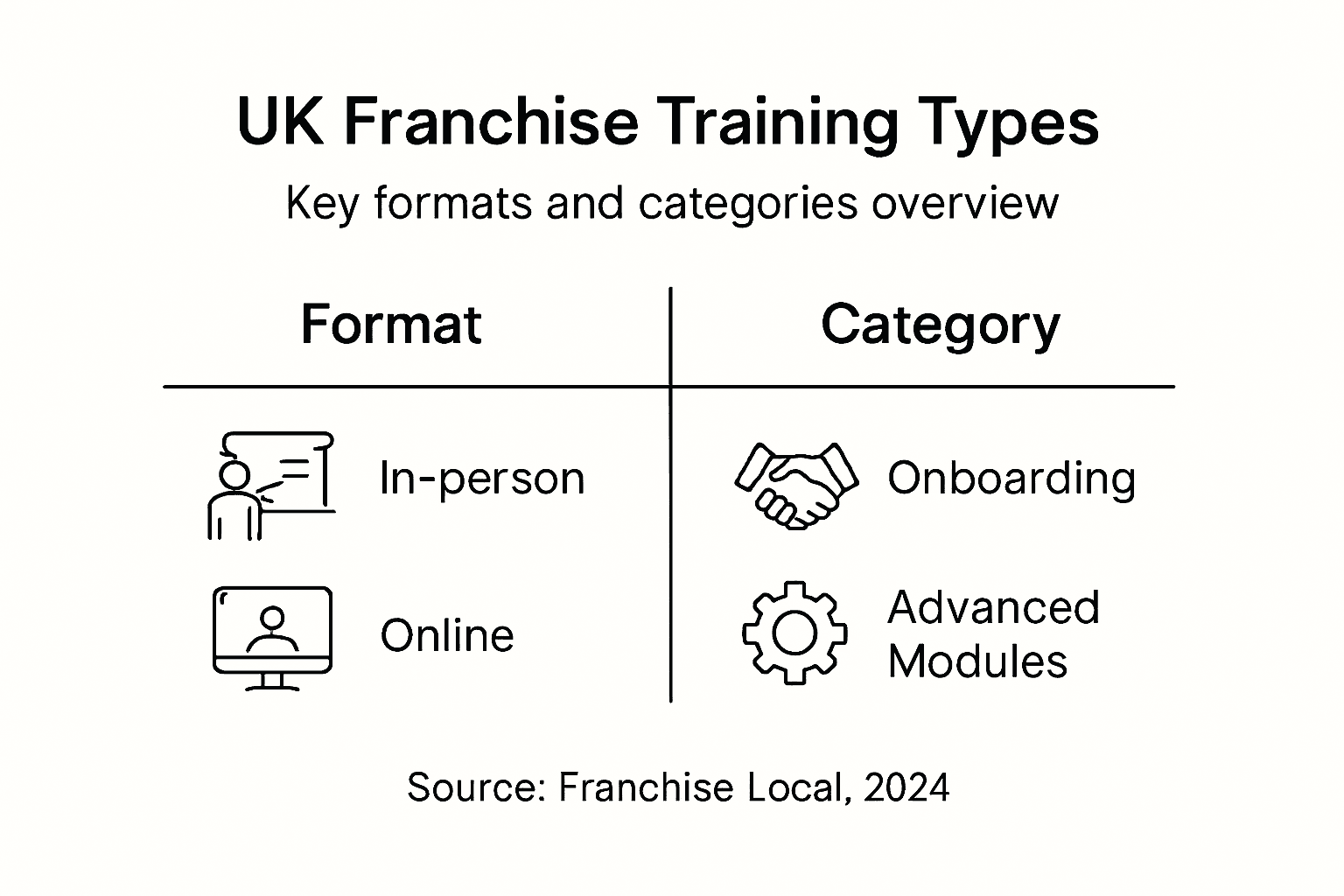
Additionally, franchise training can be categorised into in-person, online, and hybrid formats. In-person training provides direct interaction and hands-on learning experiences, while digital programmes offer flexibility for busy entrepreneurs. Hybrid models combine both approaches, allowing franchisees to benefit from comprehensive theoretical instruction and practical skill development. Some franchisors also provide specialised training tracks tailored to specific business segments, such as retail, service-based, or technology-oriented franchise models.
Here is a comparison of the main franchise training programme formats in the UK:
| Training Format | Delivery Method | Key Advantages | Typical Learner Suitability |
|---|---|---|---|
| In-Person | Face-to-face sessions | Hands-on practice, direct feedback | New franchisees, practical roles |
| Online | Web-based platforms | Flexible scheduling, accessible | Busy professionals, remote owners |
| Hybrid | Mix of both methods | Balanced learning, broader coverage | All franchisee types |
| Specialised Track | Tailored content | Industry-specific expertise, focus | Sector-specific franchisees |
Pro tip: Request a detailed training curriculum from potential franchisors and evaluate the comprehensiveness and ongoing support of their training programmes before making an investment decision.
Essential curriculum and delivery methods
Franchise training curricula in the United Kingdom are meticulously designed to provide comprehensive educational experiences that blend theoretical knowledge with practical business skills. Educational modules exploring franchising typically encompass a multi-dimensional approach to learning, integrating interactive lectures, group discussions, and independent study methodologies.

The core curriculum for franchise training generally includes several critical knowledge domains. Strategic Business Management forms the foundational component, covering essential topics such as financial planning, marketing strategies, operational protocols, and legal compliance. Brand Development and Maintenance represents another crucial area, teaching franchisees how to maintain consistent brand standards, deliver quality customer experiences, and implement company-specific operational guidelines. Additional curriculum elements often include leadership development, financial management, technology integration, and industry-specific skills tailored to the particular franchise sector.
Delivery methods for franchise training have evolved significantly, offering multiple engagement formats to accommodate diverse learning preferences. These typically include Live In-Person Training, which provides direct interaction and hands-on learning experiences; Online Digital Programmes, offering flexibility and self-paced learning; and Hybrid Learning Models that combine both digital and face-to-face instruction. Advanced training programmes may also incorporate simulation exercises, case study analysis, mentorship opportunities, and ongoing professional development workshops to ensure franchisees remain adaptable and competitive in dynamic business environments.
Pro tip: Request a comprehensive curriculum breakdown from potential franchisors, ensuring the training programme offers a balanced mix of theoretical knowledge and practical skill development.
Legal and industry standards for franchise training
Franchise training in the United Kingdom operates within a sophisticated legal framework that establishes rigorous standards for education, disclosure, and operational transparency. Franchise disclosure laws provide critical guidelines that ensure franchisees receive comprehensive, accurate information about their potential business opportunities, including mandatory training requirements that protect both franchisor and franchisee interests.
The legal landscape governing franchise training encompasses several key regulatory dimensions. Mandatory Disclosure Requirements compel franchisors to provide detailed training programme specifications, including curriculum content, delivery methods, and expected learning outcomes. Compliance Standards mandate that training programmes must cover essential business competencies such as operational protocols, brand standards, financial management, and legal obligations specific to the particular franchise sector. These standards are typically enforced through industry associations like the British Franchise Association (BFA), which sets professional benchmarks for franchise education and training.
Industry-specific regulations further shape franchise training standards across different business sectors. Each industry segment – whether retail, service-based, or technology-oriented – develops nuanced training requirements that reflect its unique operational challenges and professional expectations. Franchisors must demonstrate their ability to provide comprehensive, sector-specific training that equips franchisees with the precise skills and knowledge necessary for successful business implementation. This approach ensures that training programmes are not just generic business education, but targeted, practical learning experiences tailored to specific market conditions and operational environments.
Pro tip: Always request a detailed written description of the franchise training programme and verify its alignment with industry-specific legal standards before making any investment commitment.
Costs, common pitfalls and best practices
Franchise training programmes represent a significant financial investment for both franchisors and franchisees, with costs varying widely depending on the complexity and depth of the educational curriculum. Government funding strategies can help mitigate the substantial upfront expenses associated with developing comprehensive training infrastructure, making strategic financial planning crucial for successful programme implementation.
Common pitfalls in franchise training often emerge from inadequate financial planning and unrealistic expectations. Cost Structures typically encompass multiple components: initial training programme development, ongoing curriculum updates, delivery mechanisms, trainer salaries, and technological infrastructure. Franchisees frequently underestimate these expenses, leading to financial strain. Potential hidden costs include travel expenses for in-person training, digital learning platform subscriptions, assessment and certification processes, and periodic refresher courses that ensure continued professional development.
The table below summarises common cost components and effective strategies for franchise training:
| Cost Component | Typical Expense | Cost Management Best Practice |
|---|---|---|
| Trainer Salaries | Ongoing, moderate | Use external experts for niche modules |
| Digital Platform Subscription | Recurring, flexible | Select scalable, multi-user solutions |
| Assessment & Certification | Per participant | Integrate with broader skill development |
| Travel for In-Person | Variable, location-based | Prefer regional or hybrid delivery |
| Curriculum Development | Upfront, significant | Update content incrementally |
Best practices for managing franchise training costs and effectiveness require a multifaceted approach. Successful franchisors develop scalable training models that balance comprehensive education with cost-efficiency, leveraging technologies like online learning platforms, modular curriculum designs, and adaptive training methodologies. Strategic investments should prioritise creating flexible, replicable training experiences that can be customised for different franchisee skill levels and industry segments. This approach ensures that training programmes remain valuable, relevant, and economically sustainable across diverse business environments.
Pro tip: Request a detailed, transparent breakdown of all training-related costs and compare multiple franchise opportunities to identify programmes offering the most comprehensive yet cost-effective training investments.
Unlock Your Franchise Success with Expert Training and the Right Opportunity
Navigating the complexities of franchise training in the United Kingdom can be challenging. From understanding operational protocols and legal compliance to mastering brand standards and financial management, every new franchisee faces the critical hurdle of transforming knowledge into profitable business practice. The right franchise training programme is essential for minimising risks and accelerating growth but finding a franchise that offers comprehensive education tailored to your needs is equally important.
At Franchise Local, we understand these challenges and provide a trusted platform where you can explore a wide array of franchise opportunities across diverse industries and investment levels. Whether you are seeking a business model with strong ongoing training support or looking for franchise options that match your lifestyle and experience, our extensive listings and detailed filters make your search efficient and effective. Take control of your entrepreneurial future by accessing franchises with proven training programmes and support.
Ready to choose a franchise that invests in your success? Visit Franchise Local now to explore the UK’s leading franchise options offering robust training paths. Don’t wait—start your journey towards profitable franchise ownership with the confidence that well-structured training brings.
Frequently Asked Questions
What is the purpose of franchise training programmes?
Franchise training programmes are designed to equip new franchise owners with the essential knowledge, skills, and operational protocols needed to launch and manage their businesses successfully.
What types of training formats are available for franchisees?
Franchise training formats include in-person, online, hybrid models, and specialised tracks tailored to specific business segments, ensuring that franchisees receive the support they need throughout their business journey.
What should I expect from the curriculum of a franchise training programme?
The curriculum typically covers strategic business management, brand development, financial management, and legal compliance, combining theoretical knowledge with practical skills through various engaging delivery methods.
How do legal standards influence franchise training?
Legal and industry standards ensure that franchise training programmes adhere to mandatory disclosure requirements and compliance standards, providing franchisees with accurate information and the essential skills needed for their specific sector.