

Franchise ownership in the UK operates in a unique legal landscape that surprises many aspiring business owners. Unlike countries with explicit franchise statutes, the UK has no dedicated franchise law, relying instead on general legal principles and industry self-regulation. This creates a distinctive environment where franchisees enjoy considerable independence whilst adhering to brand frameworks. Understanding the franchisee’s role, responsibilities, and the advantages this business model offers is essential for anyone considering this entrepreneurial path in 2026.
Key takeaways
| Point | Details |
|---|---|
| Independent yet guided | Franchisees operate their own businesses but must follow franchisor guidelines and brand standards |
| No statutory franchise law | UK franchise relationships are governed by general contract, IP, and competition laws plus self-regulation |
| Fee and royalty obligations | Franchisees pay initial fees and ongoing royalties in exchange for brand access and support |
| Strong sector performance | Over 1000 franchise systems operate in the UK with high success rates and economic contribution |
| Clear agreements prevent disputes | Precise territorial rights and IP usage terms reduce legal conflicts and protect both parties |
What a franchisee is and the UK legal context
A franchisee runs an individual business licensed by a franchisor to use established brand names, operational systems, and proven procedures. This arrangement allows entrepreneurs to operate under a recognised banner whilst maintaining ownership of their enterprise. The relationship differs fundamentally from employment, as franchisees invest their own capital, manage daily operations, and bear business risks independently.

The legal definition of a franchise in England and Wales is not explicitly defined by statute but understood through case law and industry self-regulation. This absence of specific legislation distinguishes the UK from jurisdictions like the United States or Australia, where comprehensive franchise codes govern the sector. Instead, franchisees in the UK are subject to general laws covering contract, intellectual property, real estate, and competition.
The British Franchise Association’s Code of Ethics serves as the primary self-regulatory mechanism, promoting fair dealings and ethical conduct between franchisors and franchisees. This voluntary framework encourages transparency, reasonable terms, and dispute resolution without statutory enforcement. Prospective franchisees should understand that whilst this system offers flexibility, it places greater responsibility on individuals to scrutinise agreements and seek legal advice before committing.
Key legal areas affecting franchisees include:
- Contract law governing the franchise agreement terms and obligations
- Intellectual property law protecting trademarks, trade secrets, and brand assets
- Real estate law for premises leases and property arrangements
- Competition law preventing anti-competitive practices and market distortions
- Employment law if the franchisee hires staff for their operation
Understanding these elements helps clarify the balance between franchisee independence and franchisor control. You operate your own business, but within defined parameters that protect brand consistency and customer experience. This dual nature requires careful navigation of franchise legal requirements to ensure compliance and avoid disputes that could jeopardise your investment.
Key responsibilities and operational requirements of a franchisee
Franchisees must follow proven business models and brand standards that ensure consistency across all outlets. This obligation forms the core of the franchise relationship, as customers expect identical quality and service whether they visit your location or another franchisee’s. Franchisees are responsible for adhering to operational procedures and brand guidelines that cover everything from product specifications to customer service protocols.
Financial obligations represent another critical responsibility. Franchisees are required to pay initial franchise fees and ongoing royalties to the franchisor, typically calculated as a percentage of gross sales. These payments fund continuous support, marketing initiatives, system improvements, and brand development that benefit all network members. Initial fees can range from a few thousand pounds for mobile franchises to hundreds of thousands for established high street brands.
Strict operational guidelines can limit your autonomy compared to independent business ownership, but they provide a framework that significantly reduces risk. You cannot typically change suppliers, alter product offerings, or modify branding without franchisor approval. This constraint might feel restrictive, yet it protects you from costly mistakes and ensures customers receive the expected experience.
Daily business management remains entirely your responsibility. You hire and train staff, manage inventory, handle customer complaints, maintain premises, and oversee financial performance. The franchisor provides systems and support, but execution depends on your commitment and capability. Successful franchisees balance following prescribed methods with bringing entrepreneurial energy to local market conditions.
Core franchisee responsibilities include:
- Maintaining brand standards for products, services, and customer interactions
- Paying all fees and royalties promptly according to agreement terms
- Participating in required training programmes and ongoing education
- Implementing franchisor marketing campaigns and promotional activities
- Reporting sales data and operational metrics as specified
- Protecting confidential information and intellectual property
- Operating only within designated territory boundaries
Pro Tip: Before signing a franchise agreement, request detailed breakdowns of all ongoing costs beyond royalties, including marketing levies, technology fees, and mandatory supplier premiums. These hidden expenses can significantly impact profitability and should factor into your financial projections.
Clear operational compliance protects the brand’s reputation and ensures consistent customer experience across the network. When every franchisee maintains standards, the collective brand value increases, benefiting all participants through enhanced recognition and customer loyalty.
Legal nuances, common challenges and dispute risks for franchisees
The relationship between franchisor control and franchisee independence creates legal complexity that demands careful attention. Franchisors must avoid undue control to prevent unintended liabilities, as excessive direction could reclassify the relationship as employment or partnership. Such reclassification exposes both parties to tax implications, employment rights claims, and liability for each other’s actions.
Intellectual property usage represents a frequent source of confusion and conflict. Ambiguity in IP usage can lead to disputes, particularly when agreements fail to specify scope, duration, and limitations clearly. You might assume permission to use trademarks in digital marketing or product variations, only to face cease and desist demands or termination threats. Precise IP clauses protect both parties by establishing exactly what you can and cannot do with brand assets.
Territorial rights generate substantial friction when poorly defined. Vague territorial rights are a common source of conflict, as agreements must specify exact geographical limits and exclusivity provisions. Without clear boundaries, franchisors might award overlapping territories to new franchisees, diluting your customer base and undermining your investment. Exclusive territory clauses should include maps, postcodes, and explicit restrictions on franchisor-owned outlets or online sales encroachment.
Common legal challenges franchisees face:
- Termination disputes arising from alleged breaches of operational standards or payment defaults
- Renewal conflicts when franchisors impose substantially different terms or refuse extensions
- Restraint of trade clauses preventing post-termination competition in related businesses
- Misrepresentation claims regarding projected earnings or market conditions presented during recruitment
- Quality control disagreements over product specifications or approved supplier requirements
Financial and personal consequences of disputes can devastate franchisees. Legal costs quickly escalate into tens of thousands of pounds, whilst business disruption during conflicts damages revenue and reputation. High-profile cases have seen franchisees lose their entire investment through termination, with restrictive covenants preventing them from applying their skills elsewhere in the industry.
“The franchise agreement is the bible of the relationship. Every clause matters, and ambiguity always favours the party with deeper pockets and better lawyers. Franchisees must invest in thorough legal review before signing, as renegotiating after commitment proves nearly impossible.”
Protecting yourself requires proactive measures. Engage experienced franchise solicitors to review agreements before signing, focusing particularly on territory rights, termination provisions, and renewal terms. Understand your obligations completely and ensure you can meet them sustainably. Document all communications with the franchisor and maintain meticulous records of compliance with operational standards. These steps provide evidence if disputes arise and demonstrate your good faith efforts.
Recognising franchise legal considerations early helps you avoid pitfalls that trap unprepared franchisees. The self-regulatory UK environment places responsibility on you to protect your interests through careful due diligence and professional advice.
The benefits and current landscape of franchising in the UK
Franchisees benefit from recognised brands that lower marketing costs and build customer trust immediately. Launching an independent business requires years of effort to establish credibility and attract customers. Franchising bypasses this struggle by providing instant access to established reputations, allowing you to focus on operations rather than brand building. Customers recognise the name, understand the offering, and bring existing loyalty to your location.
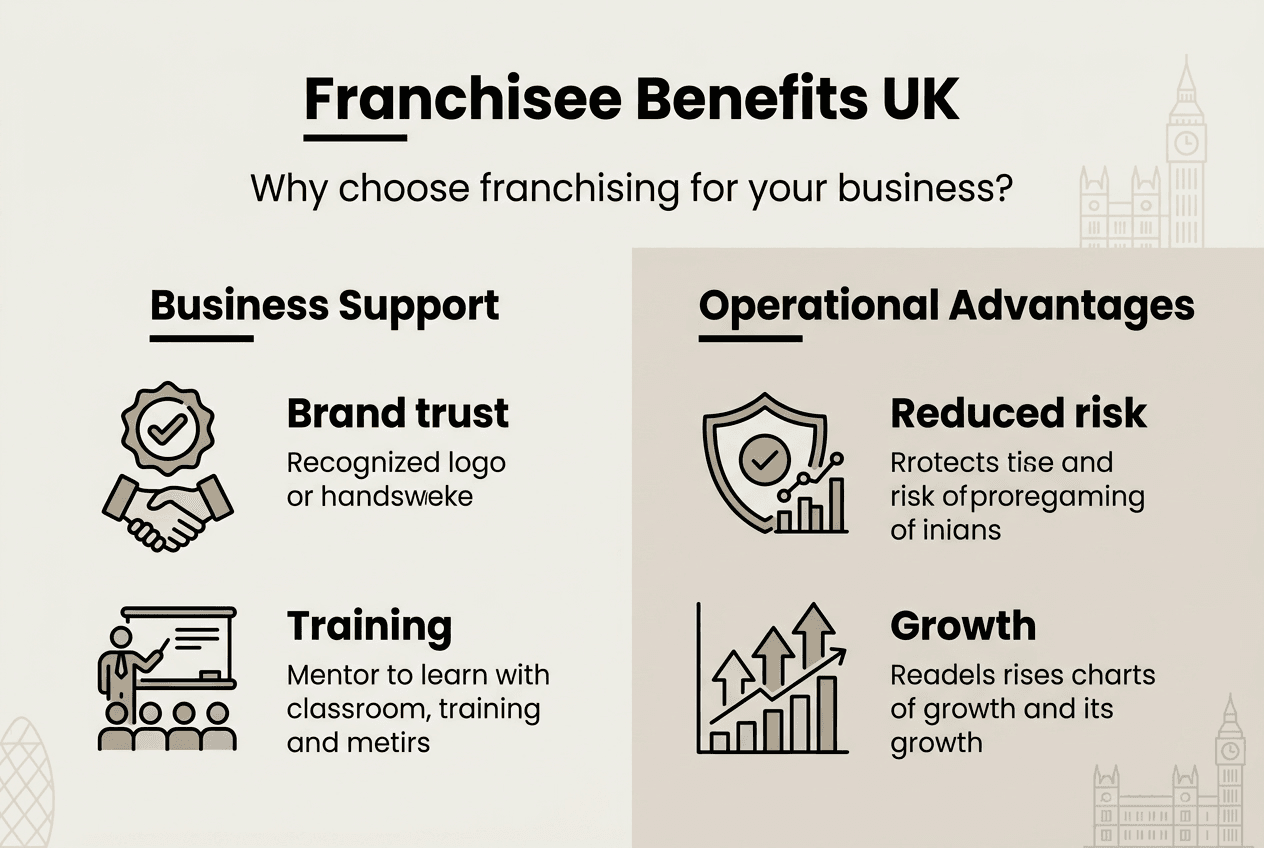
Proven business models and franchisor support reduce failure risks compared to independent startups. Franchisors have refined their systems through years of operation, identifying what works and eliminating ineffective practices. You receive comprehensive training, ongoing guidance, and access to collective purchasing power that reduces costs. This support network proves invaluable when challenges arise, providing expertise and resources unavailable to solo entrepreneurs.
The UK franchising sector demonstrates strong performance, marked by sustained growth and increasing diversification across industries. There are currently 1009 franchise systems operating in the UK, spanning sectors from fast food and retail to professional services and healthcare. This diversity offers prospective franchisees numerous options aligned with their interests, skills, and investment capacity.
The sector’s economic contribution reflects its significance. Franchising generates substantial employment, supports thousands of small business owners, and contributes billions to GDP annually. Success rates significantly exceed those of independent startups, with franchise businesses showing greater longevity and profitability. These statistics make franchising an appealing route into business ownership for individuals seeking reduced risk whilst maintaining entrepreneurial satisfaction.
| Metric | Value | Significance |
|---|---|---|
| Active franchise systems | 1009 | Wide variety of opportunities across industries |
| Franchisee success rate | Significantly higher than independent startups | Reduced business failure risk |
| Sector growth trend | Sustained expansion and diversification | Ongoing opportunities in emerging sectors |
| Economic contribution | Billions in GDP, substantial employment | Established, stable business model |
Sector diversification continues expanding into new industries beyond traditional fast food and retail. Healthcare, education, professional services, and technology franchises now represent significant growth areas. This evolution creates opportunities for franchisees with specialised skills or interests in emerging markets.
Pro Tip: Research franchise systems that entered the UK market within the past three to five years. Newer franchises often offer better territory availability, more favourable terms to attract franchisees, and greater flexibility than established brands with saturated markets. However, balance this opportunity against the higher risk of unproven systems.
The combination of brand recognition, proven systems, comprehensive support, and strong sector performance makes franchising attractive for aspiring business owners. You gain the independence of ownership whilst benefiting from collective strength and established success frameworks.
Explore franchising opportunities with FranchiseLocal
Navigating the UK franchise landscape requires reliable information and comprehensive resources. FranchiseLocal offers detailed guides and industry insights specifically designed for prospective franchisees researching opportunities. Our ultimate guide to franchising covers everything from initial research through to signing agreements and launching operations.
Access our extensive directory featuring franchise opportunities across diverse industries, investment levels, and operational models. Whether you seek a home-based business requiring minimal capital or a high street presence with substantial growth potential, our platform helps you identify options matching your criteria. Filter by price point, location, industry sector, and lifestyle preferences to discover franchises aligned with your goals.
Our comprehensive search functionality connects you directly with franchisors actively recruiting in your area. Compare opportunities, request information, and begin conversations with brands seeking motivated franchisees. FranchiseLocal simplifies franchise research, saving you time and helping you make informed decisions about this significant investment.
What are the common questions about being a franchisee in the UK?
Am I truly independent as a franchisee or essentially an employee?
You operate an independent business, investing your own capital and bearing financial risk. However, you must follow franchisor systems and brand standards, creating a middle ground between employment and complete autonomy. The legal relationship is contractual, not employment-based.
What fees should I expect to pay as a franchisee?
Initial franchise fees vary widely by brand and sector, ranging from £5,000 to £500,000 or more. Ongoing royalties typically represent 5% to 12% of gross sales, plus marketing levies of 1% to 4%. Request complete fee schedules including technology, training, and supplier costs.
How do I protect my territorial rights from encroachment?
Ensure your franchise agreement includes explicit territorial definitions with maps and postcodes, exclusivity clauses preventing franchisor-owned outlets in your area, and clear policies on online sales and delivery services. Seek legal review of these provisions before signing.
What happens if I want to sell my franchise business?
Most agreements require franchisor approval of buyers, who must meet qualification standards and complete training. The franchisor may claim first refusal rights or charge transfer fees. Review exit provisions carefully, as restrictions can significantly impact your ability to realise investment value.
Where can I find help with franchise due diligence?
Engage franchise-specialist solicitors to review agreements, accountants to assess financial projections, and existing franchisees to understand operational realities. FranchiseLocal provides due diligence guidance and resources to support your research process. The British Franchise Association also offers valuable information and standards for evaluating opportunities.