

A secured franchise loan is backed by an asset the lender can claim if you stop repaying. An unsecured franchise loan is not tied to a named asset. Secured borrowing is generally cheaper and can reach larger sums. Unsecured borrowing is usually quicker and keeps your property out of the deal, but it typically costs more and often comes with a personal guarantee. The British Business Bank makes the same cost point for UK business finance in general.
The right choice depends on what you can offer as security, how much you need, how fast you need it and how much risk you are prepared to carry personally. This guide takes each in turn, with figures from official and lender pages.
Secured vs unsecured at a glance
| Secured franchise loan | Unsecured franchise loan | |
|---|---|---|
| Security | Business-owned or other named assets, such as property, machinery or stock | No named asset used as security |
| Typical cost | Generally lower interest | Typically higher interest |
| Personal guarantee | Possible, depending on the lender | Often required |
| Speed | Usually slower, as security must be assessed | Usually quicker |
| Best suited to | Larger sums and buyers with assets to offer | Smaller sums, new owners and buyers with few assets |
| Main risk | Losing the asset if repayments are not maintained | Personal liability and credit damage if you default |
Treat the table as a starting point. Lenders set their own terms, so two secured loans can look very different once you read the offer.
What a secured franchise loan is
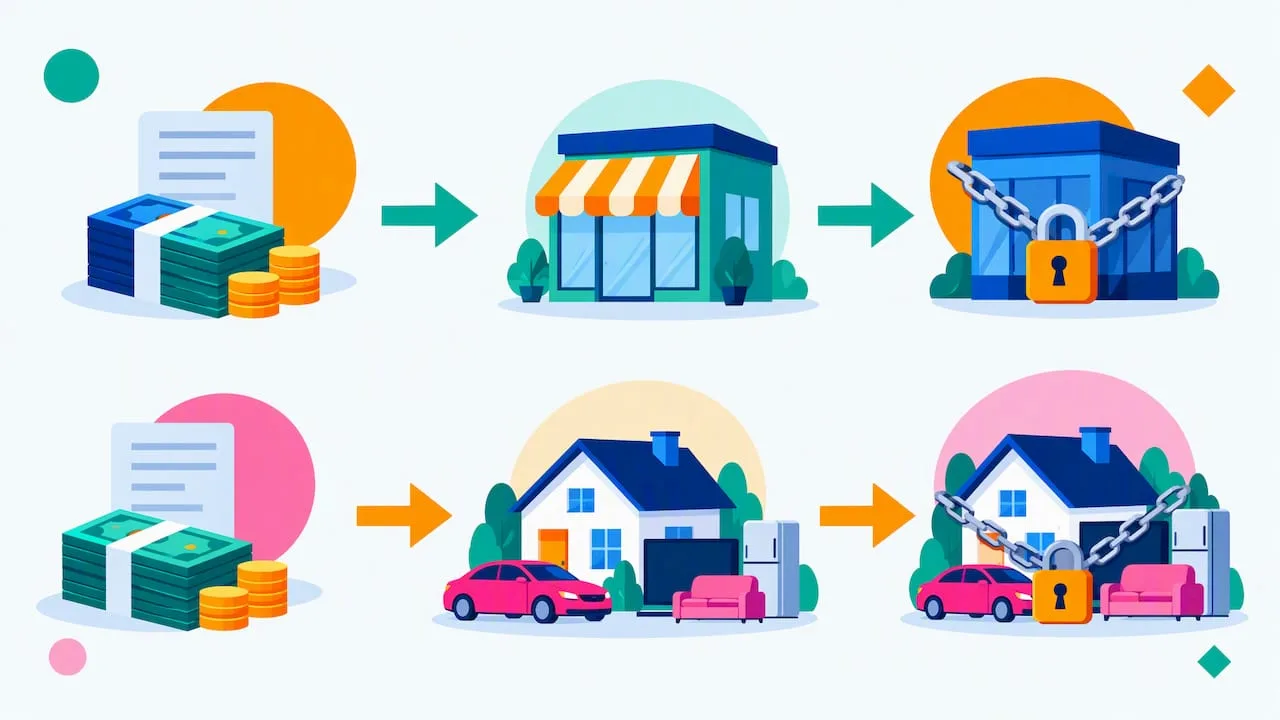
With a secured loan, the lender takes security over an asset. According to the British Business Bank, the lender may seize that asset if repayments are not maintained. That is the trade: the lender carries less risk, so it can usually offer lower interest rates and competitive repayment terms.
The security can take different forms:
- Property, including a UK property you own
- Machinery or equipment
- Stock
- Third-party security, such as a guarantee, used instead of or alongside other security
The last point is easy to miss. The British Business Bank notes that lenders may consider third-party security instead of, or alongside, other forms. In practice this means a family member or another party could be asked to stand behind the loan. Anyone offering that should take independent legal advice first.
Why franchisees choose secured lending
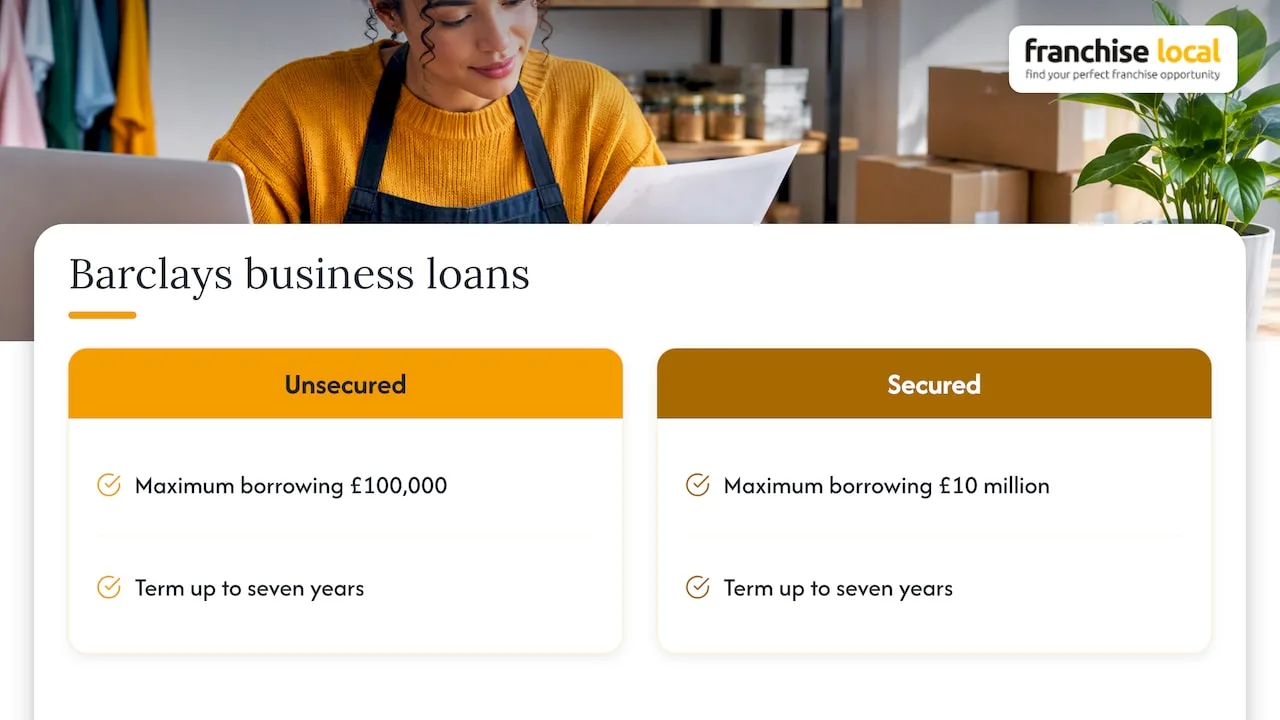
A franchise purchase often involves an initial fee, equipment, a vehicle, training costs and working capital. Those figures can add up quickly, and secured lending is where larger sums are usually found. One high street lender’s franchising page shows the gap clearly: Barclays lists business loans of up to £100,000 unsecured or up to £10 million secured, with terms of up to seven years.
If you are buying a premium brand, taking on a multi-unit territory or buying a resale, secured lending is more likely to match the scale of the investment.
What an unsecured franchise loan is
An unsecured loan does not require you to pledge a specific asset. The lender looks instead at your credit history, your finances and the strength of the plan. The British Business Bank notes that these loans typically carry higher interest rates than secured ones.
That higher price reflects the lender’s risk. If it cannot claim an asset, it prices the loan to cover the chance of non-repayment.
Unsecured does not always mean no personal risk
This is where many first-time franchisees get caught out. The word “unsecured” describes the loan’s security, not your exposure. The British Business Bank states that an unsecured business loan may still require a personal guarantee, which makes the owner personally liable if the business cannot repay.
Its guide to personal guarantees adds useful detail:
- A personal guarantee is a legally binding agreement. The owner or director becomes personally liable if the business defaults or becomes insolvent.
- Some lenders ask for a guarantee covering the full amount. Others may ask for as little as 20%.
- Guarantees are usually required for unsecured business loans, which are often easier to reach for small business owners, start-ups and sole traders without business assets.
So an unsecured loan can still put your savings, and potentially your home, in play. Our guide to personal guarantees on UK franchise loans explains how to limit that exposure before you sign.
Amounts, rates and terms in the UK
Figures differ by lender and change over time, so use the examples below as reference points and confirm current terms on the lender’s own page.
Bank franchise lending
On its franchising page, Barclays states that it can fund up to 70% of approved franchise costs and, in some circumstances, offer up to 12 months of capital repayment holidays. Two practical points follow:
- Even with a supportive lender, you will usually need to put in your own money. If a lender funds up to 70%, the remaining share must come from you or another source.
- A capital repayment holiday can ease the first months of trading, when income is still building. It is worth asking about, because early cash flow is a pressure point for most new franchisees.
For a broader view of what banks look for, read what UK lenders expect from franchisees in 2026.
The government-backed Start Up Loan
The Start Up Loan is the best-known unsecured option for new owners. According to GOV.UK, it is an unsecured personal loan for people who live in the UK and have, or plan to start, a UK-based business that has been fully trading for less than five years. It offers £500 to £25,000 at a fixed interest rate of 7.5% per year.
The British Business Bank adds that business partners can each apply for up to £25,000, with a maximum of £100,000 per business, repayable over one to five years.
For many franchisees this will not cover the whole purchase. It can work well as one layer of funding alongside your own savings or a bank loan. Check that the franchise you are considering is eligible: some business types, including property investment, banking and money transfer services, and gambling, are excluded from government-backed Start Up Loans.
Which loan suits which kind of franchisee
There is no single winner. Match the loan to your situation.
You own property or business assets
Secured lending is worth pricing first. If you can offer security, the British Business Bank notes that secured loans are generally cheaper, and over several years a lower rate can save a meaningful amount. The question is whether you are comfortable with what the lender could claim.
You have savings but few assets
Unsecured lending is the more natural fit. It suits buyers who do not have assets to pledge, and it is often quicker. Expect a higher rate, and read any personal guarantee clause line by line.
You are leaving employment for your first business
The British Business Bank says early-stage start-ups may struggle to get loans from traditional lenders. It points to Start Up Loans as an option for founders turned down elsewhere, and to community development finance institutions (CDFIs), which can consider applications from businesses with limited assets, trading histories or track records. A franchise can be an easier story to tell a lender than a blank-sheet start-up, because the model is already proven, but that depends on the brand and the lender.
If you are still weighing the route itself, our comparison of franchise vs start-up sets out the trade-offs.
You need a large sum or a multi-unit territory
Larger borrowing tends to need security. Compare how much you can borrow unsecured against what the investment actually costs. If the gap is large, a secured facility, or a mix of loan types, may be the only workable route.
Eligibility: what lenders check
Whatever the loan type, a lender wants to see that you can repay. Common checks include:
- Credit history. For a Start Up Loan, GOV.UK says you must live in the UK, be at least 18 and pass a credit check.
- A UK-based business and a clear funding requirement. You should be able to say exactly what you are borrowing for and why that figure.
- A realistic repayment plan. Your forecasts should show how loan repayments fit around living costs and early trading.
- Turnover that supports the borrowing. This matters more for established owners, such as someone adding a second territory.
A tidy application helps. Bring the franchise agreement terms, the franchisor’s disclosed costs, your own cash flow forecast and details of what you are putting in yourself.
What is at risk if repayments are missed
Be clear about the downside before you pick a product.
Secured loan. The lender may seize the asset if repayments are not maintained. If the security is a property, that is a serious outcome. Think about it as a real possibility, not a technicality.
Unsecured loan with a guarantee. The guarantee makes you personally liable if the business defaults or becomes insolvent. Your personal assets can then be affected, even though no asset was named in the loan.
Start Up Loan. The British Business Bank says that missed repayments could affect your credit report. The provider may issue charges for which you are personally liable, and this could lead to a county court judgment (CCJ) or referral to an approved debt collection agent.
If you already have debts, own your home with a mortgage, or are unsure how a guarantee works, speak to a regulated adviser or a solicitor before signing. A franchise accountant can also stress-test your forecast against slower-than-planned early months.
Questions to ask before you choose
Use this list when comparing offers:
- What exactly is the security, and what happens to it if I miss a payment?
- Is a personal guarantee required? For the full amount or a share?
- What is the total cost, including interest and fees, over the whole term?
- Is there a capital repayment holiday, and how long does it last?
- What percentage of the franchise cost will the lender fund?
- Are there early repayment charges if I want to clear the loan sooner?
- How quickly can funds be released, relative to my franchise start date?
If an answer is vague, ask for it in writing.
Build a funding plan, not a single loan
Most buyers combine sources: personal savings, a bank loan, perhaps a Start Up Loan, and sometimes local support. Our guides cover each layer in more depth:
- Franchise loan types: the complete UK guide
- Franchise funding options list
- Smart ways to finance a UK franchise as a new owner
- Funding a franchise purchase in the food sector
Grants rarely cover the full cost. Our piece on local franchise grants explains why there is no national scheme and where smaller local awards may appear.
Find a franchise that fits your budget
Funding is easier to plan once you know the investment level. On Franchise Local you can filter UK opportunities by price, industry, lifestyle and location, so your search starts with franchises that match what you can borrow and invest. Browse trending franchise opportunities to see what other buyers are looking at, or explore loans franchises if finance itself interests you as a business. Submit an enquiry on any listing to speak to the franchisor directly and ask for the full cost breakdown.
FAQ
Is a secured or unsecured franchise loan better?
Neither is better in every case. Secured loans are generally cheaper and can reach larger amounts, but you risk the asset. Unsecured loans are typically more expensive and often need a personal guarantee, but they are an option when you have few assets to offer.
Can an unsecured franchise loan still put my home at risk?
It can. An unsecured business loan may require a personal guarantee, which makes you personally liable if the business cannot repay. Check what the guarantee covers and for how much, and consider legal advice before you sign.
Can I get a Start Up Loan to buy a franchise?
Possibly. The Start Up Loan is open to people in the UK who have or plan to start a UK-based business trading for less than five years, and it covers £500 to £25,000 at a fixed 7.5% per year. You must pass a credit check, and some business types are excluded, so confirm your franchise qualifies.
How much of a franchise can a bank fund?
It depends on the lender and the brand. One major bank states it can fund up to 70% of approved franchise costs, so you should expect to contribute the rest yourself.