

An automotive franchise lets you run a vehicle-related business under an established brand, using its systems, training and support in return for an upfront fee and ongoing payments. In the UK, entry costs run from under £10,000 for a mobile valeting franchise to £80,000 or more for a van-based product distribution franchise. This guide sets out the main types, what each costs, what you need to run one and what to check before you commit.
It is written for first-time buyers and existing business owners comparing options. Use it to narrow your search, then browse the live listings on our automotive franchises directory.
What an automotive franchise is
You license a proven business format from a franchisor. You trade under its name, follow its operating system and pay for the right to do so. The franchisor provides training and support. You run the day-to-day business and carry the commercial risk.
The word automotive covers very different businesses. Some need a van and a few thousand pounds. Others need a workshop with several bays and a team of technicians. Choosing the right type matters more than choosing the right brand, because the type decides your capital, your daily routine and the skills you need.
The main types of automotive franchise in the UK
Most UK opportunities fall into six groups.
| Type | What you do | Typical set-up | Skill level |
|---|---|---|---|
| Mobile valeting and car care | Clean and protect vehicles at the customer’s home or workplace | Van, equipment, starter stock | Low to moderate |
| Mobile repair (SMART, bodywork, alloy wheels, dent removal) | Fix minor damage on site | Fitted van, specialist kit, consumables | Moderate, training provided |
| Garage and workshop networks | Service and repair vehicles in a branded workshop | Premises, bays, technicians | High |
| Tools and product distribution | Sell tools or car care products to trade customers from a van | Van, stock, territory | Moderate, with trade knowledge |
| Car wash | Operate a fixed-site or mobile wash business | Site and equipment, or van | Low to moderate |
| Car hire, leasing and dealerships | Rent, lease or sell vehicles under a brand | Premises, fleet access, staff | Business management |
Mobile services
Mobile franchises are the most accessible entry point. You work from a van, often from home, and serve customers where the vehicle is parked. Valeting, smart repairs, mobile body shops, alloy wheel refurbishment and ECU remapping all follow this pattern. Costs are lower because you have no premises, and you can usually start part-time and grow.
Browse the current options on our car and auto repair franchises page.
Garage and workshop networks
Some franchisors invite independent garages to join a branded service network. These suit people who already have a workshop or are ready to lease one. A typical network sets minimum standards for the workshop, such as dedicated bays, qualified technicians, a reception desk and signage. In return you get branding, business support and sometimes preferential vehicle leasing rates.
Tools and product distribution
In this model you sell professional tools, or car care and cleaning products, from a mobile showroom to garages, bodyshops and trade customers. Franchisees usually work inside a protected territory. Industry reports describe established tool franchise systems in the UK that have trained several hundred franchisees. The work is relationship-driven: regular rounds, repeat orders and product knowledge.
Car wash
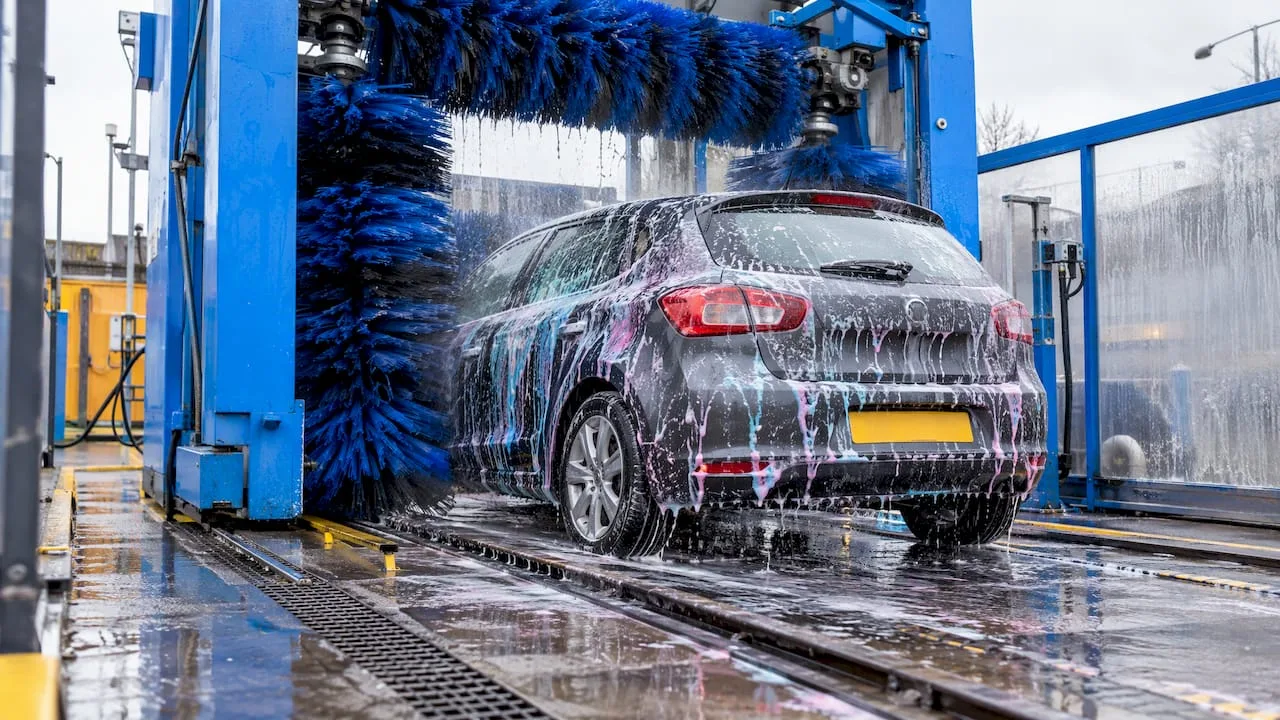
An automatic or fixed-site car wash franchise gives you a branded, mechanised site operated with the franchisor’s systems and suppliers. Revenue typically comes from wash packages, add-ons such as vacuums, and subscription or wash club memberships. Mobile wash operations are a lower-cost alternative. See our guide to car wash franchises in the UK for more detail.
Car hire, leasing and dealerships
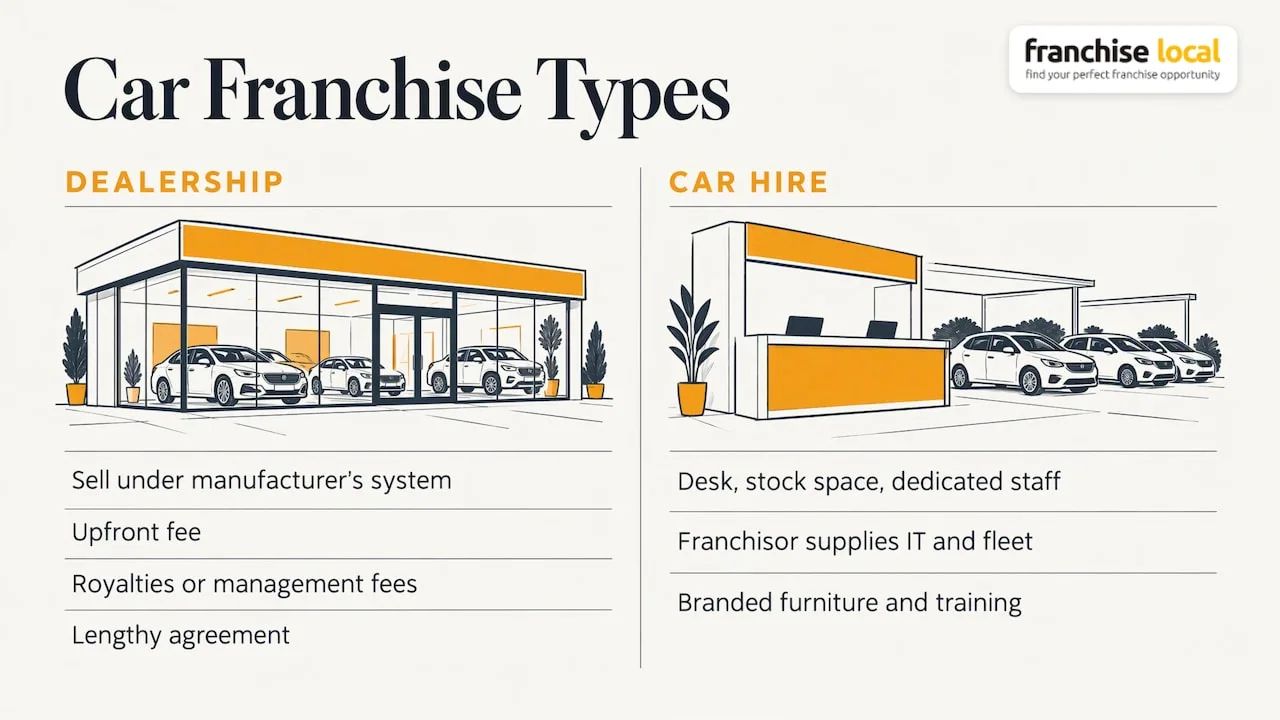
These sit at the top end of investment and complexity. A dealership franchise lets you sell cars under a manufacturer’s name and system, with an upfront fee, ongoing royalties or management fees and a lengthy agreement. A car hire franchise generally needs premises with a desk and reception area, IT connection, space for stock and dedicated staff, while the franchisor supplies the IT system, fleet access, branded furniture and training. Compare current listings in car dealership, car retail and vehicle leasing franchises.
What an automotive franchise costs
The figures below come from franchisor prospectuses and listings. They are examples of what the market looks like, not quotes, and they change. Confirm every figure with the franchisor.
| Franchise type | Example start-up cost | What it includes |
|---|---|---|
| Mobile valeting | £9,750 + VAT total | £3,750 licence, £3,500 van fit-out and equipment, £1,000 first stock, £1,500 launch marketing; £1,000 minimum working capital |
| Mobile valeting (launch package) | £5,000 launch package | One exclusive territory, brand rights, booking and payment systems, training; you supply your own van and equipment |
| Mobile SMART repair | £22,500 + VAT own capital for a full purchase | £10,000 van fit-out and equipment, £4,000 consumables, £3,000 training, £5,500 franchise fee |
| Mobile SMART repair, part-funded | £12,500 + VAT deposit | Remaining equipment cost financed over time |
| Mobile car repair | £20,000 + VAT licence fee | Plus about £300 uniform, £300 training, £8,000 equipment and £3,500 consumables; van cost on top |
| Mobile body shop | £35,000 start-up | £25,000 or more of funding needed; technician training accredited by the IMI |
| Van-based product distribution | From £80,000 | At least 30% self-funding needed to secure a loan on working capital |
| Car wash, fixed site | £5,000 to over £20,000 for equipment alone | A full setup in London can total around £65,000 |
| Car wash, mobile | £1,500 to £4,000 upfront | Basic mobile operation |
One repair franchisor puts the average UK automotive repair franchise set-up cost at roughly £25,000, with its own mobile repair entry from £4,000 and ongoing fees of £250 per month for marketing and administration. Treat that as one brand’s claim and compare it with other offers.
The pattern is clear. A mobile service costs a fraction of a workshop, a site-based wash or a distribution round, and prices rise with equipment, stock and territory size.
Ongoing fees
The upfront fee is only part of the cost. Ask each franchisor for a written list of recurring charges. These typically include:
- Management or royalty fee. Often a percentage of turnover or a fixed monthly sum. One valeting prospectus lists a management fee between 6.25% and 8.33% plus VAT.
- Marketing fee. The same prospectus lists a marketing fee in the same range, plus VAT.
- Vehicle costs. Van purchase, lease or loan, plus insurance, fuel and maintenance. Monthly van costs vary with deposit and loan length.
- Consumables and stock. Paint, polish, chemicals, parts and tools you reorder as you work.
- Insurance and compliance. Motor trade insurance, public liability and any local authority requirements.
Add these to your forecast before you compare franchises. A lower entry fee with a higher percentage fee can cost more over five years than the reverse.
What you need to run one
Skills and qualifications
There is no single qualification for an automotive franchise. Requirements depend on the model:
- Mobile valeting and car care. Most franchisors train from scratch. A reliable vehicle, a good work ethic and customer service skills matter most.
- Mobile repair and remapping. A basic understanding of automotive systems is usually expected, with comprehensive training provided. Some brands offer IMI-accredited technician training.
- Garages and MOT. You need qualified technicians. An MOT station needs a qualified tester, either you or an employee, and the usual entry qualification is a Level 2 MOT Testing Award.
- Dealerships and hire. Business management experience counts for more than technical skill, because you will lead a team and manage stock, finance and compliance.
If you have no trade background, start with a model where the franchisor trains you fully and the work is structured.
Equipment, vehicles and premises
Work out what you must provide and what the franchisor supplies. Typical packages include a fitted van or fit-out, an equipment pack, a consumables pack, training and branded livery. One valeting franchise expects you to provide your own unbranded van and equipment such as a pressure washer, water tank, power supply and detailing tools, while others set up the whole van for you.
Workshop and hire models add premises. For a garage network, expect minimum standards such as dedicated bays, technicians and a reception desk. Repair garages need diagnostic tools. Body shops need specialist kit such as paint booths, ovens and lifting tables. Motor trade insurance is required for a garage and should cover road risks, premises, tools, employees, money on site and stock. Public liability cover is recommended.
Support you should expect
Good franchisors give you more than a logo. Look for initial and ongoing training, operations manuals, IT and booking systems, marketing support, technical aftercare and a named support contact. Members of the British Franchise Association agree to a code of ethics that includes a proven pilot operation before franchising, ownership of the trade name or trademark, and initial and continuing support throughout the agreement.
What makes an automotive franchise profitable
Profit depends on a handful of factors you can check in advance.
- Margin per job. Valeting, repair and product sales have different margins. Ask for a worked example per job, not a headline figure.
- Utilisation. How many billable hours or jobs per week does a typical franchisee achieve in months one, six and twelve?
- Territory. The size, population and number of vehicles in your area drive demand. Protected territories stop the franchisor placing another franchisee next to you.
- Repeat business. Subscriptions, fleet contracts, regular trade rounds and memberships steady your income.
- Fixed costs. A van is cheaper to run than a site. Premises and staff raise your break-even point.
- Fee structure. Percentage fees rise with turnover. Fixed fees reward growth once you pass break-even.
Some franchisors publish profit expectations. One mobile repair brand states that franchisees can expect a net profit of 15 to 20% with turnover potentially growing to £500,000. Treat such figures as the franchisor’s own projection. Build your own forecast using your territory, your working hours and the full fee list, and ask to speak to existing franchisees about their actual results.
How to assess an opportunity before you sign
Work through the following in order.
- Request the franchise disclosure pack. This should include the fee schedule, the agreement and a list of current franchisees.
- Speak to franchisees. Ask about start-up costs versus the quote, time to break-even, support quality and what they would change.
- Check the franchisor’s credentials. Look at how long it has operated, how many units are open and whether it is an accredited member of the British Franchise Association.
- Test the numbers. Compare the franchisor’s projections with your own, including every ongoing fee and your living costs for the first year.
- Take legal and financial advice. Use a solicitor experienced in franchising and an accountant before you sign.
What the agreement should cover
A franchise agreement can run to 50 pages or more. Before signing, check these areas:
- Territory, including any exceptions to your exclusivity
- Fees and other costs
- Your duties and the franchisor’s duties
- Premises, where relevant
- Intellectual property
- Selling or transferring your franchise
- Termination and what follows it
- Restrictions after you leave
- How disputes are resolved
Because the agreement is the template for the whole network, it should be drafted properly, not adapted from a generic form. Small drafting gaps can become expensive disputes later.
Warning signs
Take extra care if you see any of the following:
- Pressure to pay a deposit before you have seen the full agreement
- Income promises with no worked basis or no franchisee references
- Unclear or changing fee lists
- A territory with no defined boundaries or no protection
- No pilot operation or very few operating franchisees
- Reluctance to let you talk to existing franchisees
- Vague descriptions of training and support
Franchisors that welcome questions and give clear written answers are doing what a good franchisor should.
Legal and business steps to get started
The UK has no single franchise law. Franchise relationships are governed mainly by contract law, alongside consumer law, employment law, health and safety and environmental rules, and data protection law. That makes the written agreement central to your protection. The steps below suit most automotive franchisees.
- Set up your business structure. Most franchisees operate as a sole trader or a limited company. Ask your accountant which suits your tax position.
- Register for tax. Register with HMRC and for VAT if your turnover requires it or you choose to.
- Arrange insurance. Motor trade insurance for workshop-based models, vehicle insurance with business use for mobile models, and public liability cover.
- Sort your funding. Many franchisors work with lenders that understand franchising. Expect to contribute a share of the cost yourself.
- Complete training. Attend the franchisor’s initial training and any technical accreditation.
- Meet local requirements. Waste disposal, water use and noise rules can apply to washing and workshop activity. Check these with your local council.
- Launch. Use the franchisor’s launch marketing and set your first-month targets.
A franchise consultant or an adviser from our franchise service providers directory can help with funding, legal review and planning.
Choosing the right type for you
Match the franchise to your situation:
- Under £10,000 to invest, working alone: mobile valeting or mobile wash.
- £10,000 to £35,000, hands-on and willing to learn a trade skill: mobile repair, SMART repair or body repair.
- Existing garage or workshop: a garage network that lifts your brand and supplies business support.
- £80,000 or more, with trade sales skills: van-based tool or product distribution.
- Management background and larger capital: car hire, leasing or dealership franchises.
Then think about lifestyle. Mobile work is flexible but physical and weather-dependent. Workshops give stability but tie you to a location and a team. Our ultimate guide to franchising covers the wider decision, including funding and what daily life as a franchisee looks like.
Find your automotive franchise
Franchiselocal is a UK franchise directory that lets you filter opportunities by industry, investment level, lifestyle and location. Start with the full automotive franchises for sale list, or read our top automotive franchise opportunities round-up and overview of different automotive franchise types. When you find a brand that fits, submit an enquiry through its listing and the franchisor will contact you directly. To widen your search, see our trending franchise opportunities or search by county.
FAQ
Do I need mechanical qualifications to run an automotive franchise?
Not always. Valeting, car wash and many mobile repair franchises provide full training and expect a basic understanding of vehicles at most. Garage and MOT models need qualified technicians, and an MOT station needs a qualified tester, which is usually the Level 2 MOT Testing Award. Check the exact requirement in each franchisor’s recruitment information.
What is the cheapest automotive franchise to start?
Mobile services have the lowest entry costs. Mobile valeting and mobile car wash franchises can start from a few thousand pounds, with some valeting totals under £10,000 plus VAT. Remember to add the van, working capital and ongoing management and marketing fees to your calculation.
How do I spot a red flag in an automotive franchise offer?
Be wary of pressure to pay before you see the full agreement, income promises with no evidence, unclear fees and undefined territories. A reliable franchisor shares its fee schedule and agreement early, gives you franchisee contacts and encourages independent legal advice.
Which automotive franchise is the most profitable?
There is no single answer, because profit depends on the model, your territory, your hours and the fee structure. Compare the margin per job, the number of jobs you can realistically complete and the ongoing fees, then ask existing franchisees about their actual results before you decide.
Do I need a licence to run an automotive franchise in the UK?
There is no single licence for automotive franchising. Requirements depend on the activity: a garage needs motor trade insurance and, for MOT testing, a qualified tester, while mobile services need business-use vehicle insurance. Ask the franchisor which approvals apply and confirm local rules with your council.